Hear from Our Customers
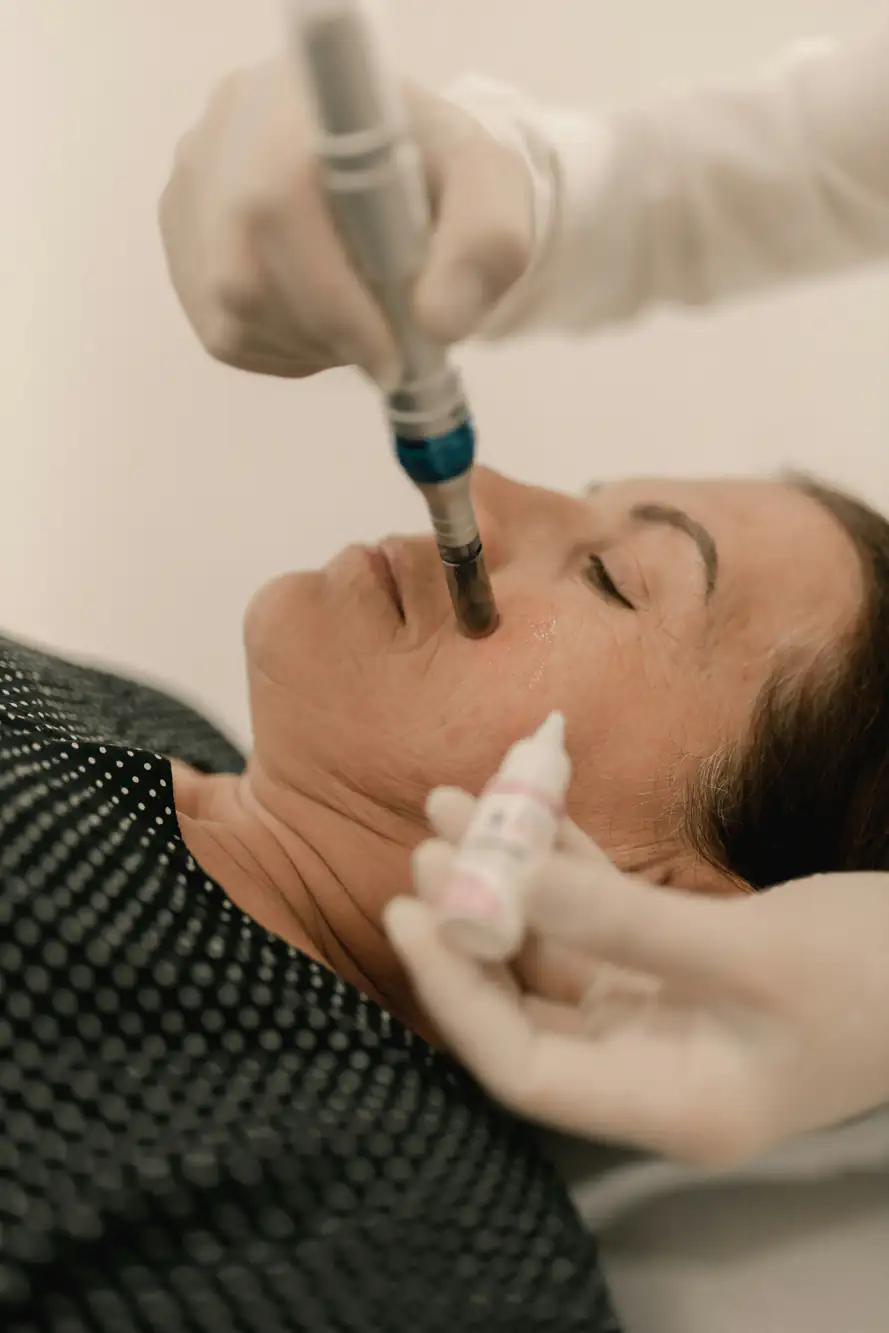
Your skin starts rebuilding itself from the inside out. That’s what happens when you trigger your body’s natural collagen production through controlled micro-injuries.
Clinical studies show a 400% increase in collagen and elastin production six months after completing a series of treatments. That’s not marketing speak—that’s measurable change in how your skin functions.
You’ll see improvements in acne scarring, fine lines, enlarged pores, and uneven texture. The treatment works on your face, neck, chest, and other areas where skin damage shows up. Most people notice smoother, firmer skin within a few months, and those results last well beyond your final session.
This isn’t about covering up problems with makeup or filters. It’s about addressing what’s actually causing the texture issues, the scarring, the visible signs of aging. Your skin learns to repair itself more effectively, and that shows up in how you look every single day.
We’ve been serving Clayton, NC and surrounding Wake County communities for six years. Jacqueline Grace, the licensed esthetician behind Wake Skincare, trained in New York and brought medical-grade skincare expertise to the area.
She’s been named Best Esthetician in Wake County three consecutive years. She placed first in Pigmentation Artist of the Year at The Skin Games, an international aesthetics competition. She holds HydraFacial Master Certification, putting her among the first hundred practitioners worldwide to achieve that level.
Those aren’t just credentials to list on a website. They mean you’re working with someone who knows how to assess your specific skin concerns and create a treatment plan that actually addresses them. Clayton residents don’t need to drive to Raleigh or Durham for expert-level skincare—you can get it locally, with personalized attention that larger medical spas can’t always provide.
You start with a free consultation where we evaluate your skin and discuss what you’re trying to fix. Acne scars, sun damage, fine lines, texture issues—whatever’s bothering you gets addressed in a personalized treatment plan.
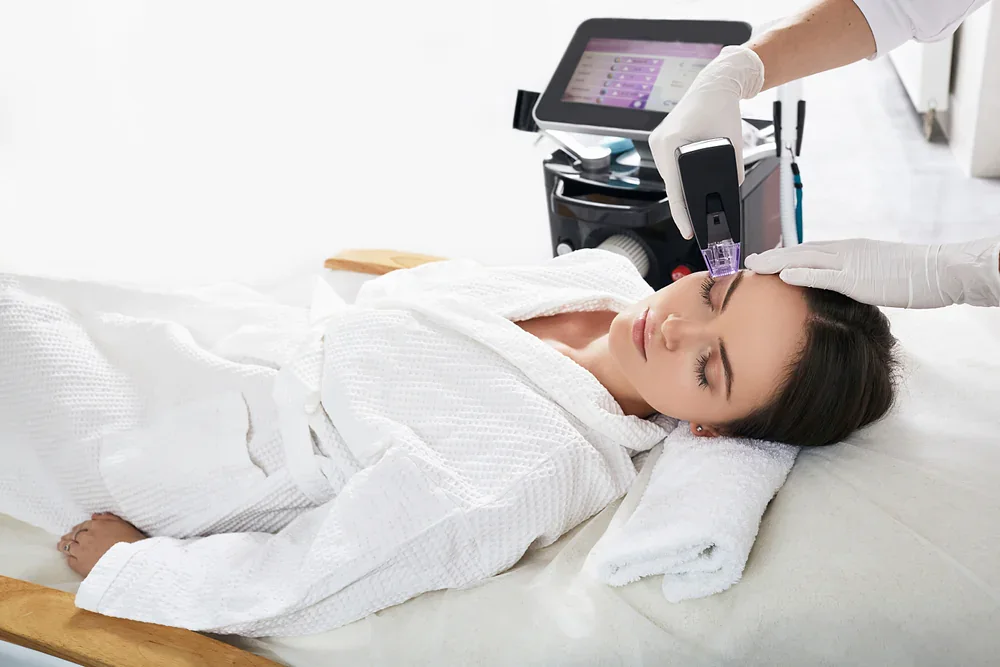
During the actual treatment, we use SkinPen, an FDA-approved microneedling device that creates controlled micro-channels in your skin. This triggers your body’s natural healing response, ramping up collagen and elastin production. The session takes 30 to 60 minutes, which means you can schedule it during a lunch break if needed.
Most people need four to six sessions spaced four to six weeks apart. That timeline gives your skin time to heal and rebuild between treatments. You’ll see some redness right after—similar to a mild sunburn—but that typically fades within a day or two.
Results become visible around three to six months after you complete your series. That’s when the collagen remodeling really shows up in smoother texture, reduced scarring, and firmer skin. After that, annual maintenance treatments help you hold onto those improvements long-term.

Ready to get started?
Every microneedling treatment includes a thorough skin assessment, the SkinPen procedure itself, and post-treatment serums designed to maximize your results. Those micro-channels we create don’t just trigger collagen—they also let active ingredients penetrate deeper into your skin than they normally would.
You’re getting medical-grade treatment in a setting that prioritizes your comfort and your specific goals. Whether you’re dealing with persistent acne scars that haven’t responded to other treatments, or you’re noticing fine lines and texture changes from aging, the approach stays personalized.
Clayton’s growing community includes a lot of working professionals who need treatments that fit into busy schedules. That’s why sessions are efficient—30 to 60 minutes—and downtime is minimal. You might look a little flushed for a day, but you’re not sidelined from work or social plans.
The treatment is safe for all skin tones, which matters if you’ve been told lasers aren’t a good option for you. Microneedling carries a lower risk of hyperpigmentation, making it a smarter choice for diverse skin types. And because it works with your body’s natural healing process, results look natural—not overdone or obviously “worked on.”

Yes, and the research backs it up. In controlled studies with 466 patients, 93.8% of participants saw visible improvements in their skin. That’s not a small sample size, and those results held up across different skin types and scar severities.
Microneedling works for acne scars because it addresses the underlying structural damage. Scarring happens when collagen fibers break down unevenly during the healing process. By creating controlled micro-injuries, you’re essentially giving your skin a chance to rebuild those fibers correctly.
You won’t see overnight transformation. Most people need four to six treatments spaced a month apart, and the real improvements show up three to six months after completing the series. But when you compare before and after photos from that timeline, the difference in skin texture and scar depth is significant. This is one of the few non-surgical options that actually remodels scar tissue instead of just covering it up.
Most people experience mild redness for 24 to 48 hours. Think of it like a sunburn that fades quickly. You’re not going to be stuck at home recovering, and you won’t need to take time off work.
Your skin might feel a little sensitive the first day, so we recommend skipping heavy makeup and sticking with gentle, hydrating products. By day two or three, you can usually return to your normal skincare routine and makeup application.
This is one of the reasons microneedling has become so popular for people with busy schedules. You can book a session on a Friday afternoon and be back to normal by Monday. Compare that to more aggressive treatments like deep chemical peels or ablative lasers, which can leave you red and peeling for a week or more. The minimal downtime makes it easier to fit treatments into your life without disrupting your work or social calendar.
Yes. Unlike certain laser treatments that carry higher risks for darker skin tones, microneedling doesn’t rely on heat or light energy. That means there’s a much lower chance of post-inflammatory hyperpigmentation or uneven skin tone after treatment.
This matters if you’ve been told in the past that you’re not a good candidate for laser resurfacing. Microneedling works mechanically—it creates micro-channels that trigger your skin’s natural healing response without the thermal damage that can cause pigmentation issues.
That said, proper technique and post-treatment care still matter. You want someone who understands how to adjust needle depth and treatment intensity based on your specific skin type and concerns. And you’ll need to be diligent about sun protection during the healing process, since your skin will be more vulnerable to UV damage. But the treatment itself is considered one of the safest options for improving skin texture and tone across all skin types.
Most people need four to six sessions to get the full benefit. The exact number depends on what you’re treating and how severe the damage is. Mild texture issues might improve with fewer treatments, while deeper acne scars or significant sun damage usually require the full series.
Sessions are spaced four to six weeks apart. That timing isn’t arbitrary—it’s how long it takes for your skin to complete one full healing and remodeling cycle. If you schedule treatments too close together, you’re not giving your collagen production enough time to ramp up between sessions.
Results become visible around three to six months after you finish your series. That’s when the collagen remodeling really shows up in smoother, firmer skin. After that, most people do annual maintenance treatments to keep their results. It’s not a one-and-done solution, but it’s also not something you need to repeat every month indefinitely. Once you’ve built up that collagen foundation, you’re maintaining it rather than starting from scratch.
The treatment involves some discomfort, but it’s manageable. Most people describe it as a scratching or vibrating sensation rather than sharp pain. We apply a topical numbing cream before starting, which significantly reduces what you feel during the procedure.
The level of discomfort also depends on which area we’re treating and how deep we need to go with the needles. Thinner skin around the eyes or upper lip tends to be more sensitive. Areas with thicker skin, like the cheeks or forehead, usually feel less intense.
Here’s what actually happens: the numbing cream sits on your skin for about 20 to 30 minutes before we start. By the time we begin the treatment, most of the area is pretty numb. You’ll still feel the device moving across your skin, and some spots might be more sensitive than others, but it’s not the kind of pain that makes people stop mid-treatment. The whole session takes 30 to 60 minutes, and any lingering sensitivity fades within a few hours after we’re done.
Yes, and combining treatments often gives you better results than doing microneedling alone. The micro-channels created during the procedure allow serums and active ingredients to penetrate much deeper than they normally would. That’s why we often pair microneedling with targeted serums for hyperpigmentation, hydration, or anti-aging.
Some people also combine microneedling with treatments like HydraFacial or chemical peels, but the timing and sequencing matter. You don’t want to overload your skin or compromise the healing process. That’s something we map out during your consultation based on your specific goals and skin condition.
The key is creating a treatment plan that addresses multiple concerns without causing unnecessary irritation or downtime. For example, if you’re dealing with both acne scarring and uneven pigmentation, we might recommend a series of microneedling sessions with brightening serums, followed by maintenance HydraFacials to keep your skin clear and glowing. The combination approach tends to work better than trying to fix everything with a single treatment type, but it needs to be coordinated properly to avoid overdoing it.