Hear from Our Customers
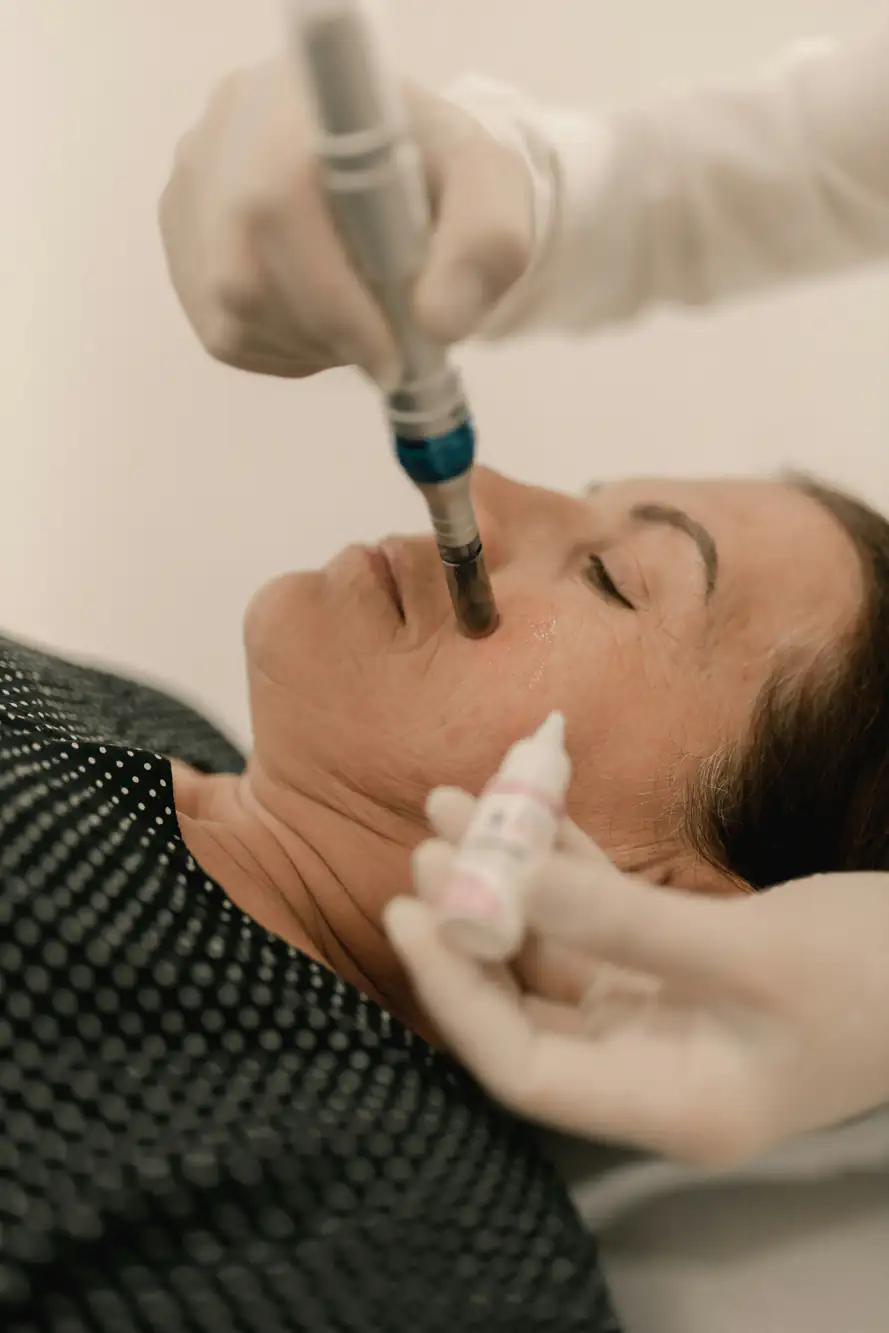
Your skin doesn’t just look better temporarily. Microneedling creates controlled micro-injuries that force your body to produce new collagen and elastin—the structural proteins that keep skin firm, smooth, and resilient.
Clinical studies show a 400% increase in collagen production six months after completing a treatment series. That’s not marketing speak—that’s measurable tissue regeneration happening beneath the surface.
You’ll notice a glow within the first few days as inflammation subsides and cell turnover accelerates. But the real transformation happens over the following 4-6 weeks as fresh collagen fills in acne scars, tightens enlarged pores, and softens the appearance of fine lines. The results continue improving for months because your skin is actually rebuilding itself, not just reacting to a topical product.
This works for persistent issues that creams can’t touch. Indented acne scars. Sun damage that’s settled into your skin texture. Fine lines that started showing up earlier than you expected. Microneedling addresses these concerns at the dermal level, where real change happens.
Wake Skincare is led by Jacqueline Grace, a licensed esthetician who’s earned recognition three years running as the Best Esthetician in Wake County. She’s also placed first internationally in the Pigmentation Artist of the Year category at The Skin Games, competing against practitioners worldwide.
That level of recognition doesn’t come from following a script. It comes from understanding skin at a clinical level and customizing every treatment to match what your skin actually needs—not what a one-size-fits-all protocol says to do.
Jacqueline is one of fewer than 100 practitioners globally to achieve HydraFacial Master Certification, and we operate under the oversight of Dr. Joseph Hummel, one of the most respected medical directors in the Triangle. You’re getting medical-grade treatment standards, not spa-level guesswork.
Roxboro residents and clients throughout Wake County come here because the results are consistent, the approach is personalized, and the expertise is proven. Every treatment starts with a free consultation to assess your skin and build a plan that makes sense for your goals and timeline.
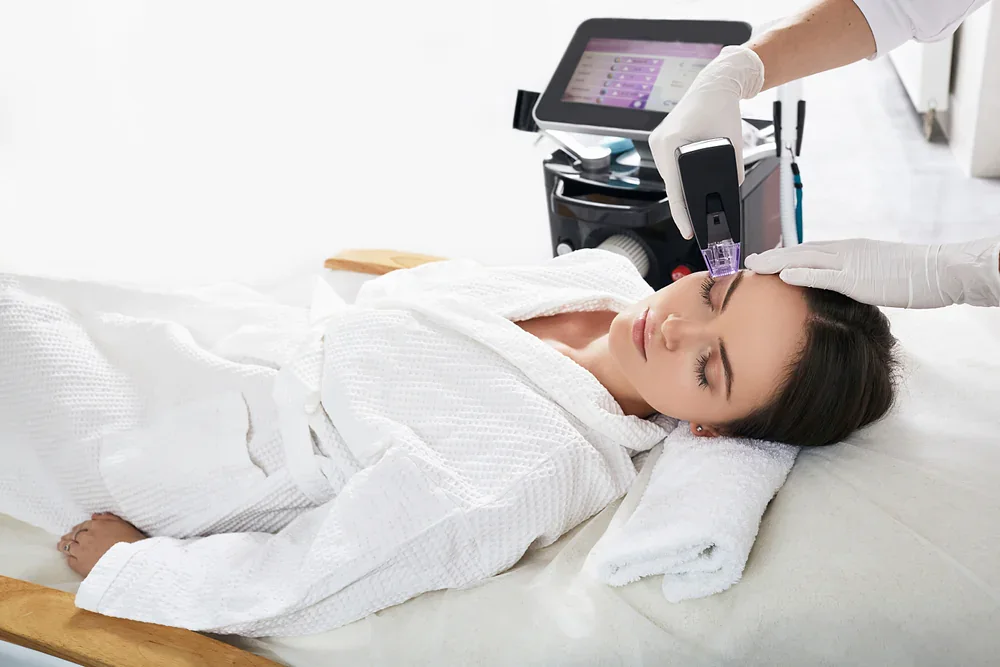
Microneedling uses an FDA-cleared device called SkinPen, which contains fine needles that create thousands of controlled micro-channels in your skin. These channels trigger your body’s wound-healing response, flooding the area with growth factors and stimulating collagen production.
Before treatment begins, a topical numbing cream is applied to keep you comfortable. Once your skin is prepped, the SkinPen is passed over the treatment area in a systematic pattern, adjusting depth based on your skin type and the concern being treated. Acne scars require deeper penetration than fine lines, for example.
The appointment typically takes 30-60 minutes depending on the size of the area. Your skin will look flushed immediately after, similar to a moderate sunburn, but most people return to normal activities within 24-48 hours. Some notice a healthy glow within days as the skin begins its repair process.
You’ll need 3-6 sessions spaced 4-8 weeks apart to see full results, because collagen production is a gradual biological process. Each session builds on the last, progressively improving skin texture, tone, and firmness. Maintenance treatments once or twice a year help sustain results long-term.

Ready to get started?
Microneedling is highly effective for concerns rooted in collagen loss or skin texture damage. That includes acne scars—especially rolling or boxcar scars that create uneven texture. It also addresses fine lines, enlarged pores, mild skin laxity, sun damage, and hyperpigmentation.
Unlike laser treatments, microneedling carries no risk of post-inflammatory hyperpigmentation, making it safe for all skin types and tones. That’s a significant advantage for anyone with darker skin who’s been told to avoid certain resurfacing treatments.
For Roxboro and Wake County residents dealing with visible signs of aging or acne scarring, this is one of the few non-invasive options that produces measurable structural change. You’re not just smoothing the surface—you’re rebuilding the foundation.
Each treatment at Wake Skincare is customized based on your skin’s current condition and your specific goals. Some clients combine microneedling with other modalities like dermaplaning or HydraFacial to enhance results. Others use it as a standalone treatment. The approach depends on what your skin needs, not what’s easiest to sell.
Sessions are priced between $200-$800 depending on treatment area and whether you’re combining services. That’s competitive with the broader market, and significantly more affordable than laser resurfacing or surgical options—without the downtime or risk.

At-home derma rollers don’t penetrate deeply enough to trigger real collagen production. Most home devices only reach 0.25mm to 0.5mm, which is enough to enhance product absorption but not enough to stimulate the dermal layer where collagen and elastin are produced.
Professional microneedling with SkinPen reaches depths of 0.5mm to 2.5mm, depending on what’s being treated. That deeper penetration is what creates the controlled injury response that forces your skin to rebuild itself. It’s also performed under sterile conditions with medical-grade equipment, which significantly reduces infection risk.
Home rollers also dull quickly and can cause micro-tears if not used correctly, leading to irritation or scarring rather than improvement. Professional treatment is calibrated, consistent, and supervised by someone trained to assess your skin’s response in real time.
Your skin will be red and slightly swollen immediately after treatment, similar to a sunburn. That usually peaks within the first 24 hours and starts calming down by day two. Most people feel comfortable returning to work or normal activities within 48 hours.
You’ll need to avoid makeup for 24 hours and skip intense exercise for a day or two to prevent excess sweating and irritation. Sun exposure should be minimized, and you’ll want to use a gentle cleanser and a good SPF during the healing process.
Some people experience light peeling or flaking around day three or four as the skin renews itself. That’s normal and a sign that cell turnover is happening. Just don’t pick at it—let it shed naturally. By the end of the first week, most visible side effects are gone, and you’ll start seeing that post-treatment glow.
Most people need 3-6 sessions spaced 4-8 weeks apart to achieve significant improvement. The exact number depends on what you’re treating and how your skin responds. Mild fine lines or texture issues may improve with three sessions, while deeper acne scars often require five or six.
Collagen production is a gradual process. Each session builds on the previous one, progressively thickening the dermal layer and improving skin structure. You’ll see some improvement after the first treatment, but the cumulative effect is where the real transformation happens.
After completing your initial series, maintenance sessions once or twice a year help sustain results. Your skin will continue aging and losing collagen over time, so periodic treatments keep that regeneration process active. Think of it like strength training for your skin—you get the best results with consistency.
Yes. Microneedling is one of the few skin rejuvenation treatments that’s safe for all skin types, including darker skin tones that are at higher risk for hyperpigmentation with laser treatments. Because it doesn’t use heat or light energy, there’s no risk of post-inflammatory pigmentation changes.
The SkinPen device is FDA-cleared specifically for treating facial acne scars and wrinkles across all skin types. It works by creating a mechanical injury rather than a thermal one, which means your skin’s melanin production isn’t triggered the way it would be with lasers or intense pulsed light.
That makes microneedling a preferred option for many people of color who’ve been told they’re not good candidates for resurfacing treatments. It’s also safe for sensitive skin that doesn’t tolerate chemical peels or aggressive exfoliation well. The treatment is customized to your skin’s tolerance level, so depth and intensity are adjusted based on how your skin responds.
Microneedling is one of the most effective non-surgical treatments for atrophic acne scars—the indented scars that create uneven texture. It works by breaking up the fibrous tissue that tethers scars down and stimulating new collagen to fill in the depressed areas.
Rolling scars and boxcar scars respond particularly well because the controlled injury prompts your skin to produce fresh collagen in those specific areas. Ice pick scars, which are very deep and narrow, may require additional treatments like TCA cross or subcision, but microneedling still helps improve overall texture.
Clinical studies show measurable improvement in scar depth and skin smoothness after a series of treatments. You won’t see scars completely disappear, but you’ll see them become less noticeable as the skin’s surface evens out. For many people, that’s the difference between feeling self-conscious about their skin and feeling comfortable going out without makeup.
Traditional microneedling uses fine needles to create micro-injuries that stimulate collagen production through your skin’s natural wound-healing response. RF (radiofrequency) microneedling adds heat energy delivered through the needles, which further stimulates collagen remodeling and can tighten skin more aggressively.
RF microneedling tends to produce faster tightening results and works well for moderate skin laxity, but it also comes with more downtime and a higher risk of side effects, especially for darker skin tones. Traditional microneedling is gentler, safer across all skin types, and still highly effective for texture, scars, and fine lines.
At Wake Skincare, we focus on FDA-cleared SkinPen microneedling, which has a strong safety profile and proven results for the concerns most clients are dealing with—acne scars, enlarged pores, fine lines, and uneven texture. If you’re unsure which approach makes sense for your skin, the free consultation will help you figure that out based on your goals and skin type.