
Hear from Our Customers
Your makeup goes on differently. That’s usually the first thing people notice—foundation glides instead of catching on texture or peach fuzz. The dullness you’ve been trying to cover up with highlighter is just gone.
Dermaplaning removes the top layer of dead skin cells and fine vellus hair in one pass. It’s not laser, not a peel, not microneedling. It’s a surgical-grade scalpel used at a precise angle to manually exfoliate your skin at a level you can’t achieve with scrubs or at-home tools.
The result is immediate. Skin looks brighter, feels smoother, and absorbs serums and moisturizers better because there’s no barrier of dead cells blocking them. You’re not waiting three weeks to see if it worked.
Most clients in Carolina Meadows come in before an event—a wedding, photos, a work trip. But plenty come monthly because they like how their skin looks and how little effort it takes to maintain.
Wake Skincare is led by Jacqueline Grace, a licensed esthetician who’s been named Best Esthetician in Wake County three years running. She’s also placed first internationally in the Pigmentation Artist of the Year category at The Skin Games and holds HydraFacial Master Certification—a distinction fewer than 1% of providers earn.
That’s not name-dropping. It’s context. When you’re letting someone take a blade to your face, you want to know they’ve done it thousands of times and trained at the highest level.
Carolina Meadows clients come to us because our approach is different. Every dermaplane facial starts with a consultation and skin analysis. You’re not getting the same treatment as the person before you. We adjust pressure, pair dermaplaning with the right serums or peels, and build a plan based on your skin—not a menu.

You start with a free consultation. We examine your skin, ask about your routine, and walk through what dermaplaning will and won’t do for your specific concerns. If it’s not the right fit, we’ll tell you.
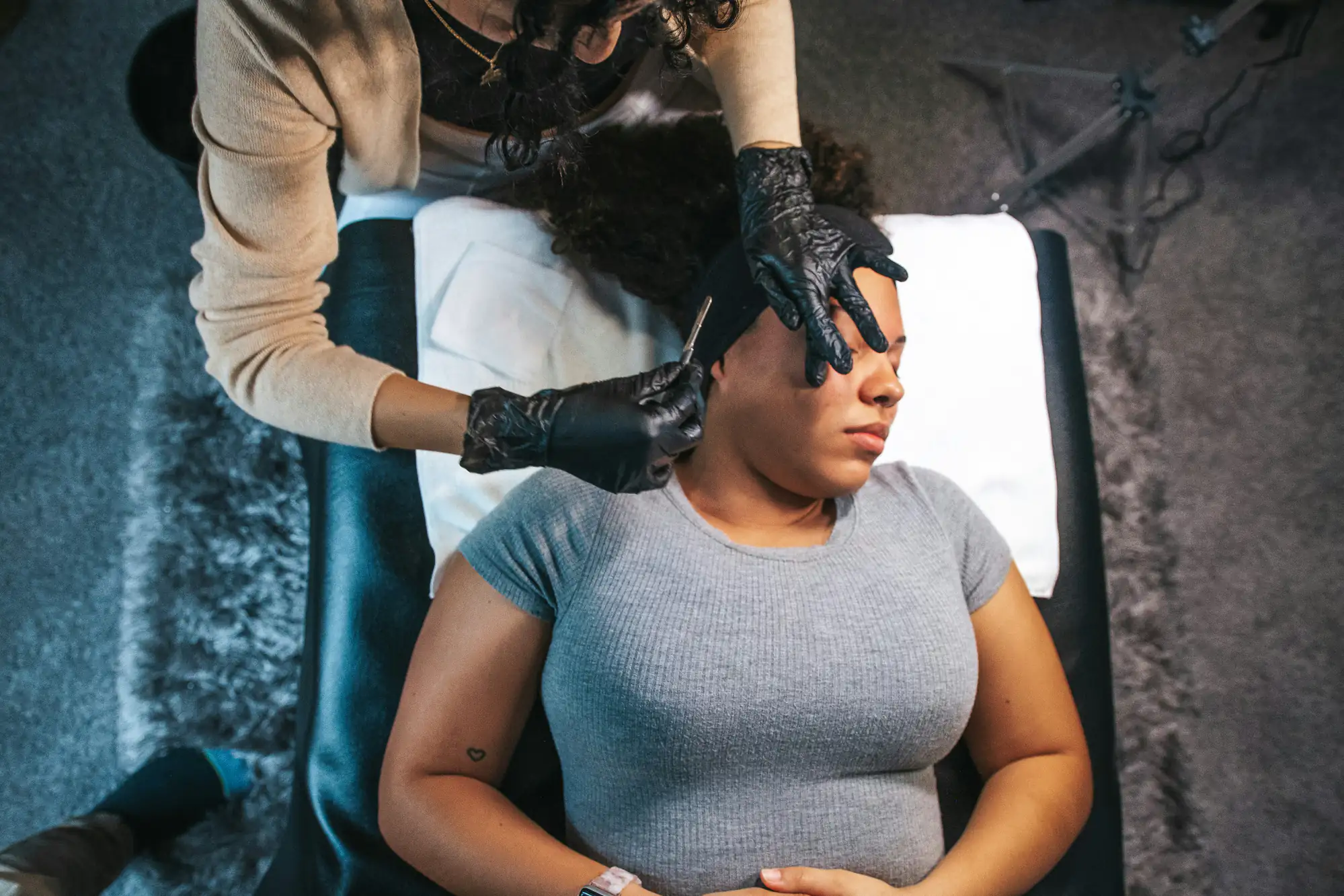
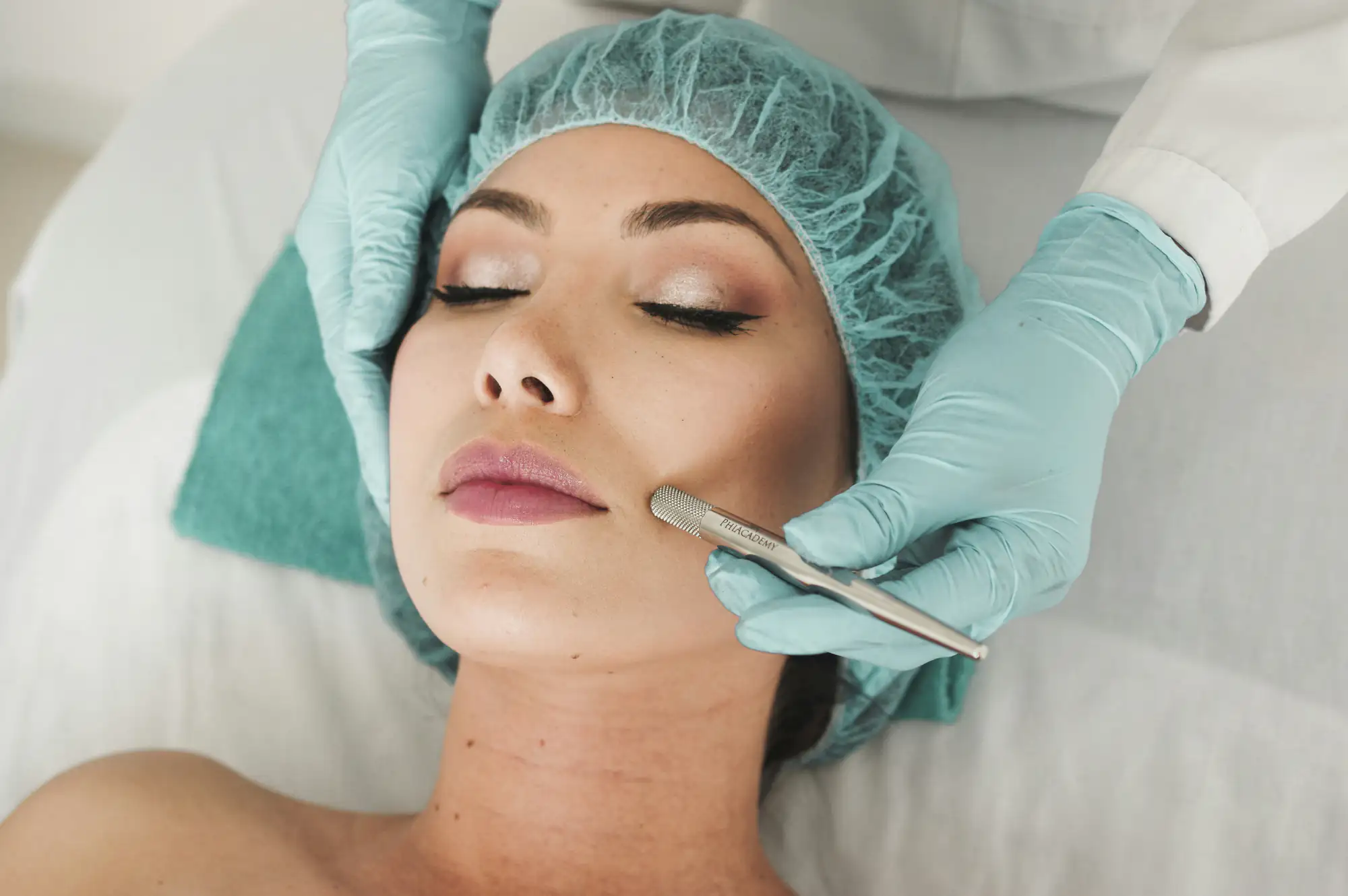
If you move forward, your face is cleansed and prepped. Then comes the actual dermaplaning—a sterile surgical blade is held at a 45-degree angle and gently moved across your skin in short strokes. It removes dead skin cells and vellus hair without cutting or irritating the skin underneath.
The whole process takes 20 to 30 minutes. There’s no numbing cream, no pain, no heat. Most people say it feels like a light scratching or tickling sensation.
After the treatment, a hydrating serum or mask is applied. Your skin might look slightly flushed for an hour, but that’s it. No peeling, no downtime, no restrictions. You can put on makeup the next day if you want, though most people don’t feel like they need to.

Ready to get started?
Every dermaplaning session at Wake Skincare includes a full cleanse, the dermaplane treatment itself, and a customized post-treatment application based on your skin type. That might be a hydrating mask, a calming serum, or a peptide treatment to boost collagen response.
You also get a free skin evaluation before your first appointment. We use that time to assess texture, tone, sensitivity, and any active concerns like acne or hyperpigmentation. If dermaplaning isn’t the best option—or if it should be combined with something else like a HydraFacial or chemical peel—we’ll say so.
Carolina Meadows is part of a growing wellness-focused community in Wake County, and the demand for non-invasive treatments here has grown steadily. People want results without surgery, without needles, and without taking time off work. Dermaplaning checks all three boxes.
It’s also one of the few professional treatments that’s safe during pregnancy and breastfeeding, which makes it a go-to option when chemical peels and retinoids are off the table. You’re getting medical-grade exfoliation from a licensed professional using sterile, single-use blades. That’s a very different experience than buying a razor off Amazon and trying it yourself.
No. This is the most common myth about dermaplaning, and it’s not true. The hair on your face is vellus hair—fine, soft, and light. It’s structurally different from terminal hair like what grows on your scalp or legs.
When you shave terminal hair, it can feel stubbly or coarse as it grows back because you’re cutting through a thicker shaft. Vellus hair doesn’t work that way. It grows back at the same texture, color, and rate it always has.
Dermaplaning removes hair at the surface level. It doesn’t affect the follicle or change how your hair grows. What you’re left with after a few weeks is the same peach fuzz you had before—just a fresh layer of it. If this weren’t true, estheticians and dermatologists wouldn’t recommend it, and people wouldn’t come back for it monthly.
At-home dermaplaning tools aren’t as sharp, and they’re not designed for the same level of exfoliation. Most of them are guarded razors that remove some surface hair and a little dead skin, but they don’t get the depth or smoothness you’d get from a professional treatment.
We use a surgical-grade scalpel—sterile, single-use, and held at a precise angle. The technique matters just as much as the tool. Too much pressure and you risk irritation. Too little and you’re not doing anything. It takes training to do it safely and effectively.
There’s also the issue of prep and aftercare. Your skin needs to be properly cleansed and prepped before dermaplaning, and the right serums need to go on afterward to maximize results and prevent sensitivity. At-home tools don’t come with that level of care, and most people don’t know what to apply or avoid after exfoliating that deeply.
It’s not painful. Most people describe it as a light scratching sensation—some even find it relaxing. There’s no heat, no needles, no numbing required. You’re awake and comfortable the entire time.
As for downtime, there isn’t any. Your skin might look slightly pink for about an hour after the treatment, similar to how it looks after washing your face with warm water. That fades quickly. You’re not dealing with peeling, scabbing, or sensitivity that keeps you indoors for days.
You can go back to your normal routine right away. The only thing we recommend is avoiding direct sun exposure and wearing SPF for the next few days, which you should be doing anyway. Some people choose to skip makeup for 24 hours just to let their skin breathe, but it’s not required. If you have an event that evening, you’re fine to go.
Most people come in every four to six weeks. That’s roughly how long it takes for your skin to complete a full cell turnover cycle, and it’s when you’ll start to notice texture or dullness creeping back in.
If you’re preparing for something specific—a wedding, a big trip, professional photos—you might book a session a week or two before. That gives your skin time to settle and look its absolute best without cutting it too close.
Some clients come in more frequently if they’re dealing with active concerns like hyperpigmentation or acne scarring, especially when dermaplaning is combined with other treatments like chemical peels or microneedling. Others come quarterly just for maintenance. It depends on your skin, your goals, and your budget. There’s no one-size-fits-all schedule, and we’ll help you figure out what makes sense based on how your skin responds.
It depends on the type of acne. If you have active cystic acne or open, inflamed breakouts, dermaplaning isn’t recommended. The blade can spread bacteria and make things worse. It’s not worth the risk.
But if you’re dealing with closed comedones, texture, or post-acne scarring, dermaplaning can actually help. It removes the layer of dead skin that clogs pores and makes it harder for your products to penetrate. Once that’s gone, your serums and treatments work better.
This is why the consultation matters. We evaluate your skin before recommending anything. If dermaplaning isn’t the right move, we’ll suggest an alternative—like a HydraFacial or a salicylic peel—that addresses acne without irritating it. The goal is results, not just booking an appointment.
Before your appointment, avoid retinoids, exfoliating acids, and any aggressive treatments for at least three to five days. Your skin needs to be calm and intact, not already irritated or over-exfoliated. If you’ve recently had a chemical peel, waxing, or laser treatment, let us know.
After dermaplaning, skip the gym for 24 hours. Sweat and bacteria can irritate freshly exfoliated skin. Also avoid saunas, hot tubs, and anything that creates heat or friction on your face.
Don’t use retinoids or exfoliating acids for at least two to three days post-treatment. Your skin is more sensitive after dermaplaning, and layering harsh actives too soon can cause redness or irritation. Stick to gentle cleansers, hydrating serums, and a good SPF. If you’re not sure what’s safe to use, ask. We give clear aftercare instructions based on your skin and what was done during your session.