
Hear from Our Customers
Your makeup goes on smoother because there’s no peach fuzz catching product or creating texture. You’re not fighting with foundation that won’t blend or powder that sits on top of fine hair.
Your skincare products actually absorb instead of sitting on the surface. That expensive serum you’ve been using? It can finally do its job when dead skin cells and facial hair aren’t blocking the way.
You see immediate results—skin that looks brighter and feels softer right after treatment. No waiting weeks to notice a difference. This matters when you’ve got an event coming up or you’re just tired of looking in the mirror and seeing dull, uneven texture staring back at you.
The treatment also triggers your skin to produce more collagen over time. So while you get instant smoothness, you’re also setting yourself up for longer-term improvements in skin firmness and tone.
We’ve been serving the Governors Club area and surrounding Wake County communities since right before COVID hit. Jacqueline Grace, a New York-trained licensed esthetician, runs our clinic and has been named Best Esthetician in Wake County three years running.
She’s also HydraFacial Master Certified and took first place internationally in the Pigmentation Artist of the Year category at The Skin Games. That’s not local recognition—that’s competing against estheticians worldwide and winning.
Every dermaplaning appointment starts with a free consultation where you talk through what’s bothering you about your skin. You’re not getting pushed into treatments you don’t need. Dr. Joseph Hummel oversees the medical side, so you’re getting both expert esthetic care and physician oversight in one place.

You come in for your free consultation first. Jacqueline examines your skin, asks about your concerns, and determines if dermaplaning is right for you. Most skin types handle it well, including sensitive skin, but this conversation matters.
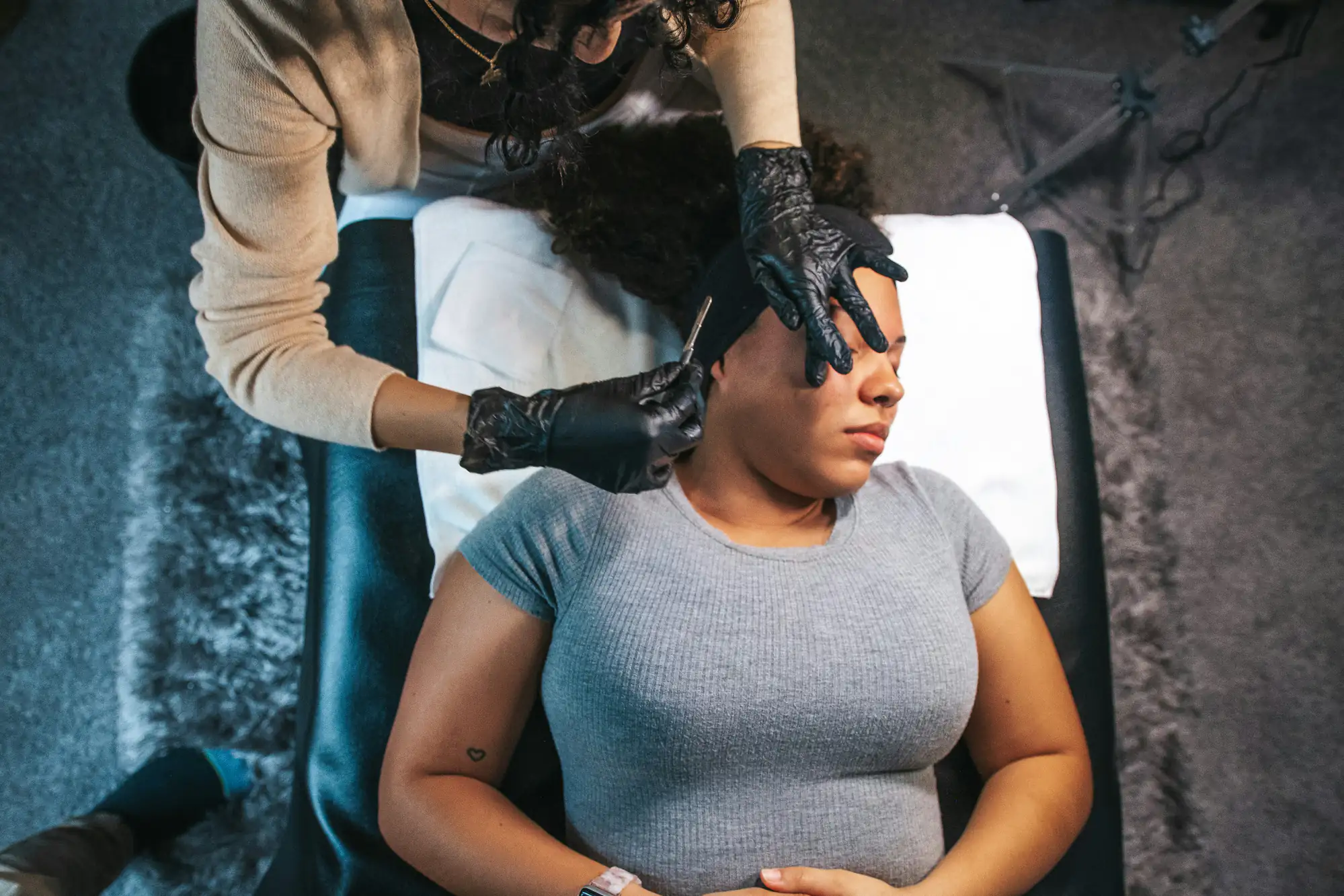
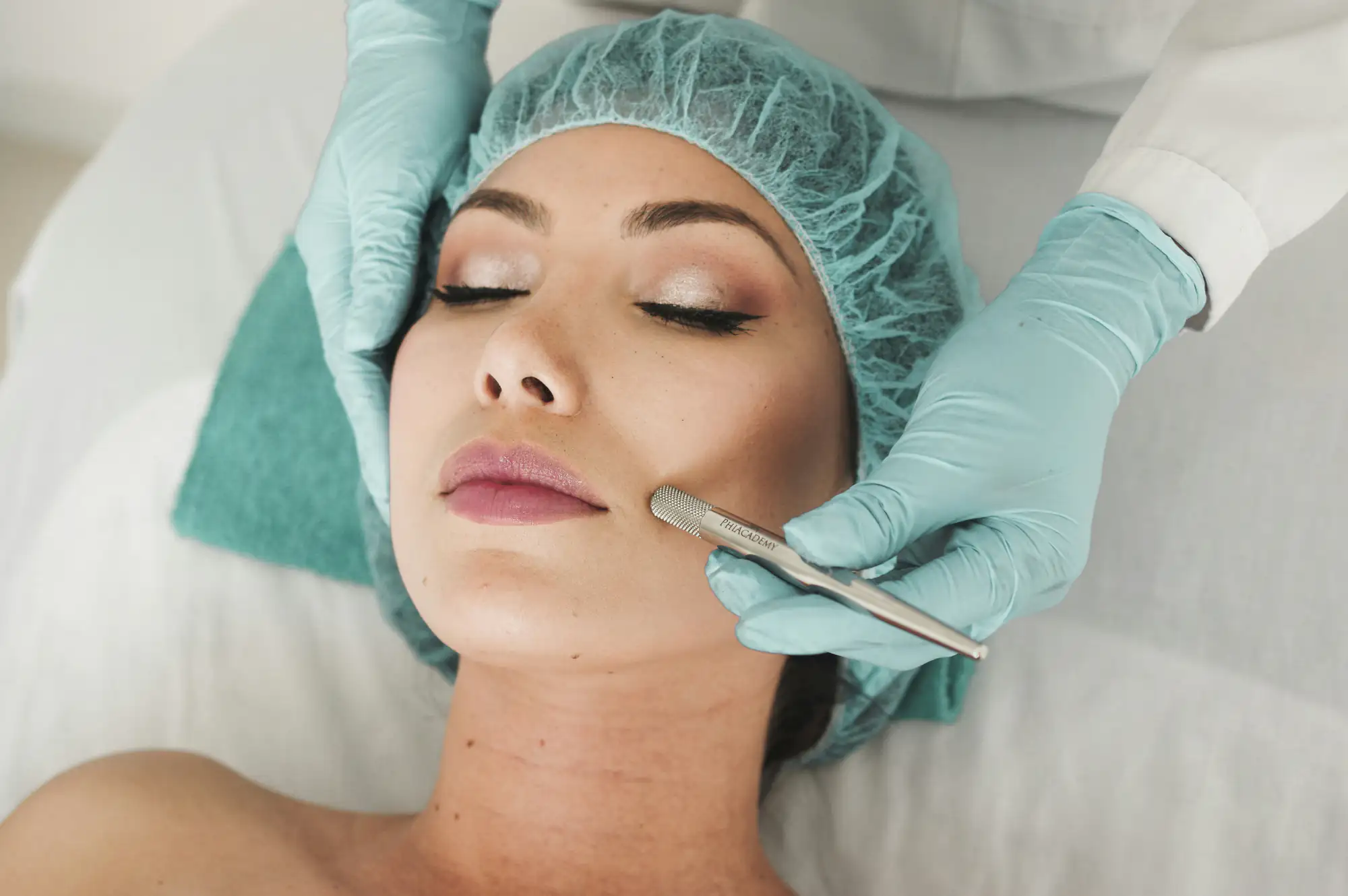
During the actual treatment, your skin gets cleansed thoroughly. Then a sterile surgical scalpel is used at a 45-degree angle to gently scrape away the top layer of dead skin cells and fine facial hair. It’s not painful—most people say it feels like a light scratching sensation.
The whole process takes about 30 to 45 minutes. There’s no numbing needed, no downtime after. You can put makeup on the same day if you want, though your skin will look good enough that you might not feel like you need to.
You’ll see results immediately. Your skin feels smoother when you touch it. It looks brighter when you look in the mirror. And over the next few days, you’ll notice your skincare products sinking in better and your makeup applying more evenly.
Most people come back every four to six weeks to maintain results. That’s how long it takes for dead skin cells to build back up and for vellus hair to grow back in.

Ready to get started?
Dermaplaning removes the entire top layer of dead skin cells that make your complexion look dull. It also removes all the vellus hair on your face—the peach fuzz that traps dirt, oil, and makeup.
This isn’t just exfoliation. It’s precise, medical-grade exfoliation performed by someone who’s been trained and certified to do it safely. You’re getting professional-grade results that at-home tools can’t replicate, no matter what the packaging promises.
The treatment works especially well for people in the Governors Club and greater Wake County area dealing with North Carolina’s humidity and seasonal changes. That combination creates buildup on your skin faster than you’d deal with in drier climates. Regular dermaplaning keeps that buildup from settling in and clogging pores.
You can combine dermaplaning with other treatments like HydraFacial or chemical peels to amplify results. A lot of clients do dermaplaning first to remove the barrier, then follow up with a HydraFacial so the serums penetrate deeper. That’s something you can discuss during your consultation based on what your skin actually needs.
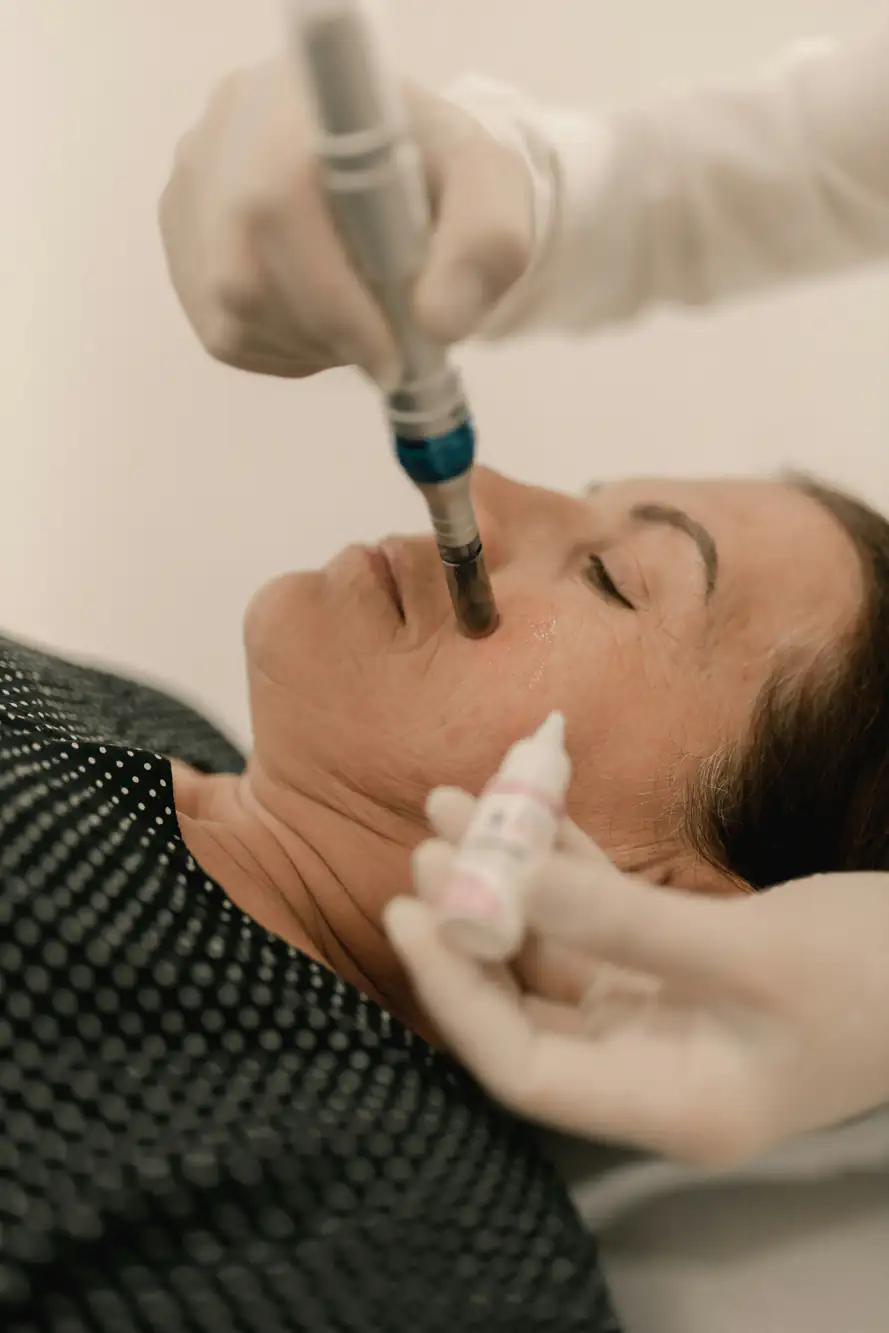
It doesn’t hurt. You’ll feel the blade moving across your skin, but it’s a light scraping sensation, not painful.
Some people worry it’ll feel like shaving, but it’s much gentler than that. The scalpel is held at a specific angle and moved in controlled strokes. You’re not going to walk out with razor burn or cuts.
After treatment, your skin might look slightly pink for an hour or two, but that fades quickly. You won’t have the redness or peeling you’d get from a chemical peel or the irritation from microdermabrasion. Most people go right back to their normal day without anyone noticing they had anything done.
No. That’s a myth that won’t die, but it’s not how hair growth works.
Dermaplaning removes vellus hair, which is fine, soft, and light-colored. When it grows back, it comes back exactly the same texture and color because you haven’t altered the hair follicle. You’re just cutting the hair at the surface level.
The reason people think shaved hair grows back thicker is because the blunt edge of a cut hair feels different than the tapered natural end. But it’s the same hair. If you stop getting dermaplaning treatments, your peach fuzz will return to exactly what it was before—nothing more, nothing less.
You’ll see immediate results that last about four to six weeks. That’s the typical skin cell turnover cycle and how long it takes for vellus hair to grow back.
Right after treatment, your skin is smoother and brighter. Over the next few weeks, you’ll notice your skincare products absorbing better and your makeup going on more evenly. Those benefits stick around until dead skin cells start building up again.
Most clients book appointments every four to six weeks to maintain results. Some come in more frequently before big events—weddings, photoshoots, important work presentations. Others stretch it to every two months during slower seasons. It depends on how quickly your skin turns over and how much maintenance you want to keep up with.
It depends on what type of acne you’re dealing with. If you have active cystic acne or open, inflamed breakouts, dermaplaning isn’t a good idea right now.
Scraping a blade over active pimples can spread bacteria and make things worse. You’d be better off treating the breakouts first, then coming in for dermaplaning once your skin has calmed down.
But if you have acne scarring, uneven texture from old breakouts, or occasional small blemishes, dermaplaning can actually help. It removes the dead skin cells that clog pores and trap oil. A lot of people with acne-prone skin find that regular dermaplaning keeps their pores clearer and helps their acne treatments penetrate better. That’s something Jacqueline will assess during your free consultation—she’ll look at your skin and tell you straight up whether dermaplaning makes sense for you right now or if you should wait.
At-home dermaplaning tools are designed for safety, which means they don’t get as close to the skin or remove as much buildup. You’re getting surface-level results at best.
Professional dermaplaning uses a sterile surgical scalpel held at a precise 45-degree angle. The technique matters—too shallow and you’re not removing enough, too deep and you risk irritation. Jacqueline has been trained specifically on how to move the blade, how much pressure to apply, and how to work around delicate areas like your nose and eyes.
You also can’t see the back of your own face or work at the right angle on yourself. And if something goes wrong at home—a nick, irritation, or uneven removal—you’re on your own to fix it. At our clinic, you’re getting medical-grade treatment with physician oversight, which matters when someone’s taking a blade to your face.
Dermaplaning is generally safe for sensitive skin because it’s a physical exfoliation method that doesn’t use chemicals or heat. A lot of people with sensitive skin can’t tolerate chemical peels or laser treatments, but they handle dermaplaning just fine.
If you have rosacea, it depends on how active it is. Mild rosacea usually isn’t a problem, but if you’re in the middle of a flare-up with visible redness and irritation, it’s better to wait until things calm down.
During your free consultation, Jacqueline will look at your skin and ask about your history with other treatments. If you’ve had reactions to facials or peels before, that’s important information. She’ll be honest about whether dermaplaning is a good fit for your skin right now or if you’d be better off with a different treatment. You’re not getting pushed into something that’s going to make your skin worse.