
Hear from Our Customers
Your foundation stops settling into fine lines. That’s the first thing most people notice after dermaplaning. The peach fuzz that used to catch your makeup is gone, and you’re left with a smooth surface that lets products glide on instead of clump up.
Dead skin cells pile up faster than you think. They make your complexion look dull, and they block your serums from reaching the layers where they actually work. Dermaplaning removes that barrier in about 30 minutes.
You’ll see the difference immediately. Brighter tone. Smoother texture. And when you apply skincare that night, it sinks in instead of sitting on top. That’s not marketing talk—it’s basic biology. Remove the dead layer, and active ingredients penetrate better.
There’s no peeling, no redness, no hiding at home for a week. You can get this done on a lunch break and go straight back to work. Most people in Kenly book it before events because the results show up right away and last about three to four weeks.
We’re based in Wake Forest, about 25 minutes from Kenly. We’ve been named Best Esthetician in Wake County three years running, and we’ve placed first internationally in pigmentation treatment competitions. That’s not luck—it’s training, repetition, and a refusal to cut corners.
Jacqueline Grace founded our clinic after training in New York and specializing in medical-grade aesthetics. She’s one of the first hundred practitioners worldwide to earn HydraFacial Master Certification. That means advanced technique, not just basic certification.
We serve clients across Johnston and Wake Counties, including Kenly, Smithfield, Selma, and Zebulon. Every appointment starts with a free consultation where we assess your skin, answer your questions, and build a plan that makes sense for your goals and your budget.

You’ll start with a consultation. We look at your skin, talk about what you’re trying to fix, and make sure dermaplaning is the right move. If you have active acne or certain skin conditions, we’ll recommend something else. Transparency matters more than booking every appointment.
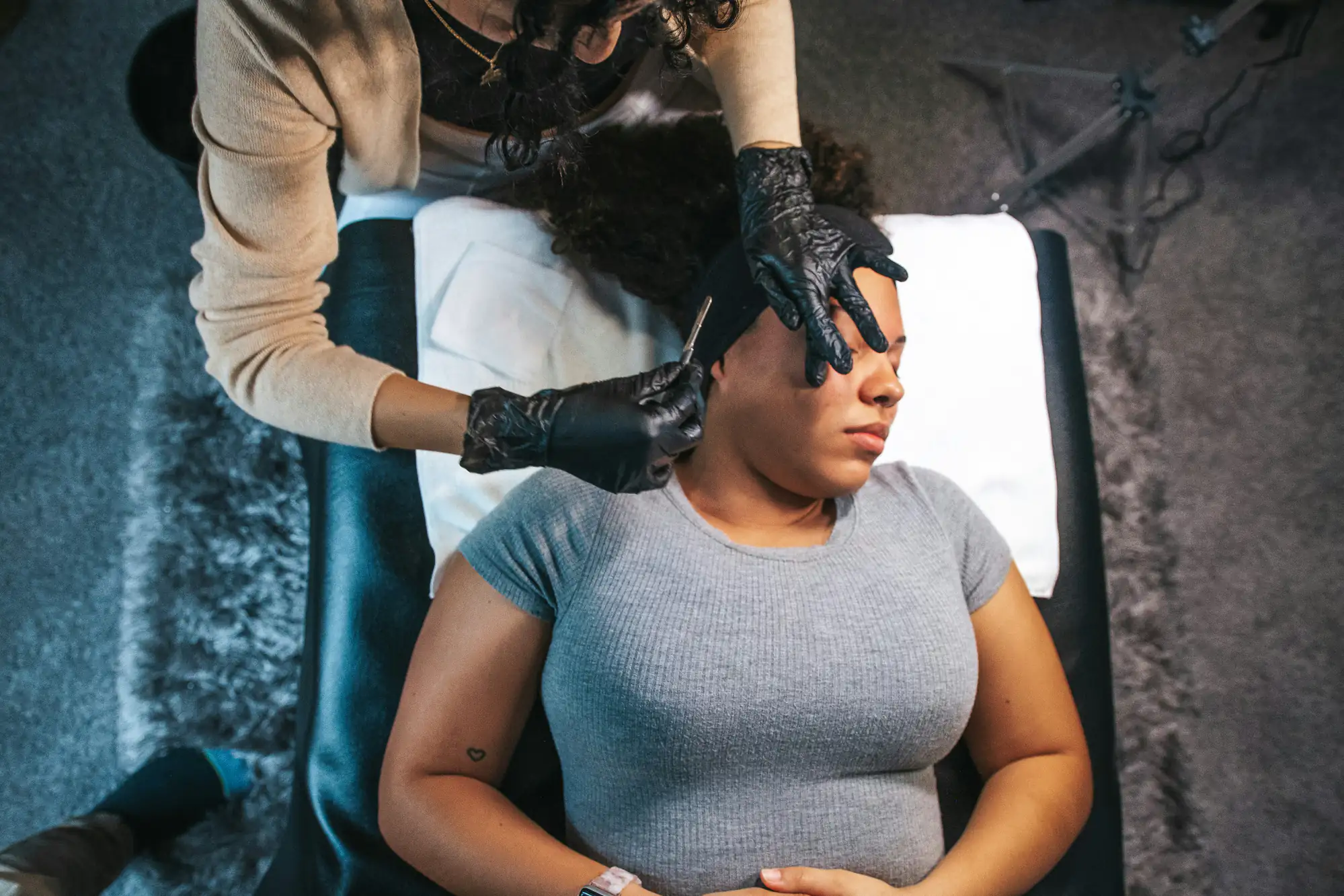
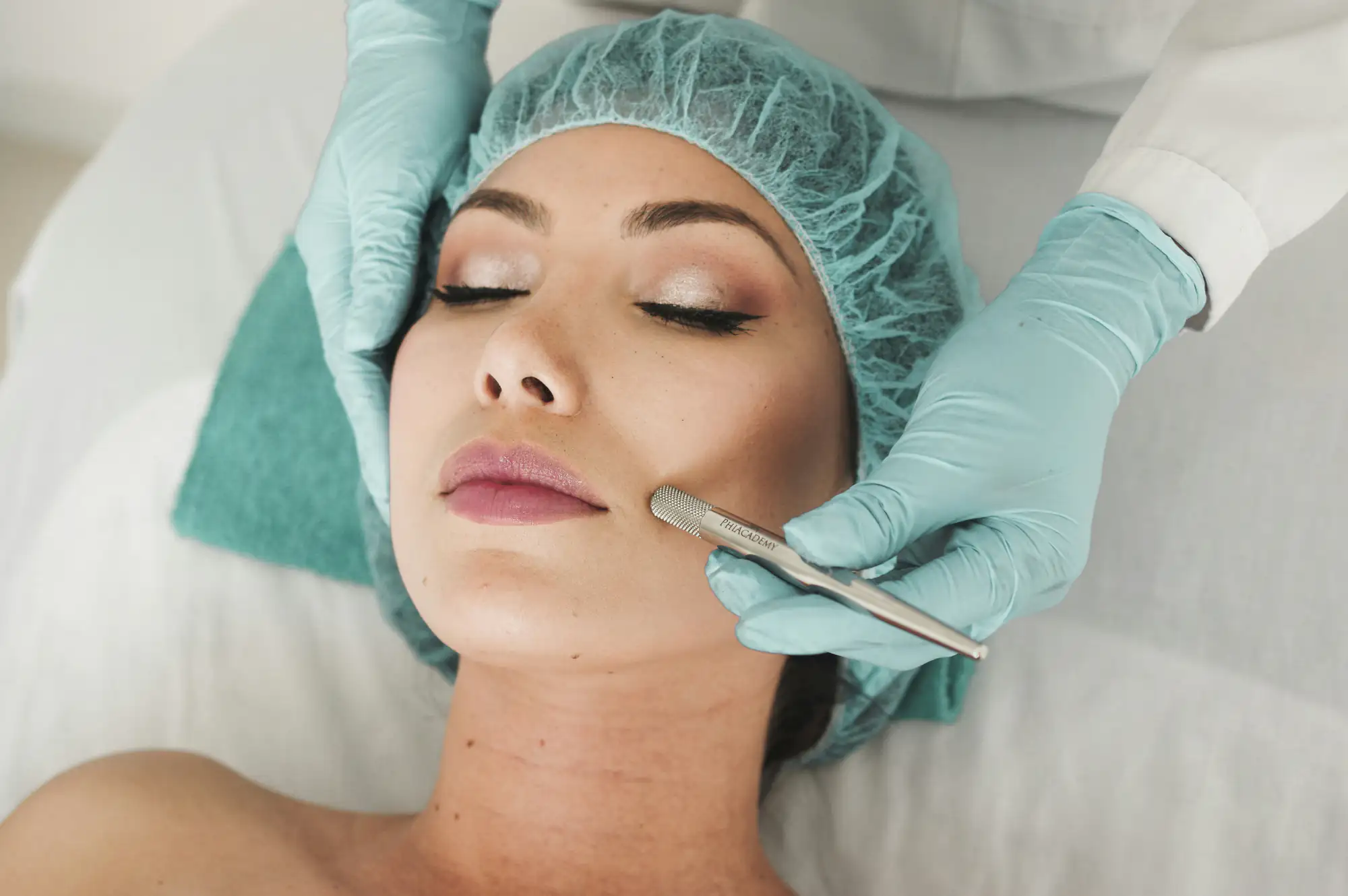
The treatment itself is straightforward. We cleanse your skin, then use a sterile surgical blade at a 45-degree angle to gently scrape away dead skin cells and vellus hair—that’s the peach fuzz. It’s not painful. Most people say it feels like a light scratching sensation.
The whole process takes about 30 minutes. Afterward, we apply a hydrating serum or mask because your skin is primed to absorb it. There’s no downtime. You might look a little pink for an hour, but that fades fast. You can wear makeup the next day, though most people wait just because their skin looks good enough without it.
Results last three to four weeks. After that, the dead skin builds back up and the fine hair grows back at the same texture it was before. That myth about hair growing back thicker? Completely false. Vellus hair doesn’t change texture when you remove it.

Ready to get started?
Dermaplaning works well on its own, but it’s even better as prep for other treatments. A lot of our clients in the Kenly area combine it with a HydraFacial because the exfoliation lets the HydraFacial serums penetrate deeper. You’re essentially clearing the path for the active ingredients to do their job.
We also pair it with chemical peels for clients dealing with hyperpigmentation or sun damage. The blade removes the surface layer, and the peel targets deeper discoloration. It’s a one-two punch that gets results faster than either treatment alone.
If you’re dealing with dull skin, uneven texture, or fine lines, dermaplaning addresses all three. It’s safe for most skin types, including sensitive skin, as long as it’s done by someone who knows what they’re doing. That’s why training and certification matter. A bad technique can irritate your skin or cause micro-cuts. A good one leaves you glowing.
Kenly sits in an area where sun exposure and humidity can accelerate skin aging. Dermaplaning helps reverse some of that damage by removing the dulling layer and stimulating cell turnover. It’s a simple treatment with a solid track record, and it doesn’t require you to take time off or hide your face while you heal.
No. This is the most common myth about dermaplaning, and it’s completely false. The hair on your face is vellus hair—fine, soft, and light in color. It’s structurally different from terminal hair, which is the thicker, darker hair that grows on your scalp or legs.
When you shave terminal hair, it can feel stubbly as it grows back because you’re cutting it at the thickest part of the shaft. Vellus hair doesn’t work that way. It grows back at the same fine texture because the follicle itself doesn’t change. Dermaplaning doesn’t alter your hair’s thickness, color, or growth rate.
This myth probably persists because people aren’t used to seeing their facial hair grow back after removal. It feels different when you touch it during the regrowth phase, but that’s just because you’re noticing it. The hair itself hasn’t changed. If dermaplaning caused thicker hair growth, dermatologists wouldn’t recommend it, and aestheticians wouldn’t perform it on themselves—which most of us do regularly.
Most people book dermaplaning every three to four weeks. That’s how long it takes for dead skin cells to build back up and for the vellus hair to regrow to a noticeable length. Your skin has a natural exfoliation cycle, and dermaplaning works with that rhythm.
If you’re using it to prep for an event—wedding, photoshoot, big presentation—book it about a week before. That gives any minor pinkness time to fade completely, and your skin will still look fresh and smooth on the day that matters.
Some clients come in monthly as part of their regular skincare routine. Others do it a few times a year before major events. There’s no right or wrong frequency as long as you’re not overdoing it. Dermaplaning too often can irritate your skin and disrupt its natural barrier. Spacing it out properly gives your skin time to regenerate and keeps the treatment effective. We’ll help you figure out a schedule that makes sense based on your skin type and goals.
Yes, when it’s done correctly by a trained professional. Dermaplaning is actually one of the gentler exfoliation methods because it’s purely physical—no chemicals, no heat, no suction. That makes it a good option for people who react badly to acids or retinoids.
That said, if you have active acne, rosacea flare-ups, or open wounds, we’ll hold off. Dermaplaning over inflamed skin can spread bacteria and make things worse. It’s not about turning down business—it’s about not damaging your skin for a quick booking.
Sensitive skin doesn’t automatically disqualify you. It just means we take extra care during the consultation to assess your skin’s current state and make sure dermaplaning won’t trigger irritation. Most people with sensitive skin tolerate it well and actually prefer it to harsher exfoliation methods. The key is working with someone who knows how to read your skin and adjust technique accordingly. That’s where experience and certification make a real difference.
You can, but most people don’t want to. Your skin looks good enough on its own right after treatment. That said, if you need to wear makeup the same day, wait at least a few hours to let any minor pinkness settle.
The next day, makeup application is noticeably better. Foundation goes on smoother because there’s no peach fuzz or dead skin to catch it. It blends easier and looks more natural. A lot of clients say their makeup routine gets faster because products don’t require as much blending or layering to look even.
One thing to keep in mind: your skin is more receptive to everything after dermaplaning, including makeup. If you’re using products with potential irritants—heavy fragrances, certain preservatives—your skin might react more than usual. Stick with clean, non-comedogenic products for the first day or two. After that, you’re good to go back to your normal routine. The goal is to let your skin enjoy the benefits of exfoliation without overwhelming it right away.
Technique, tools, and training. At-home dermaplaning tools are designed to be safer for untrained hands, which means they’re less effective. The blades are duller, the angle is fixed, and the results are surface-level at best. You might remove some peach fuzz, but you’re not getting the deep exfoliation that comes with a professional treatment.
Professional dermaplaning uses a sterile surgical scalpel held at a precise 45-degree angle. That angle matters. Too steep and you risk cutting the skin. Too shallow and you’re just skimming the surface. It takes training to maintain consistent pressure and angle across the contours of your face.
There’s also the issue of safety. If you’re doing it yourself at home, you’re working without proper lighting, without a steady hand, and without the ability to see all angles of your face clearly. That increases the risk of nicks, irritation, or uneven exfoliation. Professional dermaplaning is performed in a controlled environment with proper sanitation and aftercare. The difference in results is obvious, and the difference in safety is significant. If you’re going to invest time and money into your skin, do it right.
It helps, but it’s not a standalone solution for deeper scarring or pigmentation. Dermaplaning removes the outermost layer of dead skin, which can make surface-level discoloration look lighter and texture look smoother. It also preps your skin to absorb treatments that target deeper issues—like chemical peels, microneedling, or brightening serums.
If you’re dealing with post-inflammatory hyperpigmentation from old breakouts, dermaplaning can speed up the fading process by removing the dulling layer and encouraging cell turnover. But if you have deeper atrophic scars—the kind that create texture changes or indentations—you’ll need a more aggressive treatment like microneedling or laser resurfacing.
We’re honest about what dermaplaning can and can’t do. It’s an excellent exfoliation treatment that improves tone and texture, and it makes other treatments more effective. But it’s not a miracle cure for deep scarring. During your consultation, we’ll assess your skin and recommend a treatment plan that actually addresses your specific concerns. Sometimes that’s dermaplaning alone. Often, it’s dermaplaning combined with something else. The goal is results, not upselling you on treatments you don’t need.