Summary:
You’ve probably noticed your skin looking a little flat lately — not broken out, not irritated, just dull. Your serums aren’t doing much. Your foundation sits unevenly. And no matter how consistent you are with your routine, something feels off.
A lot of the time, the problem isn’t your products. It’s what’s sitting on top of your skin — a layer of dead cells and fine facial hair that’s quietly blocking everything you’re putting on it.
Dermaplaning removes that layer. And when it’s done right, the difference is immediate. Here’s exactly how it works, what the process looks like, and what you should know before booking your first session.
What a Dermaplane Facial Actually Does to Your Skin
Dermaplaning uses a sterile, medical-grade surgical scalpel — held at a precise 45-degree angle — to gently remove the outermost layer of dead skin cells along with the fine vellus hair, or peach fuzz, that covers most of your face. The result is smoother texture, a more even tone, and skin that actually absorbs what you put on it.
It sounds more intense than it is. Most clients describe the sensation as light and feathery — no numbing cream, no discomfort, no recovery time. You can apply makeup the same day, which makes it a practical option for people with full schedules who still want real results.
The exfoliation is the main event here, not the hair removal. Clearing that surface layer is what allows your skincare products to penetrate more deeply and work the way they’re designed to.
Step-by-Step: What Happens During a Professional Dermaplaning Session
The session starts with a skin consultation — not a quick glance, but an actual assessment of your skin type, any active conditions, and what you’re trying to address. We begin that conversation before any treatment touches your skin, because the approach genuinely changes based on what your skin needs that day.
After cleansing and ensuring the skin is completely dry — dermaplaning can’t be performed on wet skin — the treatment itself begins. Using short, controlled strokes across the face, our provider works methodically to lift dead skin cells and peach fuzz from the surface. The scalpel is single-use and sterile, which matters more than most people realize when something is touching every inch of your face.
Once the treatment is done, hydrating serums and antioxidants are applied to the freshly exfoliated skin. Because the barrier layer has been removed, those products absorb significantly more effectively than they would otherwise. The session closes with SPF application — non-negotiable, because post-treatment skin is more photosensitive and needs protection.
The whole process typically takes under an hour, and you walk out with skin that looks noticeably different. Not red, not raw — just smooth, bright, and clean in a way that’s hard to achieve with products alone.
Results tend to last around three weeks before the skin’s natural cell turnover cycle brings new dead cells to the surface. For most clients, monthly maintenance keeps the results consistent and cumulative — skin that looks better at month six than it did at month one.
Does Dermaplaning Make Hair Grow Back Thicker?
This is the question that stops more people from trying dermaplaning than anything else. And the short answer is no — it doesn’t, and it can’t.
Hair growth is controlled by the follicle, which sits deep below the skin’s surface. Dermaplaning only removes hair at the surface level and has no contact with the follicle whatsoever. A 2007 analysis published in PubMed Central confirmed that shaving does not affect hair thickness or rate of regrowth — the follicle is simply not involved. What grows back is the same hair, at the same rate, with the same texture and color it had before.
The reason this myth persists is partly visual. When hair grows back after surface removal, it grows in with a blunt tip rather than the natural tapered tip it had before. That can make it feel slightly different to the touch in the first week or two. But it’s the same hair. It will taper again as it grows, and over time, most clients stop noticing any difference at all.
It’s also worth noting that vellus hair — the fine, soft peach fuzz on most faces — is not the same as terminal hair, which is the coarser hair found on eyebrows, the upper lip, or the chin. Dermaplaning targets vellus hair, which is already fine and light. There’s no mechanism by which surface removal would cause it to become darker or coarser.
If this concern has been holding you back, it’s a safe one to let go of. The science is clear, and the experience of clients throughout Wake County who’ve been doing monthly dermaplaning for years backs it up.
Professional Dermaplaning vs. At-Home Dermaroller: What's the Actual Difference?
At-home skincare tools have gotten a lot better. But there’s a meaningful gap between what a consumer-grade device can do and what a trained professional can do with medical-grade equipment — and in some cases, that gap includes real safety risk.
Dermaplaning and dermarolling are often lumped together in the same conversation, but they’re different treatments with different mechanisms, different risks, and very different outcomes depending on who’s doing them and how.
Understanding that difference isn’t just useful for making a booking decision — it’s useful for protecting your skin from damage that can take months to reverse.
Dermaroller at Home: What It Can and Can't Do
A dermaroller is a handheld device covered in tiny needles that you roll across your skin to create micro-injuries, which theoretically stimulate collagen production. The concept is sound — it’s the same principle behind professional microneedling. The execution at home is where things get complicated.
Consumer dermarollers use a rolling motion, which means the needles enter and exit the skin at an angle rather than straight down. That creates micro-tears rather than clean, precise punctures. The difference matters because uneven trauma to the skin triggers a less controlled healing response — and in some cases, that response includes hyperpigmentation, uneven texture, or scarring rather than the smooth, plump skin you were hoping for.
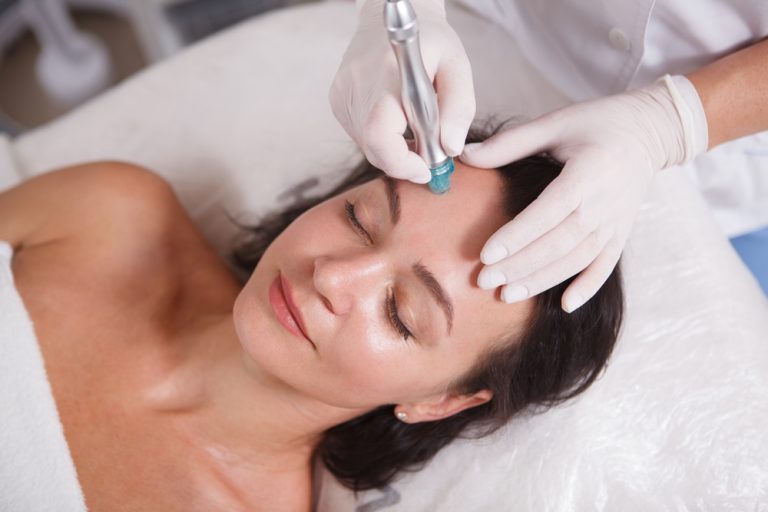
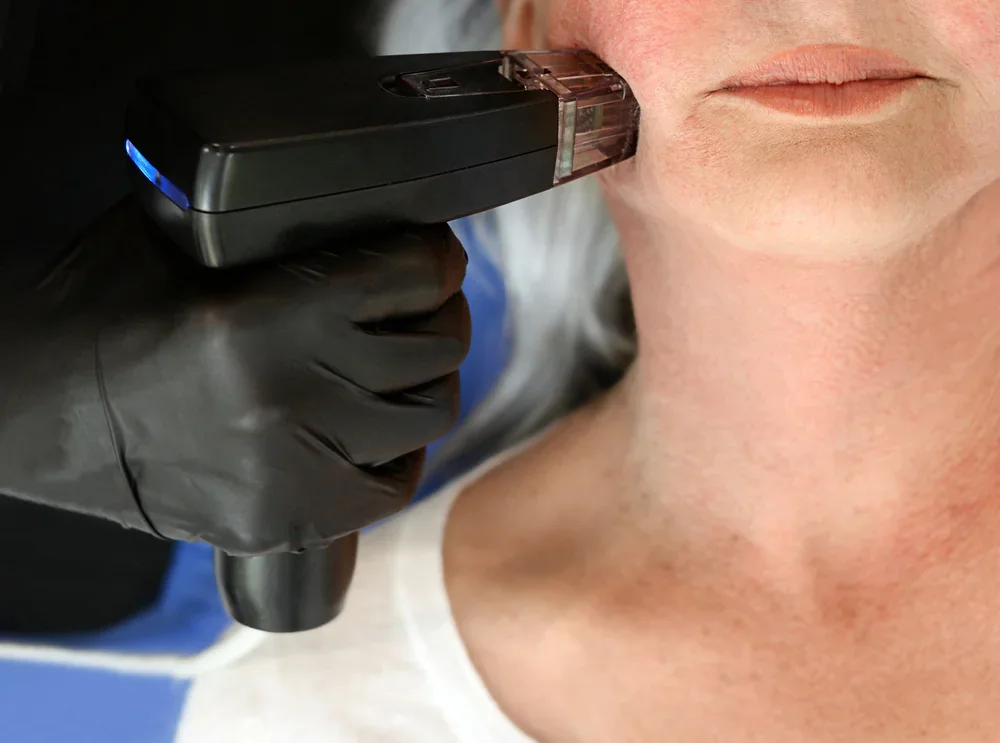
Depth calibration is another issue. Professional microneedling devices like the SkinPen — which we use at our Wake County practice — are FDA-cleared and allow for precise needle depth adjustment based on the treatment area and the client’s skin type. At-home rollers don’t offer that level of control, which means they’re often either too shallow to do much of anything or, in the wrong hands, deep enough to cause damage.
Sterility is the third factor. A single-use, sterile needle cartridge in a clinical setting is not the same as a roller that’s been used multiple times and stored in a bathroom. Bacteria introduced into micro-injuries can cause breakouts, infections, or worse — particularly for anyone with active acne or compromised skin.
None of this means at-home tools are useless across the board. But the risk-to-reward calculation changes significantly when the person using the tool hasn’t been trained to assess skin type, identify contraindications, or adjust technique based on what they’re seeing in real time.
Derma Roller Side Effects Worth Knowing Before You Try It
Most people who use a dermaroller at home don’t experience serious problems. But the ones who do often don’t connect the damage to the tool — because the side effects can show up days or weeks after use, by which point the link isn’t obvious.
Post-inflammatory hyperpigmentation, or PIH, is one of the more common complications. When the skin experiences trauma — even minor, controlled trauma — it can respond by producing excess melanin in the affected area. For people with medium to deeper skin tones, this risk is higher. The result is dark spots or patches that can take months to fade and, in some cases, require professional treatment to resolve.
Hypertrophic scarring is less common but more serious. This happens when the skin’s healing response goes into overdrive and produces excess collagen, creating raised scar tissue. It’s more likely when the device is used too aggressively, too frequently, or on skin that wasn’t appropriate for the treatment in the first place.
There’s also the issue of granulomatous reactions — a rare but documented complication that occurs when certain skincare products (particularly those containing Vitamin C, retinoids, or other actives) are applied immediately after rolling, allowing them to penetrate far deeper than intended. The skin’s immune response to those foreign substances can cause chronic inflammation that requires medical attention.
We see clients in Wake County who’ve come in after frustrating experiences with at-home devices — redness that won’t resolve, new dark spots, or texture changes they weren’t expecting. The fix is usually possible, but it takes time and the right professional approach. The easier path is a consultation before you start, not after something goes wrong.
Skin needling done professionally — with an FDA-cleared device, proper depth calibration, and a trained provider assessing your skin in real time — carries a fundamentally different risk profile than the at-home version. That’s just the practical difference between a controlled clinical environment and a bathroom counter.
Ready for a Dermaplane Facial in Wake County, NC?
Dermaplaning is one of the more straightforward treatments available — no needles, no downtime, results you can see the same day. But like most things in skincare, the outcome depends heavily on who’s doing it and how well they understand your skin.
If you’ve been dealing with dullness, uneven texture, or makeup that just won’t sit right, it’s worth having a real conversation about whether dermaplaning is the right starting point — or whether it’s best combined with something else based on what your skin actually needs.
We offer free consultations for exactly that reason. Jacqueline Grace has been named Best Esthetician in Wake County three years running, and our team serves clients across Wake Forest, Raleigh, Durham, Chapel Hill, and more than 22 cities throughout Wake County. Reach out to Wake Skincare to book your consultation and get a clear picture of what your skin needs next.