Summary:
You’ve probably tried the serums. Maybe a peel or two. And the dark spots are still there — maybe a little lighter, but not gone. That’s a frustrating place to be, especially when you’ve put real time and money into fixing something that keeps coming back.
IPL is one of the more effective tools available for pigmentation, but it’s also one of the most misunderstood. People go in with the wrong expectations, get surprised by what happens to their skin in the days after treatment, and walk away thinking it didn’t work — when it actually did. This post is here to change that. Here’s what IPL treatment for pigmentation actually involves, who it works for, and what honest results look like.
How IPL for Hyperpigmentation Actually Works
IPL stands for Intense Pulsed Light. Unlike a laser, which uses a single focused wavelength, IPL emits broad-spectrum light across multiple wavelengths at once. That distinction matters — it means one treatment pass can target both brown pigmentation and redness at the same time, rather than requiring separate sessions for separate concerns.
When the light hits your skin, it’s absorbed by the melanin sitting in the pigmented areas. That absorbed light converts to heat, which breaks down the melanin particles. Your body then does the work of clearing them out naturally. The result, over a series of sessions, is a more even skin tone and a visible reduction in spots, sun damage, and discoloration.
What Happens to Your Skin After IPL Treatment
Here’s the part almost no one tells you before you book — and it’s the reason some people think IPL made their skin worse when it actually didn’t.
In the 24 to 48 hours following treatment, your treated spots will likely get darker. Not dramatically, but noticeably. This is not a bad sign. It’s the opposite. The melanin particles are fragmenting and rising toward the surface of the skin before your body clears them. Over the following one to two weeks, those darkened spots will flake off or fade as the pigment is eliminated. What’s left underneath is clearer, more even skin.
This process is normal, expected, and a sign the treatment is working exactly as it should. The reason it matters so much is that patients who aren’t prepared for it often panic, stop their treatment series early, or assume something went wrong. They don’t see the result because they didn’t stay the course.
Most patients need between three and six sessions, spaced four to six weeks apart, to achieve optimal results. That spacing isn’t arbitrary — it gives your skin time to clear the treated pigment and allows your provider to assess progress before calibrating the next session. Many people notice visible improvement after their first treatment, but significant, lasting change typically requires completing the series.
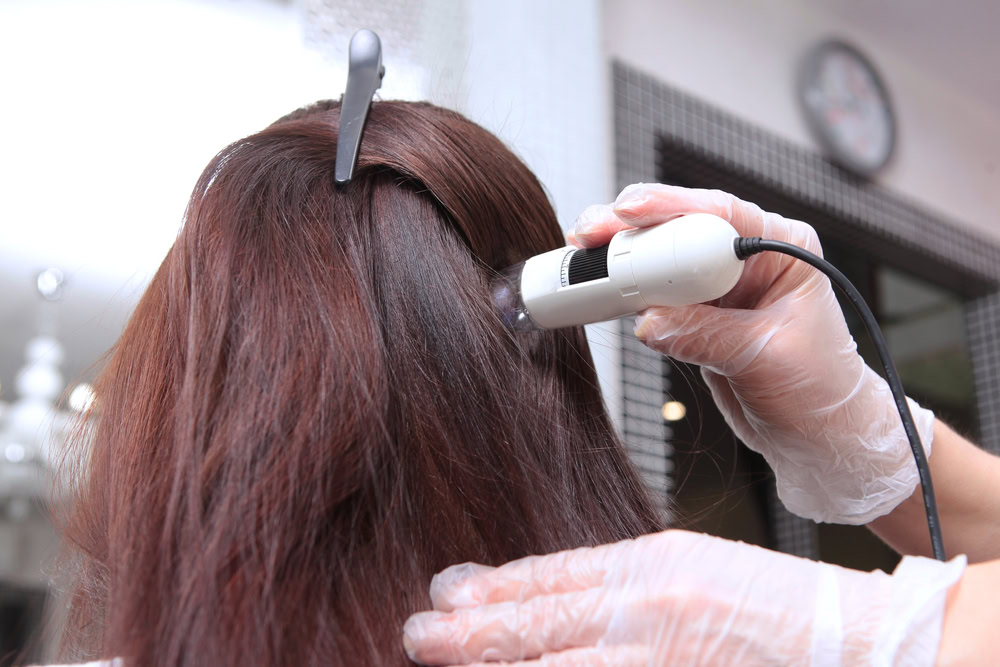
A typical session runs about 20 to 30 minutes depending on the areas being treated. The sensation is often described as a mild rubber-band snap against the skin. It’s not painless, but most people find it very manageable — especially with a device like Lumecca by InMode, which uses a sapphire contact cooling tip to protect the skin’s surface and reduce discomfort compared to older IPL platforms.
Sun avoidance is essential both before and after treatment. If you’re heading into a session with a fresh tan or planning a beach weekend right after, your provider will likely ask you to reschedule. Broad-spectrum SPF is non-negotiable during and after your treatment series, and it’s the single biggest factor in how long your results last.
Does IPL Work on Darker Skin Tones?
This is one of the most common questions we hear — and one of the most important to answer honestly.
The short version: IPL is generally considered safe and effective for Fitzpatrick skin types I through IV, which covers a wide range of skin tones from very fair to light brown. For Fitzpatrick types V and VI — medium brown to deep brown and black skin — IPL requires careful clinical evaluation and precise settings calibration. The concern is that higher concentrations of melanin in the skin itself can absorb the light energy, potentially causing post-inflammatory hyperpigmentation or, in poorly managed cases, burns. That’s a real risk, and any provider who waves it off isn’t being straight with you.
What it doesn’t mean is that IPL is categorically off the table for darker skin tones. It means the provider needs to know what they’re doing. Device settings need to be calibrated specifically for the individual’s skin. The consultation needs to include a real Fitzpatrick assessment, not just a visual glance. And the person performing the treatment needs specific experience with hyperpigmentation across diverse skin tones — not just general aesthetics training.
This is an area where we have a specific, verifiable track record. Our founder Jacqueline Grace placed First Place in Pigmentation Artist of the Year at The Skin Games — an international aesthetics competition that evaluates practitioners on real client results. She also placed Second Place in the same category in a separate year. These aren’t self-awarded designations. They’re the result of demonstrated outcomes across a range of skin concerns and skin types, judged by industry professionals at a global level. That credential is directly relevant when you’re deciding who should be treating your pigmentation.
Wake County’s population is diverse, and the demand for providers who can safely and skillfully treat hyperpigmentation across a range of skin tones is real. If you’ve been told IPL isn’t for you without a real consultation, it’s worth getting a second opinion from someone who actually specializes in this.
Hyperpigmentation Laser Treatment Cost in Wake County
Cost is one of the first questions people ask, and it’s a fair one. IPL isn’t cheap, and understanding what you’re actually paying for — and why prices vary — helps you make a smarter decision.
The factors that drive cost are the device being used, the provider’s training and credentials, the size of the treatment area, and the number of sessions in your series. A single session on the face is a different investment than a full face, neck, and chest series. Because the right number of sessions depends on your specific skin, personalized pricing makes more sense than a published rate card — and it’s why we offer a free consultation rather than asking you to guess.
What Does IPL Treatment for Pigmentation Actually Cost?
Pricing across the Triangle market reflects the range of providers and devices available. Single-session IPL treatments can vary meaningfully depending on the treatment area and provider. A series of three sessions typically represents a larger but more effective investment than a single standalone treatment — because that’s what actually produces lasting results.
We don’t publish a rate card because your skin isn’t a rate card situation. The number of sessions you need, the areas you want treated, and the settings appropriate for your skin type all factor into what your treatment plan looks like. That’s exactly what the free consultation is for — not a sales pitch, but a real assessment of your skin, your concerns, and what a realistic plan would involve.
What we can tell you is that the device matters. We use Lumecca by InMode, which is one of the most powerful IPL platforms commercially available. It delivers higher energy density than older IPL machines, which translates to more decisive results in fewer sessions. Using a premium, medical-grade device isn’t a marketing point — it’s a clinical one. Fewer sessions to achieve the same outcome is a real cost consideration when you’re comparing providers.
Our consultations are free. If you’re going to invest in a treatment series, you should at least be able to get an honest assessment of whether you’re a good candidate before spending anything.
The other cost factor that doesn’t show up on a price list is the cost of doing this wrong. Post-inflammatory hyperpigmentation from a poorly calibrated IPL session — especially on medium to deeper skin tones — can be more difficult to treat than the original concern. The provider’s credentials and clinical experience are part of what you’re paying for, and they’re not a line item you want to cut corners on.
Laser Therapy for Hyperpigmentation: Is IPL the Right Treatment, or Do You Need a Laser?
This is a question worth spending a minute on, because the terms get used interchangeably in a way that creates real confusion.
IPL is not a laser. A laser uses a single, focused wavelength of light to target a very specific depth or concern in the skin. IPL uses a broad spectrum of wavelengths, which means it can address multiple concerns — brown pigmentation and vascular redness, for example — in a single session. That versatility is one of IPL’s strengths, particularly for patients dealing with sun damage, age spots, rosacea, and uneven skin tone all at once.
Lasers, by contrast, can go deeper and more precisely than IPL, which makes them better suited for certain concerns — deeper pigmentation, more significant textural issues, or cases where a single targeted wavelength is clinically preferable. Neither is universally better. They’re different tools for different situations.
For most cases of surface-level hyperpigmentation — sun spots, solar lentigines, post-summer skin damage, mild post-inflammatory pigmentation — IPL is an excellent first-line treatment. It’s effective, the downtime is minimal, and the broad-spectrum action means you’re often addressing more than just the pigmentation you came in for.
Wake County’s climate is worth factoring in here. Summers in this part of North Carolina are long and intense — UV index levels regularly reach Very High to Extreme from May through September. If you’ve spent any time outdoors this year, whether at Falls Lake, on the greenways, at your kids’ sports fields, or just commuting and running errands, your skin has been accumulating UV exposure at a pace that’s hard to fully offset with sunscreen alone. The fall and winter months — when UV levels drop and you can more easily avoid sun exposure before and after treatment — are the optimal window for IPL in this region.
If you’re unsure whether IPL or a laser-based treatment is the right call for your specific concern, that’s a conversation worth having in a real consultation — not something to resolve by reading a comparison chart online. The answer depends on your skin type, the nature of your pigmentation, and your goals.
Is IPL Treatment for Pigmentation Right for You?
If you’ve been dealing with stubborn dark spots, sun damage, or uneven skin tone, IPL is one of the more effective and well-supported treatments available. It works. But the results depend heavily on the device being used, the provider’s expertise with pigmentation specifically, and whether your treatment plan is actually calibrated for your skin — not a generic protocol applied to everyone who walks in.
The temporary darkening after treatment is normal. Multiple sessions are necessary. Skin of color can be treated safely when the provider has the right training. And the consultation is where all of those details get sorted out before you commit to anything.
If you’re in Wake County, NC and you want a real answer about whether IPL is right for your skin, we offer free consultations — no fee, no pressure. Come in, have your skin evaluated, and leave with a clear picture of what’s actually possible for you.