Summary:
If you have darker skin and you’ve been dealing with persistent redness, bumps, or that hot, sensitive feeling that flares up after a glass of wine or a day in the sun — you may have rosacea and not know it. That’s not a knock on you. It’s a documented failure of the skincare industry to recognize rosacea in people with skin of color. And it means a lot of people are out here trying to treat something they can’t name, with products that weren’t built for them, while wondering whether light therapy is even safe for their complexion. Let’s get into it.
Is Red Light Therapy Safe for Dark Skin?
The short answer is yes — but the longer answer is more useful. Red light therapy is safe for darker skin tones specifically because it works in a way that has nothing to do with melanin. That’s the key distinction most content glosses over.
UV light — the kind that causes sunburns, tanning, and hyperpigmentation — is absorbed by melanin in the upper layers of your skin. That’s where the risk comes from with certain laser treatments and UV-based therapies. Red light at 630–660 nm doesn’t work that way. It bypasses the epidermis and targets the mitochondria inside your skin cells, deeper down. Melanin concentration doesn’t block it, reduce it, or change how it behaves. Your skin tone is simply not a factor in how this wavelength functions.
Red and Green Light Therapy: What Each Wavelength Actually Does
Red and green light therapy are often mentioned together, but they’re doing different jobs at different depths — and understanding that difference matters, especially for darker skin managing rosacea.
Red light, typically at 630–660 nm or near-infrared at 830–850 nm, penetrates into the dermal layer. That’s where rosacea inflammation lives. It works by calming the inflammatory signaling that causes rosacea flares, strengthening fragile capillaries over time, and reducing the frequency and intensity of the redness and flushing cycles that make rosacea so frustrating to manage. It’s not a cure — rosacea is a chronic condition — but consistent sessions build cumulative improvement that’s real and measurable.
Green light operates at a shallower level, around 525–530 nm, targeting the superficial dermis. Its main job in the context of rosacea and darker skin is to slow excess melanin production and even out skin tone at the surface. Here’s why that matters: when rosacea causes inflammation in darker skin, the skin’s melanocytes respond by producing more eumelanin as a protective response. That’s what causes the dark spots or uneven patches that linger after a flare-up subsides. This is called post-inflammatory hyperpigmentation, or PIH, and it’s significantly more common in Fitzpatrick skin types IV through VI than in lighter skin.
Treating the rosacea without addressing the PIH is like fixing a leak but leaving the water damage on the ceiling. That’s what makes green light therapy particularly relevant for darker skin dealing with rosacea. It’s not just about calming the inflammation — it’s about addressing what that inflammation leaves behind. Combined, red and green light therapy create a protocol that works on both layers of the problem simultaneously: the active inflammatory cycle and the discoloration it produces.
One more wavelength worth knowing about: blue light, at around 415–480 nm, targets bacteria on the surface of the skin and is often used for the papulopustular subtype of rosacea — the kind that produces bumps and pustules rather than just redness. A 2020 peer-reviewed case report published in the Journal of Medical Case Reports found that combined blue (480 nm) and red (650 nm) LED therapy was both effective and safe for papulopustular rosacea. So depending on how your rosacea presents, the right protocol may involve more than one wavelength.
Red and Blue Light Face Therapy for Rosacea: Who Should Consider It
Not every rosacea presentation looks the same, and not every light therapy protocol is built for the same concern. If your rosacea shows up primarily as persistent facial redness and visible blood vessels, red light is typically the workhorse of your treatment plan. If you’re dealing with bumps, pustules, or breakout-like flare-ups alongside the redness, adding blue light to the mix targets the bacterial component that drives that subtype.
For darker skin specifically, the calculus is a little more nuanced. Blue light, while effective, can be more irritating on a compromised skin barrier — and rosacea-prone skin is already sensitized. This is exactly why treatment customization matters so much, and why a one-size-fits-all LED protocol is a red flag regardless of what device is being used. The wavelength combination, the session duration, the intensity settings, and the order of treatments all need to be calibrated to your specific skin type and the way your rosacea actually presents.
This is also where the gap between at-home LED devices and professional treatment becomes meaningful. At-home masks don’t deliver the same irradiance levels as clinical-grade equipment — the American Academy of Dermatology has noted this directly. You might see some improvement with a consumer device, but the clinical effect is significantly reduced. A professional session also includes the skin assessment and protocol customization that an at-home device simply can’t replicate.
If you’re dealing with rosacea on darker skin, where the margin for error is smaller and the stakes around PIH are higher, that customization isn’t optional — it’s the difference between results and setbacks. In Wake County, where roughly 39% of residents belong to racial and ethnic groups that are statistically underserved by rosacea diagnosis and light-based treatment, this is not a niche concern. It’s a widespread gap. And it’s one that most local providers aren’t equipped to address — not because they’re not skilled, but because they haven’t built their practice around skin of color the way we have.
Red Light Therapy for Skin Discoloration in Wake County
Rosacea and skin discoloration are often treated as separate problems. For darker skin, they’re not. They’re the same problem at two different stages: first the inflammation, then the pigmentation that follows. Red light therapy addresses the first stage by reducing the inflammatory cycle that drives rosacea. Green light therapy addresses the second by inhibiting the excess melanin production that creates dark spots and uneven tone after each flare.
What makes this relevant to Wake County specifically is the climate. North Carolina’s hot, humid summers and variable winters are both documented rosacea triggers — heat and UV exposure in the summer, cold wind and indoor heating in the winter. If you’re spending time outdoors at Falls Lake or on the greenways, or if you’re commuting into Raleigh for work, your skin is getting hit with rosacea triggers year-round. Managing the condition isn’t something you do once and forget. It’s an ongoing protocol.
Why Rosacea Is So Often Missed in Darker Skin — and What That Means for Treatment
Here’s a statistic that should be more widely known: of all rosacea patients diagnosed in the United States between 1993 and 2010, only 2% were Black, 2.3% were Asian or Pacific Islander, and 3.9% were Hispanic or Latino. That doesn’t reflect actual prevalence — it reflects how badly the condition is underdiagnosed in people with skin of color. Global estimates suggest up to 40 million people with skin of color may have undiagnosed rosacea. Some research puts the prevalence rate in Fitzpatrick skin types IV and V at 6–8%.
Why is it so underdiagnosed? Two reasons. First, there’s a persistent misconception that rosacea is a fair-skinned person’s condition. Second, the classic visual cues — visible redness, flushing, and dilated blood vessels — are harder to detect on darker skin. Rosacea in skin of color often presents as bumps, burning, sensitivity, or a general feeling of irritation rather than the bright facial redness that typically prompts diagnosis in lighter-skinned patients.
This matters for treatment because if you don’t know what you’re dealing with, you can’t treat it correctly. People with darker skin who have rosacea often end up trying product after product for what they think is acne, or sensitivity, or “just how their skin is” — spending money and time on approaches that aren’t targeting the actual condition. Light therapy, specifically red and green LED protocols calibrated to your skin type, addresses the underlying inflammatory mechanism rather than just the surface symptoms.
It also means that when you do find a provider who recognizes rosacea in skin of color and knows how to treat it, that’s not a minor convenience. That’s the whole thing. The diagnosis and the treatment plan are inseparable.
What to Look for in a Light Therapy Provider in Wake County
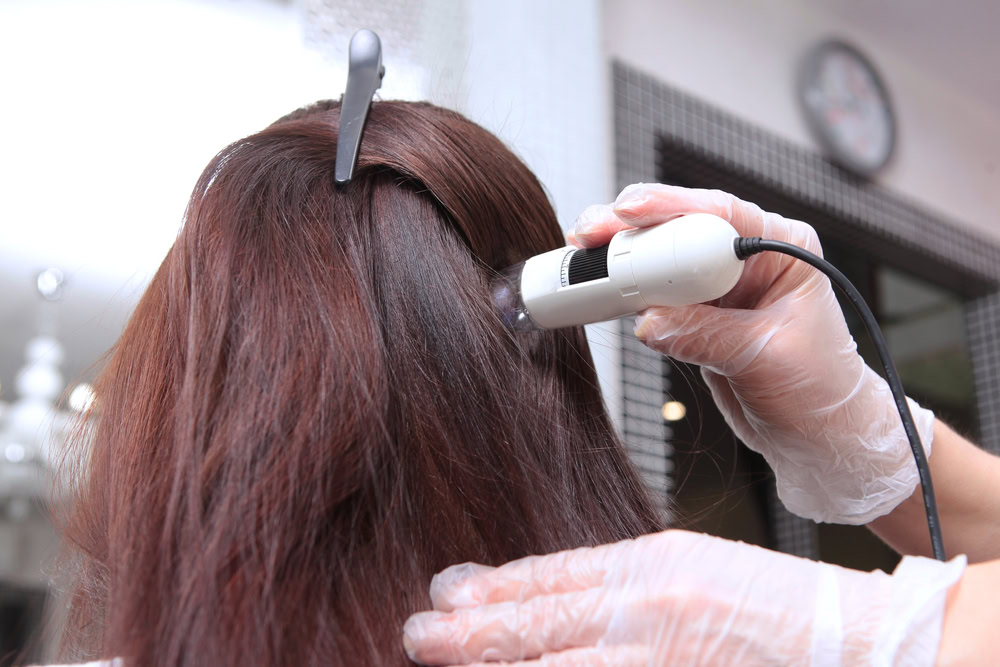
Credentials matter here in a specific way. It’s not enough to find someone who offers LED therapy — you want someone who has demonstrated expertise in treating skin of color, particularly around pigmentation. The Fitzpatrick scale is the industry-standard tool for assessing how different skin tones respond to light-based treatments, and a qualified provider will use it to calibrate your protocol from the start. If a provider doesn’t mention skin type assessment before beginning any light-based treatment, that’s worth paying attention to.
For treatments like IPL — Intense Pulse Light, which uses a broader wavelength spectrum than LED and is a step up in intensity for moderate-to-severe rosacea — North Carolina requires medical director supervision. That’s a compliance requirement that protects you, and it’s worth confirming before you book anywhere. We’re backed by one of the most respected medical directors in the Triangle, which means our IPL protocols meet that standard.
At Wake Skincare, Jacqueline Grace holds first place in the Pigmentation Artist of the Year category at The Skin Games — an international aesthetics competition that evaluates real-world treatment results, not just technique on paper. That’s peer-validated expertise in the exact skill set required to treat rosacea-related discoloration in skin of color. She’s also been named Best Esthetician in Wake County for three consecutive years, and holds a Master Certification in HydraFacial — among the first 100 practitioners worldwide to reach that level.
Every new client starts with a free skin evaluation and consultation. That’s a real assessment of what your skin is doing, what’s driving it, and what a realistic treatment plan looks like for you. If you’ve been burned before by treatments that weren’t built for your skin type, that conversation is where we figure out what’s actually going to work.
Green Light Therapy for Rosacea: What Actually Works for Your Skin
If you’ve been dealing with persistent redness, sensitivity, or dark spots that won’t resolve — and especially if you have darker skin and have never been told you might have rosacea — you’re not imagining it, and you’re not out of options. Red and green light therapy, when calibrated correctly for your skin type and your specific presentation, can meaningfully reduce the frequency of flare-ups and address the discoloration that follows them.
The key word is “calibrated.” The wavelength matters. The intensity matters. The combination of treatments matters. And the expertise of the person designing your protocol matters most of all. Generic LED sessions and at-home devices aren’t the same thing as a professional treatment built around how your skin actually behaves.
If you’re in Wake County and you’re ready to have a real conversation about what’s going on with your skin, we offer a free consultation to every new client. No pressure, no guesswork — just a clear-eyed look at what your skin needs and what we can do about it.