Summary:
Your scalp deserves the same attention you give your face. This post explores the science behind scalp care and why treating your scalp properly is essential for addressing thinning hair, dryness, and buildup.
Professional scalp treatments go beyond at-home remedies to restore balance, unclog follicles, and create the ideal environment for hair growth. You’ll learn what makes scalp health different from hair health and how targeted treatments can reverse damage you didn’t know was happening beneath the surface.
Table of contents
You moisturize your face twice a day. You never skip sunscreen. You’ve probably spent more on serums this year than you’d like to admit. But when’s the last time you thought about your scalp?
Most people don’t realize that hair problems don’t start with your hair. They start underneath it. Thinning, breakage, that constant itch you can’t shake, the flakes that show up no matter how much you wash—these aren’t just hair issues. They’re scalp issues. And if you’re only treating the hair you can see, you’re missing the whole point.
Your scalp is skin. It has pores, oil glands, a microbiome, and a pH balance just like your face. When it’s out of whack, your hair pays the price. Let’s talk about why scalp health matters more than you think—and what actually works to fix it.
What Is Scalp Health and Why Does It Matter for Hair Growth
Your scalp isn’t just where your hair happens to grow. It’s the foundation. Think of it like soil for a plant. If the soil is dry, compacted, or full of debris, nothing’s going to thrive no matter how much you water it.
Scalp health refers to the condition of the skin on your head—its hydration levels, oil production, circulation, and microbiome balance. When your scalp is healthy, it’s slightly acidic, well-hydrated, free from excess buildup, and has good blood flow to deliver nutrients to your hair follicles.
When it’s not? You get clogged follicles, inflammation, oxidative stress, and a breakdown in the hair growth cycle. That’s when you start noticing thinning, shedding, or hair that just won’t grow past a certain length. Over 20 studies have documented how scalp conditions directly impact hair quality—and the good news is, the damage is often reversible when you address the root cause.
Scalp Health vs Hair Health: Understanding the Difference
Here’s where people get confused. Hair health and scalp health are related, but they’re not the same thing.
Your hair is technically dead once it leaves the follicle. You can condition it, protect it from heat, and keep it from breaking—but you can’t make it healthier from the outside in. Hair health is about preservation.
Scalp health is about production. It’s about what’s happening before the hair even emerges. If your scalp has poor circulation, clogged follicles, or chronic inflammation, the hair that grows out is already compromised. It’s weaker, thinner, and more prone to shedding.
Research shows that oxidative stress on the scalp affects hair before it even breaks through the surface. That means by the time you notice a problem with your hair, the issue has been brewing underneath for weeks or even months. Treating your scalp isn’t a nice-to-have—it’s the only way to actually improve what’s coming out of your head.
You can deep condition all you want, but if your follicles are clogged or your scalp is inflamed, you’re just putting a Band-Aid on a deeper problem. Real improvement starts at the root. Literally.
How Your Scalp Affects Hair Growth and Retention
Your scalp controls whether your hair grows, how fast it grows, and whether it stays put. Hair follicles need three things to function properly: oxygen, nutrients, and a clean environment. When your scalp isn’t healthy, all three get compromised.
Clogged follicles are one of the biggest culprits. Oil, dead skin cells, and product buildup can block the follicle opening, which restricts hair growth and traps bacteria. This creates inflammation, and inflammation weakens the hair root. Over time, that leads to shedding and thinning.
Then there’s circulation. Blood flow to the scalp delivers the nutrients your follicles need to produce strong hair. When circulation is poor—whether from tension, stress, or just lack of stimulation—your follicles are essentially starving. Scalp treatments that include massage or exfoliation help stimulate blood flow, which directly supports healthier hair growth.
And here’s something most people don’t know: your scalp has a microbiome, just like your gut. It’s full of bacteria and fungi that, when balanced, protect your scalp and support hair health. But when that balance is off—often due to stress, harsh products, or environmental factors—it can lead to dandruff, irritation, and even hair loss.
Studies have shown that improving scalp condition can reverse hair damage. In one clinical trial, participants who received scalp treatments saw an increase of nearly six additional hairs per square centimeter compared to those who didn’t. That might not sound like much, but across your entire scalp, it adds up to noticeably thicker, fuller hair.
The bottom line: if you want stronger hair, you have to start with a stronger scalp. Everything else is downstream.
What Is a Professional Scalp Treatment and Scalp Facial
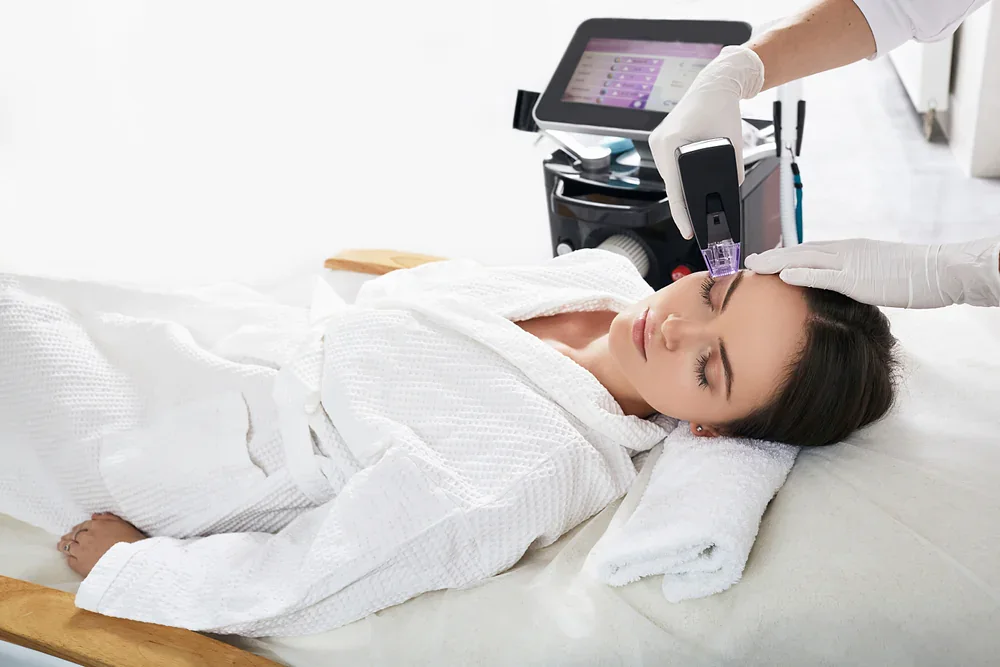
A professional scalp treatment is basically a facial for your scalp. It’s a multi-step process designed to cleanse, exfoliate, nourish, and rebalance the skin on your head. The goal is to remove buildup, unclog follicles, improve circulation, and create an environment where hair can actually thrive.
Most treatments start with an analysis—we’ll look at your scalp under magnification to identify issues like dryness, excess oil, clogged pores, or inflammation. From there, the treatment is customized based on what your scalp actually needs, not a one-size-fits-all approach.
You’ll typically get a deep cleanse, gentle exfoliation to remove dead skin and buildup, a scalp massage to stimulate blood flow, and then targeted serums or treatments to address your specific concerns. Some treatments also include steam or heat to open pores and help products penetrate deeper.
The whole process takes about 45 to 60 minutes, and the results are both immediate and cumulative. You’ll leave with a cleaner, more balanced scalp—and over time, with regular treatments, you’ll notice stronger, healthier hair growth.
Scalp Treatment for Hair Growth: Does It Actually Work
Yes. But not in the way most people think.
Scalp treatments don’t magically make hair grow faster. What they do is remove the obstacles that are preventing your hair from growing the way it should. When your follicles are clogged, your scalp is inflamed, or your circulation is poor, your hair growth cycle gets disrupted. Treatments address those issues, which allows your hair to grow normally again.
One of the most effective ways scalp treatments promote hair growth is by unclogging follicles. When sebum, dead skin, and product residue build up around the follicle opening, it creates a barrier that restricts growth and traps bacteria. Exfoliation and deep cleansing remove that buildup, giving your follicles room to breathe and function properly.
Scalp massage is another key component. Massage increases blood flow to the hair follicles, delivering oxygen and nutrients that are essential for hair production. Studies have shown that regular scalp massage can improve hair thickness over time, especially when combined with treatments that nourish the scalp.
Then there’s the issue of inflammation. Chronic low-level inflammation on the scalp—often caused by stress, pollution, or an imbalanced microbiome—can weaken hair roots and lead to premature shedding. Treatments that include anti-inflammatory ingredients and antioxidants help calm the scalp and protect hair follicles from oxidative stress, which has been directly linked to hair loss.
In clinical studies, people who used scalp treatments designed to reduce inflammation and improve scalp health saw measurable improvements in hair density and reduced shedding. One study found that participants using a treatment with antioxidants and barrier-enhancing ingredients experienced significant hair count increases compared to a placebo group.
The key is consistency. One treatment will make your scalp feel better, but regular treatments—every four to eight weeks—are what actually shift the trajectory of your hair health. You’re not just treating symptoms. You’re changing the environment your hair is growing in.
Itchy Scalp Relief and Common Scalp Issues You Shouldn't Ignore
If your scalp itches, flakes, feels tight, or gets oily within a day of washing, something’s off. These aren’t just minor annoyances—they’re signs that your scalp’s barrier is compromised, your microbiome is out of balance, or your oil production is dysregulated.
Itchy scalp is one of the most common complaints, and it usually comes down to one of three things: dryness, irritation, or a reaction to products. Dryness happens when your scalp isn’t producing enough oil or when harsh shampoos strip away the natural oils that protect your skin. Irritation can be caused by inflammation, fungal overgrowth, or conditions like eczema or psoriasis. And product reactions? Those happen more often than you’d think, especially if you’re using sulfates, fragrances, or other ingredients that disrupt your scalp’s pH.
Dandruff and flaking are also scalp issues, not hair issues. They’re usually caused by an overgrowth of yeast on the scalp, which triggers inflammation and speeds up skin cell turnover. The result is visible flakes and often itching or redness. Over-the-counter shampoos can help, but if the problem persists, it’s worth getting a professional scalp treatment to reset your scalp’s microbiome and address the root cause.
Excess oil is another big one. If your hair looks greasy by the end of the day, your scalp is likely overproducing sebum—either because it’s dehydrated and trying to compensate, or because your pores are clogged and the oil has nowhere to go. Scalp treatments that include deep cleansing and exfoliation help regulate oil production by clearing out buildup and restoring balance.
And then there’s the issue of clogged follicles, which you can’t always see or feel but definitely impact your hair. When follicles are blocked, hair growth slows, and you’re more likely to experience shedding or thinning. Professional treatments use techniques like exfoliation and extraction to clear out those blockages and give your follicles a fresh start.
The point is, these issues don’t go away on their own. Left untreated, they get worse and start affecting your hair. Scalp treatments address the underlying problem—not just the symptoms—so you can actually fix what’s going on instead of just managing it.
Taking Care of Your Scalp Is Taking Care of Your Hair
Your scalp is skin. It needs the same level of care and attention you give your face—maybe more, considering how much it has to deal with. Product buildup, environmental stress, heat styling, and just everyday life all take a toll. If you’re dealing with thinning, shedding, dryness, or irritation, the solution isn’t another shampoo. It’s addressing what’s happening underneath.
Professional scalp treatments give your scalp what at-home care can’t: deep cleansing, targeted exfoliation, therapeutic massage, and customized serums that actually penetrate where they’re needed. They reset your scalp’s environment, unclog your follicles, improve circulation, and create the foundation for healthier, stronger hair growth.
If you’re in Franklin County, NC, Granville County, NC, or Wake County, NC, and you’re ready to stop treating the symptoms and start fixing the problem, we can help. We specialize in scalp treatments that are customized to your specific needs—whether you’re dealing with thinning, dryness, buildup, or just want to maintain a healthy scalp long-term. Book a consultation and let’s get your scalp back on track.