Summary:
You bought the pen. You’ve been using it consistently, following the instructions, applying your serum after. But a few months in, you’re not sure you’re seeing what you expected — and somewhere in the back of your mind, you’re wondering if you’re actually doing anything, or if you’re doing something wrong.
That’s a fair question, and you’re not alone in asking it. At-home microneedling pens have exploded in popularity across Wake County and beyond, and the marketing makes them sound nearly identical to what you’d get in a professional setting. They’re not. Here’s what’s actually going on.
How Microneedling Actually Works — And Why Depth Is Everything
Microneedling works by creating tiny, controlled micro-channels in the skin. That controlled injury signals your body to produce collagen and elastin — the structural proteins responsible for firmness, smoothness, and scar remodeling. This process is called collagen induction therapy, and it’s the reason professional microneedling produces real, lasting changes in skin texture and tone.
The catch is that collagen induction only happens when needles reach the dermis — the deeper layer of skin where collagen actually lives. That requires a minimum depth of around 0.5mm, and for concerns like acne scarring or deeper texture issues, professional treatments go up to 2.0mm or 3.0mm depending on the area being treated.
Most at-home microneedling pens max out at 0.25mm to 0.5mm. At that depth, you’re primarily affecting the very surface of the skin. You might see some improvement in product absorption or mild exfoliation, but you’re not triggering the deeper remodeling that makes professional microneedling worth doing in the first place.
What At-Home Microneedling Pens Can and Can't Do for Your Skin
It’s worth being fair here: at-home microneedling pens aren’t entirely useless. At shallow depths, they can improve how well your skin absorbs serums and provide light surface exfoliation. For someone with no specific skin concerns who just wants a mild glow boost, the experience might feel satisfying.
But if you’re dealing with acne scars, hyperpigmentation, uneven skin texture, fine lines, or loss of firmness — which is why most people get interested in microneedling in the first place — a 0.25mm needle isn’t going to get you there. The biology simply doesn’t work that way. You can use the pen every week for six months and still not reach the tissue depth where meaningful collagen production happens.
There’s also the question of what you’re putting on your skin immediately after. Microneedling — even at shallow depths — temporarily opens your skin barrier. That’s actually the mechanism for improved serum absorption. But it also means that anything you apply post-treatment goes in more aggressively than it normally would. Many people unknowingly apply ingredients like retinol, vitamin C, or AHAs right after using their pen, not realizing those actives can cause significant irritation or even chemical burns when introduced through compromised skin. We use specifically formulated, safe-to-infuse serums for exactly this reason — it’s not an afterthought, it’s part of the protocol.
Then there’s the needle cartridge itself. At-home devices use reusable heads. With each session, those needles dull slightly and accumulate bacteria, even with cleaning. Dull needles don’t create clean micro-channels — they drag and tear. That tearing increases inflammation and raises your risk of post-inflammatory hyperpigmentation (PIH), particularly if your skin tone is in the medium-to-deeper range. It’s one of the more common ways people end up in a professional clinic not for a treatment, but for a correction.
The Safety Risks of DIY Microneedling Most People Don't Think About
The biggest safety gap with at-home microneedling isn’t the device itself — it’s the absence of a clinical assessment before you use it. A trained provider looks at your skin before a single needle makes contact. We assess your Fitzpatrick skin type, check for active breakouts or rosacea flares, review your current medications (some, like blood thinners or recent isotretinoin use, are hard contraindications), and determine whether microneedling is even appropriate for you that day. None of that happens when you unbox a pen at home.
Post-inflammatory hyperpigmentation is one of the most documented risks of improper microneedling, and it disproportionately affects medium-to-darker skin tones — Fitzpatrick types III through VI. Wake County’s population is genuinely diverse, and this is a real concern for a meaningful portion of the people considering microneedling here. A professional who understands Fitzpatrick typing and adjusts needle depth, pressure, and technique accordingly is not a luxury — it’s the difference between a result and a setback.
Infection is the other major risk that tends to get glossed over. Microneedling creates open channels in your skin. In a clinical setting, single-use sterile cartridges are used for every treatment and disposed of immediately after. OSHA bloodborne pathogen standards apply. At home, even a well-cleaned reusable cartridge carries contamination risk — and skin infections following DIY microneedling, including bacterial infections and viral reactivations like herpes simplex, have been documented in clinical literature. These are documented outcomes from real cases where sterile technique wasn’t maintained.
The device we use at Wake Skincare is the SkinPen Precision — the first FDA-cleared microneedling device in the United States, cleared specifically for acne scar treatment in adults. That clearance required clinical studies. It means the device has been evaluated for safety and efficacy by a regulatory body. No at-home pen carries that designation. “Legal to sell” and “clinically cleared” are not the same thing, and that gap matters when you’re creating intentional injury to your skin.
Professional Microneedling Cost vs. At-Home — What You're Actually Comparing
The sticker price on an at-home microneedling pen looks appealing compared to a professional session. But the comparison most people make — device cost versus single session cost — isn’t the right one. The real question is: what does each option cost you over time, and what results are you actually getting for that money?
When you factor in replacement cartridges, serums, and the time spent on sessions that may not be producing meaningful results, the at-home route adds up faster than it initially appears. And if something goes wrong — PIH, irritation, infection — the cost of correcting that professionally can exceed what a treatment series would have cost from the start.
How Much Does Professional Microneedling Cost Compared to DIY Over Time?
A quality at-home microneedling pen runs anywhere from $50 to $500 or more. Add replacement cartridges (which should be swapped out every few uses if you’re following safety guidance), a proper post-treatment serum, and a numbing product if you’re using one — and you’re looking at ongoing costs that accumulate with every session. Over the course of a year of regular use, many people spend $300 to $600 or more on at-home microneedling without a clear protocol, without professional guidance, and without the needle depth to achieve collagen induction.
Professional microneedling sessions typically range from $200 to $500 per session depending on the provider, location, and what’s included. Most clients see meaningful results from a series of three to six sessions spaced four to six weeks apart. That’s a real investment — but it’s an investment in treatments that actually reach the tissue depth where change happens, performed by someone who has assessed your skin, customized the protocol, and is accountable for the outcome.
The math shifts further when you account for the cost of corrections. Treating post-inflammatory hyperpigmentation caused by improper at-home use, or addressing an infection, or trying to reverse irritation from the wrong post-treatment serum — those outcomes bring people into professional clinics regularly, and the correction process is almost always more expensive and more time-consuming than the original treatment series would have been. We see this pattern often enough that it’s worth naming plainly: the cheapest path and the most cost-effective path aren’t always the same thing.
What a Professional Microneedling Session in Wake County Actually Looks Like
If you’ve never had a professional microneedling treatment, the process is probably less intimidating than you’re imagining. Here’s how it works when you come in to see us at Wake Skincare.
It starts with a consultation — always free, always thorough. Before any treatment is scheduled, we take time to understand your skin concerns, review your health history, and assess your Fitzpatrick skin type. That assessment directly informs the treatment: needle depth, the number of passes, which areas to treat more conservatively, and which post-treatment serums are appropriate for your skin. This isn’t a formality — it’s the step that makes the difference between a good outcome and a great one.
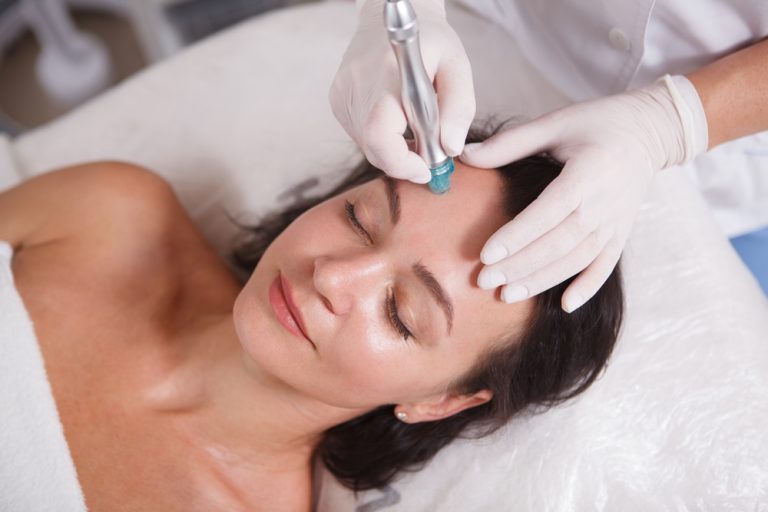
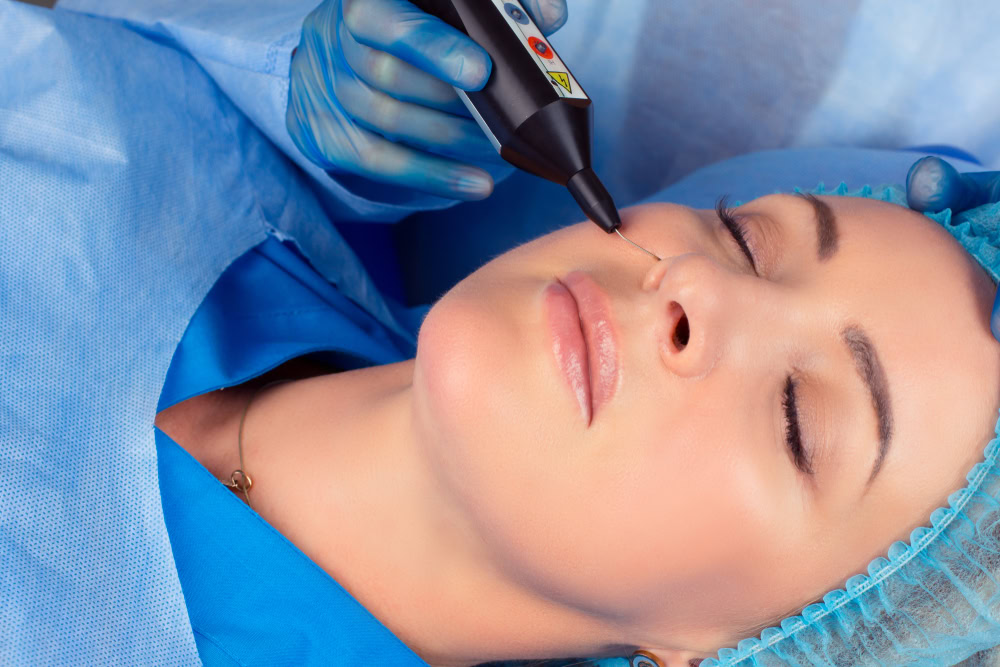
On the day of treatment, a topical numbing cream is applied and left on for 30 to 45 minutes before the SkinPen is used. Most clients describe the sensation during treatment as mild pressure or a light scratching — not painful. The treatment itself typically takes 30 to 60 minutes depending on the areas covered. Immediately after, a growth factor or hyaluronic acid serum is applied while your skin is maximally receptive, which amplifies the results. You’ll leave with written aftercare instructions and a clear picture of what to expect in the days that follow.
Most people experience 24 to 72 hours of redness — similar to a mild sunburn. By day three, the majority of clients look completely normal and often notice their skin looks brighter and more even than before. The deeper collagen remodeling continues for weeks and months after the session, which is why results improve progressively over a treatment series rather than all at once.
Wake County’s climate is worth factoring into your timing. North Carolina’s UV intensity from March through October means post-treatment sun protection is especially important here — and our spring pollen season can increase skin sensitivity, which is worth discussing before scheduling. These are the kinds of local, practical details that a professional consultation covers and that no at-home device manual ever will.
Is a Microneedling Pen Worth It, or Is It Time to See a Professional?
If you’ve been using an at-home microneedling pen and wondering why results feel underwhelming, the answer is almost always needle depth. Surface-level tools produce surface-level results. That’s not a flaw in your technique — it’s a physical limitation of what those devices are designed to do.
Professional microneedling with an FDA-cleared device, performed by someone who has assessed your skin and customized the treatment, operates in an entirely different category. The results are more predictable, the safety protocols are real, and the investment actually maps to an outcome you can see.
If you’re in Wake County — whether you’re in Wake Forest, Raleigh, Cary, Apex, or anywhere across the Triangle — and you’re ready to find out what your skin actually needs, we offer a free consultation to start that conversation. No pressure, no commitment. Just a clear-eyed look at where your skin is and what would actually help.