Summary:
You’ve built a routine. You’ve tried the serums, the exfoliants, the masks that promise glowing skin in seven days. And maybe things improved a little — or maybe they didn’t move at all. Either way, you’re still dealing with the same breakouts, the same dullness, the same dark spots that won’t budge. That’s not a failure of effort. It’s a signal that your skin needs something your bathroom shelf can’t provide. This page walks you through exactly what professional skincare can do that at-home routines can’t — and how to recognize when it’s time to stop guessing and get real answers.
Professional Skincare Benefits vs At-Home Limitations
At-home skincare is genuinely useful. A solid daily routine — cleanser, moisturizer, SPF, maybe an active ingredient or two — keeps your skin healthy and helps maintain results between professional treatments. But it has a ceiling, and most people hit it without realizing that’s what’s happening.
The core limitation is concentration and penetration. Retail products, even the expensive ones, are formulated to be safe for daily unsupervised use. That means the active ingredients — retinol, glycolic acid, vitamin C, niacinamide — are present at levels low enough that they’re unlikely to cause a reaction if you use them incorrectly. The tradeoff is that they’re often too diluted to produce the kind of change you’re after.
Professional treatments work at a different level entirely. The serums, peel solutions, and treatment protocols we use in our clinical setting contain higher concentrations of actives, applied with precision based on your specific skin type and concern. Our equipment — HydraFacial systems, SkinPen microneedling devices, IPL machines — physically cannot be replicated at home. Not safely, anyway.
Why At-Home Microneedling and DIY Peels Can Backfire
Home microneedling tools and drugstore peel pads have become popular, and it’s easy to understand why — they’re cheap, accessible, and marketed as professional-grade alternatives. The problem is that “professional-grade” is doing a lot of work in those claims.
Dermatologists and licensed estheticians consistently caution against home microneedling for good reason. The depth of penetration matters enormously with microneedling. Too shallow and you get minimal collagen stimulation. Too deep — or with an unsterilized tool — and you risk infection, scarring, or a damaged skin barrier that takes months to repair. Home dermarollers are rarely sterile after the first use, and most people don’t replace them nearly often enough.
DIY chemical peels carry similar risks. The at-home versions use lower concentrations of acids than professional peels, which sounds safer — but the issue is that people often compensate by leaving them on longer or layering them with other actives, which is where things go wrong. A professional chemical peel, applied by a licensed esthetician who has assessed your skin beforehand, uses the right formulation at the right strength for the right amount of time. That’s not something you can replicate from a YouTube tutorial.
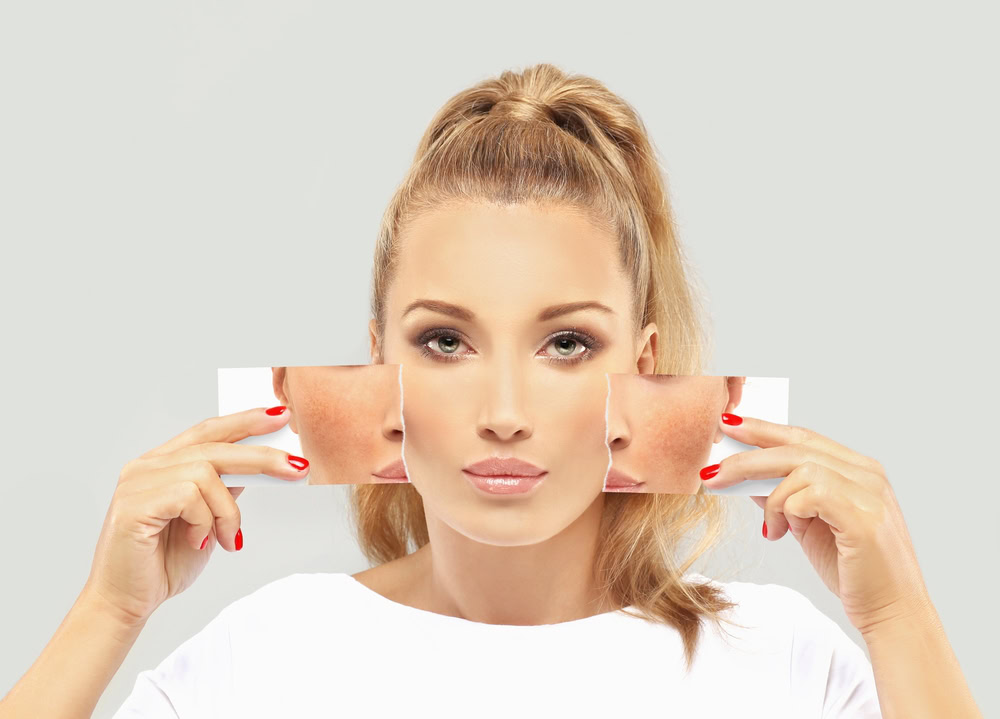
There’s also the question of what you’re actually treating. Persistent hyperpigmentation, for example, has multiple potential causes — sun damage, post-inflammatory marks, hormonal changes — and the treatment approach differs depending on the source. Applying a brightening serum to hormonally driven melasma without understanding that distinction can make it worse. A professional assessment takes the guesswork out of it entirely.
This is especially relevant in Wake County, where the combination of high UV exposure, heavy pollen seasons, and warm, humid summers creates skin conditions that are easy to misread. What looks like simple dryness in January might be a compromised skin barrier. What looks like breakouts in July might be congestion driven by heat and humidity. Getting a professional read on what’s actually happening with your skin is worth more than any product purchase.
What Professional Treatments Can Actually Do That Products Can't
The difference isn’t just ingredient concentration — it’s the mechanism of delivery and the depth of treatment. A HydraFacial, for instance, simultaneously exfoliates, extracts, and infuses customized serums into the skin using a vortex suction system that no home device replicates. The result after a single session is the kind of clarity and hydration that would take weeks of consistent product use to approximate — if you could get there at all.
Microneedling with SkinPen creates controlled micro-injuries in the dermis that trigger your skin’s natural collagen production. This is a fundamentally different process than applying a topical retinol, which nudges surface cell turnover. For concerns like acne scarring, textural irregularities, or significant loss of firmness, microneedling reaches a layer of the skin that products simply don’t access.
IPL (Intense Pulsed Light) works by targeting pigment and vascular irregularities beneath the skin’s surface with light energy — treating sun damage, redness, and hyperpigmentation at the source rather than fading the surface appearance. No serum does this. The technology is clinical by definition.
What’s also worth understanding is that professional treatments don’t replace your at-home routine — they amplify it. After a professional peel or HydraFacial, your skin is in a better state to absorb and respond to the products you’re using at home. The two work together. But the professional treatment sets the foundation that makes everything else more effective.
For clients dealing with stubborn concerns — hyperpigmentation that hasn’t responded to brightening serums, fine lines that moisturizers aren’t touching, or acne that keeps cycling back — professional treatment isn’t a luxury upgrade. It’s the logical next step.
At-Home vs Professional Treatments: What the Real Cost Comparison Looks Like
One of the most common reasons people hesitate to book a professional treatment is cost. And that’s a fair consideration — professional skincare does require an upfront investment. But the comparison most people make isn’t quite accurate.
The real question isn’t “how much does a professional treatment cost?” It’s “how much am I currently spending on products that aren’t delivering results?” When you add up the serums, exfoliants, masks, devices, and specialty treatments sitting on your shelf — many of them purchased because something else didn’t work — the number tends to be higher than people expect.
A single professional treatment that produces visible results within days, and whose effects last weeks to months, often represents better value than three months of product purchases that produce incremental, hard-to-measure change.
When to See a Skincare Professional Instead of Buying Another Product
There are a few clear signals that you’ve reached the point where professional treatment makes more sense than another product purchase.
The first is persistence. If you’ve been addressing the same skin concern — acne, hyperpigmentation, dehydration, fine lines — for more than three to six months with a consistent routine and haven’t seen meaningful improvement, that concern likely needs professional intervention. Products maintain and support; they don’t always solve.
The second is escalation. If a concern is getting worse despite your routine, that’s worth taking seriously. Worsening hyperpigmentation, increasing breakout frequency, or a skin barrier that feels perpetually irritated and reactive are all signs that something in your approach isn’t matching what your skin actually needs — and that a professional assessment could identify the disconnect.
The third is a new or changing concern. If your skin has shifted — due to a move, a seasonal change, a hormonal shift, or simply aging — and your routine no longer seems to be working the way it used to, a consultation with a licensed esthetician is the fastest way to recalibrate. This is something we hear often from clients who’ve relocated to Wake County from drier climates. The humidity, pollen, and UV intensity here are genuinely different, and a routine built for a different environment often needs to be rethought from scratch.
The fourth is a specific event or goal. If you want your skin to look meaningfully better for a wedding, a reunion, or simply because you’re tired of feeling like your skin doesn’t reflect how you actually feel — professional treatments deliver results on a timeline that at-home routines can’t match.
None of these signals mean your at-home routine has failed. They mean your skin is ready for a different level of care.
How to Know If You're Getting Genuinely Professional Care in Wake County
Not all professional skincare is equal, and this is worth understanding before you book anywhere. The term “professional facial” covers a wide range — from a relaxing spa treatment with minimal clinical benefit to a medically supervised, results-driven protocol using equipment and products that produce measurable change. Knowing what to look for protects your time and your money.
A qualified esthetician should perform a skin analysis before every treatment, not just the first visit. Your skin changes with the seasons, with your stress levels, with your hormones — a practitioner who applies the same treatment regardless of what your skin is doing that day isn’t customizing anything. Customization requires assessment.
Credentials matter and should be verifiable. In North Carolina, licensed estheticians must complete a minimum of 600 hours of formal training before sitting for state board exams. But training hours are a floor, not a ceiling. Look for practitioners who have pursued advanced certifications and demonstrated expertise beyond the baseline. HydraFacial Master Certification, for instance, is the highest tier of credentialing available for that treatment, reserved for practitioners who have demonstrated exceptional proficiency — there are fewer than 100 at that level worldwide.
Competition credentials are another meaningful signal. Winning in a category like Pigmentation Artist of the Year at an international esthetics competition isn’t a marketing badge — it’s a demonstration of clinical skill evaluated by industry experts. That kind of recognition is especially relevant for clients dealing with hyperpigmentation, which is one of the most technically demanding skin concerns to treat correctly, particularly across diverse skin tones.
Medical oversight is the other factor worth asking about. Treatments involving medical-grade ingredients or devices — certain chemical peels, IPL, injectables — should be performed under physician supervision. That level of accountability is what separates a medical aesthetics spa from a day spa, and it matters for your safety.
At Wake Skincare in Wake Forest, we operate under the medical supervision of Dr. Joseph Hummel, a board-certified physician. Jacqueline Grace, our founder and lead esthetician, holds HydraFacial Master Certification, has been named Best Esthetician in Wake County for three consecutive years by Wake Weekly’s Best of the Best, and placed first in the Pigmentation Artist of the Year category at The Skin Games — an international esthetics competition. These aren’t marketing claims. They’re credentials you can look up.
We serve clients across Wake County, including Wake Forest, Raleigh, Durham, Chapel Hill, Apex, Cary, Morrisville, Garner, Knightdale, Fuquay-Varina, Holly Springs, Zebulon, Wendell, and Rolesville. Every new client starts with a free skin evaluation — no obligation, no pressure, just an honest assessment of what your skin actually needs.
Professional vs At-Home Skincare: What's Actually Worth Your Time and Money
Your at-home routine has real value — don’t abandon it. But if you’ve been dealing with the same skin concern for months, spending money on products that promise more than they deliver, or just noticing that your skin looks different than it used to and you can’t figure out why, a professional assessment is the most efficient next step you can take.
Professional treatments work at a depth and with a precision that home routines can’t reach. The right provider will assess your skin, explain what’s actually going on, and build a treatment plan that makes sense for your goals and your budget — not just hand you a menu and upsell you into a package.
If you’re in Wake County and ready to stop guessing, we offer a free consultation to get you started. No pressure, no obligation — just real answers about what your skin needs and what it would actually take to get there.