Summary:
If you’ve been scrolling through before-and-afters wondering what’s real and what’s a filter, this is for you. Microneedling—especially when combined with radiofrequency like Morpheus8—triggers your skin’s natural repair process to build collagen, tighten laxity, and smooth texture.
It’s not magic. It’s science. And the results show up gradually, naturally, and without going under the knife.
This guide breaks down how it works, what recovery actually looks like, and how to know which treatment fits your goals.
Table of contents
You’ve probably seen the photos. Smooth, glowing skin that looks almost too good to be real. And maybe you’ve wondered—filter, or something else?
Here’s the truth: a lot of that “no-filter” skin you’re seeing comes from treatments that work below the surface. Microneedling, especially when paired with radiofrequency energy like Morpheus8, doesn’t just improve what you see in the mirror today. It changes how your skin rebuilds itself over time.
If you’re dealing with acne scars that won’t budge, fine lines that seem to multiply overnight, or sagging skin that makes you look more tired than you feel, this might be the explanation you’ve been looking for. Let’s start with what’s actually happening when needles meet skin.
What Is Microneedling and How Does It Work
Microneedling is also called collagen induction therapy, and that name tells you almost everything you need to know. The treatment uses tiny, sterile needles to create controlled micro-injuries in your skin. Controlled is the key word here—these aren’t random punctures. They’re precise, shallow channels that trigger your body’s natural healing response without causing real damage.
When your skin detects these micro-injuries, it kicks into repair mode. That means increased production of collagen and elastin, the two proteins responsible for keeping skin firm, smooth, and resilient. Think of collagen as the scaffolding that holds everything up. As we age, that scaffolding breaks down. Microneedling tells your body to rebuild it.
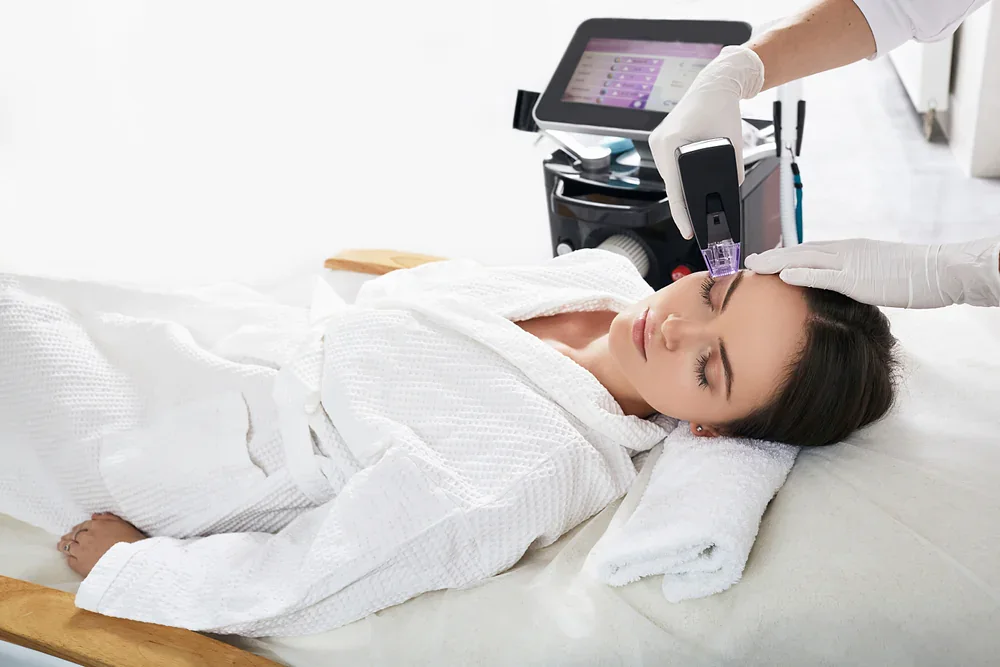
The procedure itself is minimally invasive. Most sessions take 30 to 60 minutes depending on the treatment area. You’ll feel some pressure and mild discomfort, but topical numbing cream is applied beforehand to keep things tolerable. Afterward, your skin will look red—similar to a mild sunburn—but that fades within 24 to 48 hours for most people.
The Science Behind Collagen Induction Therapy
Let’s get into the biology for a second, because understanding why this works makes the results a lot less mysterious.
Your skin has three main layers: the epidermis (the outer protective barrier), the dermis (where collagen and elastin live), and the subcutaneous tissue underneath. Microneedling targets the dermis. When those needles penetrate the skin, they create what’s called a “wound healing cascade.” Your body responds by releasing growth factors—things like platelet-derived growth factor, transforming growth factor, and fibroblast growth factor.
These growth factors do a few important things. First, they stimulate fibroblasts, the cells responsible for producing new collagen. Second, they promote neovascularization, which means new blood vessels form to bring nutrients and oxygen to the healing tissue. Third, they help break down old, hardened scar tissue and replace it with fresh, organized collagen.
Here’s what makes this different from, say, a chemical peel or laser resurfacing: microneedling doesn’t ablate or remove the top layer of skin. It preserves the epidermis while working underneath. That means faster healing, less downtime, and a much lower risk of hyperpigmentation—especially important if you have darker skin tones.
The new collagen that forms isn’t just cosmetic. It’s structural. Studies show that collagen levels can increase significantly within weeks of treatment, and that improvement continues for months as your skin remodels itself. One study found a 40% thickening of the epidermis and considerable collagen deposition in a normal lattice pattern six months post-treatment. That’s not temporary plumping. That’s actual tissue regeneration.
And because the process relies on your body’s own repair mechanisms, the results look natural. You’re not adding foreign substances or forcing your skin to do something it wasn’t designed to do. You’re just giving it a reason to rebuild.
SkinPen Microneedling: Precision for Surface-Level Concerns
Not all microneedling devices are created equal. SkinPen is one of the most trusted names in the industry, and for good reason—it’s the only FDA-cleared microneedling device on the market. That clearance isn’t just a stamp of approval. It means the device has been clinically tested and proven safe and effective for improving the appearance of acne scars and facial wrinkles.
SkinPen works with adjustable-depth needles that penetrate at a 90-degree angle. This precision matters because it allows us to customize the treatment based on your skin thickness and specific concerns. Thinner skin around the eyes? Shallower depth. Deeper acne scars on the cheeks? More penetration.
The device is particularly effective for surface-level issues: fine lines, mild acne scarring, enlarged pores, uneven texture, and overall skin tone. It’s gentle enough that most people experience minimal downtime. You might be red for a day or two, but you’re not looking at a week of hiding indoors.
One of SkinPen’s advantages is its safety profile. Unlike dermal rollers—those handheld devices you might see online—SkinPen uses single-use, sterile needle cartridges. There’s no risk of bent needles, contamination, or uneven application. The needles enter and exit cleanly, creating uniform micro-channels that heal predictably.
Recovery is straightforward. Your skin will feel tight and warm immediately after treatment, similar to a sunburn. You’ll want to avoid makeup for at least 24 hours and stay out of direct sun. Most people return to their normal routine within 48 hours. Some mild flaking or peeling may occur around day three to five as your skin regenerates, but that’s a sign the process is working.
Results from SkinPen typically become visible around four to six weeks post-treatment as new collagen forms. For best results, most people need a series of three to six sessions spaced four to six weeks apart. This gives your skin time to heal and build on the improvements from each session.
If you’re looking for a non-surgical way to refresh your complexion, improve texture, and address early signs of aging without a lot of drama or downtime, SkinPen is a solid starting point. It’s not the most aggressive option out there, but that’s exactly why it works so well for people who want noticeable improvement without the intensity of more invasive procedures.
Morpheus8: Microneedling Meets Radiofrequency Energy
Now let’s talk about what happens when you take traditional microneedling and add radiofrequency energy to the equation. That’s Morpheus8, and it’s a completely different level of treatment.
Morpheus8 combines the micro-injury concept of microneedling with RF energy delivered deep into the dermis and even the subdermal fat layer. The needles on Morpheus8 can reach up to 4mm deep—significantly deeper than standard microneedling devices. As those needles penetrate, they emit radiofrequency energy that heats the tissue.
That heat does two things. First, it causes immediate collagen contraction. The thermal energy makes existing collagen fibers tighten up on the spot, which is why some people notice a subtle lifting effect right after treatment. Second, the heat creates controlled thermal damage that triggers an even more robust collagen production response than microneedling alone.
Morpheus8 is FDA-approved as a Subdermal Adipose Remodeling Device. Translation: it doesn’t just work on your skin. It remodels the fat layer underneath, which makes it incredibly effective for contouring and tightening areas where traditional microneedling wouldn’t make much of a dent—like the jawline, neck, under the chin, and even the body.
How Radiofrequency Amplifies Collagen Production
Radiofrequency energy works by converting electrical energy into thermal energy. When that heat reaches the deeper layers of your skin, it disrupts the existing collagen structure in a controlled way. Your body interprets this disruption as damage and responds by producing new, organized collagen to repair it.
But here’s where it gets interesting: RF doesn’t just stimulate collagen production. It also causes something called collagen remodeling. Remodeling means your body isn’t just making more collagen—it’s laying it down in a more organized, functional pattern. That’s why the tightening effect from Morpheus8 can last for a year or more. You’re not just getting a temporary boost. You’re getting structural improvement.
The heat also affects the water molecules in your dermis. When RF energy is applied, those water molecules separate from the fibrous collagen, causing the tissue to contract. That’s the immediate tightening you might notice right after treatment. Over the following weeks and months, new collagen continues to form, and the skin continues to firm up.
Studies have shown that RF microneedling can produce results comparable to laser treatments but with less downtime and a lower risk of complications, especially for people with darker skin tones. Because the RF energy is delivered through the needles directly into the dermis, the surface of your skin stays relatively protected. There’s no risk of the kind of heat damage that can cause hyperpigmentation with certain lasers.
Morpheus8 is particularly effective for moderate to severe skin laxity, deeper wrinkles, pronounced acne scars, and areas where you want actual contouring—not just surface improvement. It’s often recommended for people in their 40s, 50s, and beyond who are starting to see significant sagging but aren’t ready for surgery.
The treatment itself takes about the same amount of time as SkinPen—30 to 60 minutes depending on the area. Numbing cream is applied beforehand, and while you’ll feel some heat and pressure, most people tolerate it well. Afterward, expect more redness and swelling than you would with traditional microneedling. That usually peaks within the first 24 to 48 hours and subsides over the next few days.
Downtime is still minimal compared to surgery, but it’s not quite as quick as SkinPen. Most people are back to normal activities within three to five days, though you’ll want to avoid intense sun exposure and strenuous exercise for about a week. Some people experience mild micro-crusting—tiny scabs where the needles penetrated—but those flake off naturally as your skin heals.
Morpheus8 vs SkinPen: Which One Is Right for You
So how do you choose between SkinPen and Morpheus8? It comes down to what you’re trying to fix and how much intensity you’re willing to handle.
SkinPen is ideal if your concerns are mostly surface-level: fine lines, mild acne scarring, uneven texture, enlarged pores, or general dullness. It’s gentle, has minimal downtime, and delivers noticeable improvement without a lot of drama. If you’re in your 30s or early 40s and you’re just starting to see signs of aging, SkinPen is a great preventative option. It’s also a good choice if you have a busy schedule and can’t afford more than a day or two of redness.
Morpheus8, on the other hand, is for people who need more. If you’re dealing with significant sagging—especially around the jawline, jowls, or neck—Morpheus8 can deliver the kind of tightening and lifting that SkinPen simply can’t. It’s also more effective for deeper acne scars, pronounced wrinkles, and skin that’s lost a lot of elasticity. The added radiofrequency energy means you’re not just improving texture. You’re actually restructuring the tissue.
The trade-off is intensity. Morpheus8 penetrates deeper, generates more heat, and requires a bit more recovery time. You’ll see more swelling, possibly some bruising, and you’ll need to be diligent about sun protection. But the results are more dramatic and longer-lasting. Many people see continued improvement for up to six months after treatment, and results can last one to two years.
Another factor to consider: cost. Morpheus8 is generally more expensive than SkinPen because of the technology involved and the level of results it delivers. But if you’re comparing it to surgical options like a facelift or neck lift, it’s still significantly more affordable and comes with a fraction of the downtime.
We offer both treatments and can help you decide which makes the most sense based on your skin, your goals, and your lifestyle. In some cases, you might even combine the two: start with SkinPen to address surface concerns, then move to Morpheus8 for deeper tightening as your skin ages.
The bottom line: if you want precision and gentleness, go with SkinPen. If you want power and dramatic tightening, Morpheus8 is the move. Both work. Both are safe. It’s just a matter of matching the tool to the job.
Real Results Take Time—But They're Worth It
Here’s the part that trips people up: microneedling results aren’t instant. You might see a glow within a few days, but the real transformation happens over weeks and months as your body builds new collagen. That’s not a flaw in the process. That’s how skin actually works.
The best results come from a series of treatments—typically three to six sessions spaced four to six weeks apart. This gives your skin time to heal and layer new collagen on top of the improvements from the previous session. By the time you’re done with a full series, the cumulative effect is significant. Smoother texture. Tighter skin. Faded scars. A more even tone. And it all looks natural because it is natural.
If you’re in Franklin County, Granville County, or Wake County, NC and you’re tired of filters doing the heavy lifting, it might be time to see what your skin can actually do. We offer both SkinPen and Morpheus8 treatments, with free consultations to help you figure out which approach fits your goals. You’re not committing to anything by asking questions. You’re just getting real answers from people who actually know what they’re doing.