
Hear from Our Customers
Your foundation stops clinging to peach fuzz. That’s the first thing most people notice—makeup goes on smoother, looks better, lasts longer.
But here’s what matters more: your serums and treatments actually absorb. When you’re spending money on vitamin C, retinol, or niacinamide, you want those active ingredients reaching living skin tissue—not sitting on top of a layer of dead cells. Dermaplaning removes that barrier in about 30 minutes, with zero downtime and zero discomfort.
You’ll also see pores look smaller. Not because they’ve shrunk, but because they’re cleaner. And your skin tone evens out because you’ve removed the dull, uneven surface layer that was scattering light.
If you’ve got an event coming up, this is the treatment that delivers immediate visible results. If you’re dealing with rough texture, minor acne scarring, or sun damage, dermaplaning creates the clean slate your skin needs to actually heal and regenerate.
We’re located in Wake Forest, and yes, people drive from Apex. They do it because our founder, Jacqueline Grace, has been named Best Esthetician in Wake County three years running, holds HydraFacial Master Certification, and has won international competitions for her work in medical aesthetics.
That’s not bragging—it’s context. When you’re letting someone take a surgical-grade scalpel to your face, you want someone who’s done it thousands of times and knows exactly what they’re doing.
Apex has plenty of skincare options. But most of them are offering standardized treatments with rotating staff. Here, you’re getting a licensed esthetician who’s trained in New York, certified at the highest level, and focused entirely on your specific skin concerns. Every dermaplane facial starts with a free consultation, and every treatment is customized based on what your skin actually needs—not what’s on a menu.

You’ll start with a consultation if it’s your first visit. We evaluate your skin type, ask about your concerns, and make sure dermaplaning is the right fit. It’s suitable for virtually every skin type and tone, but there are a few situations where it’s not recommended—active acne being the main one.
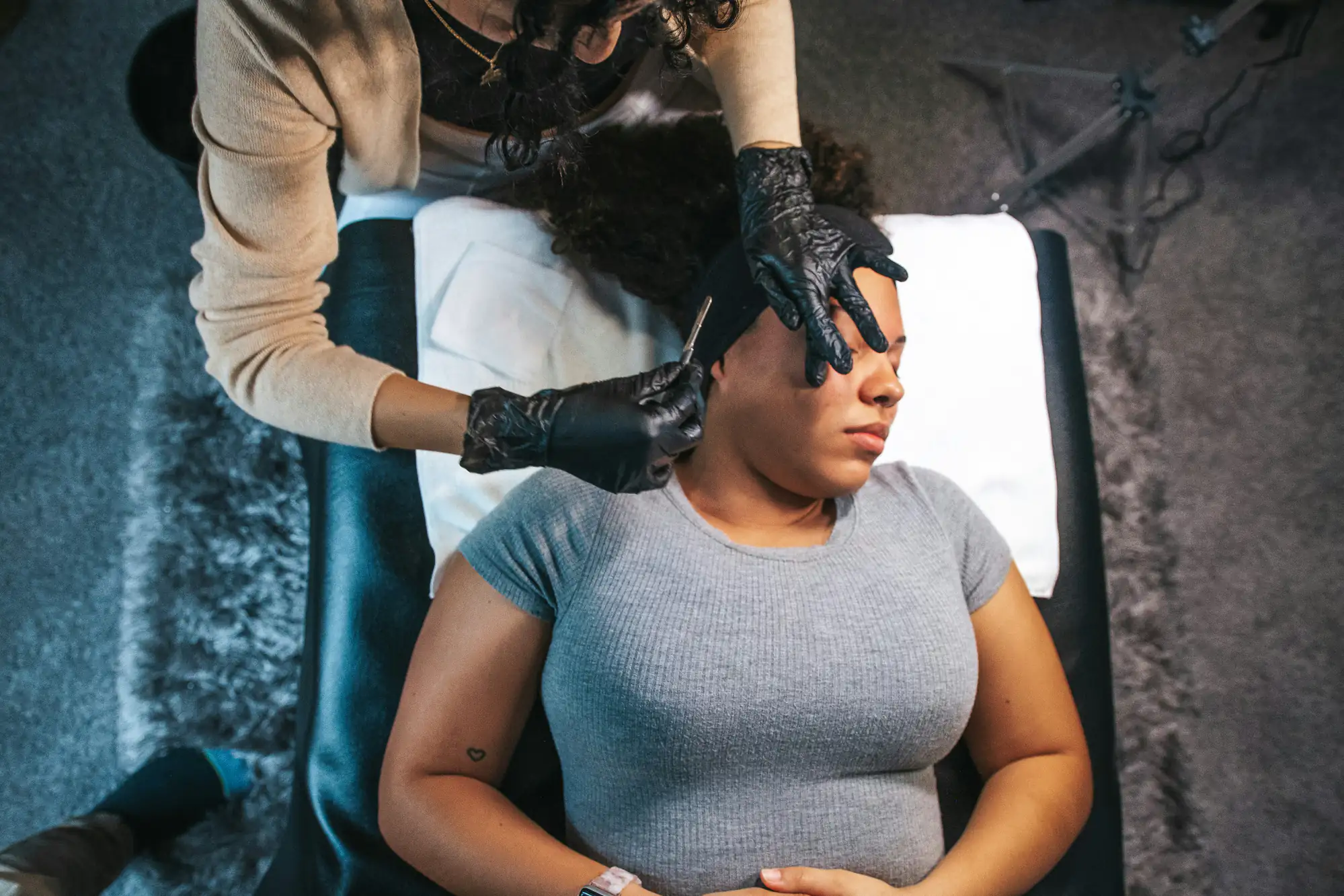
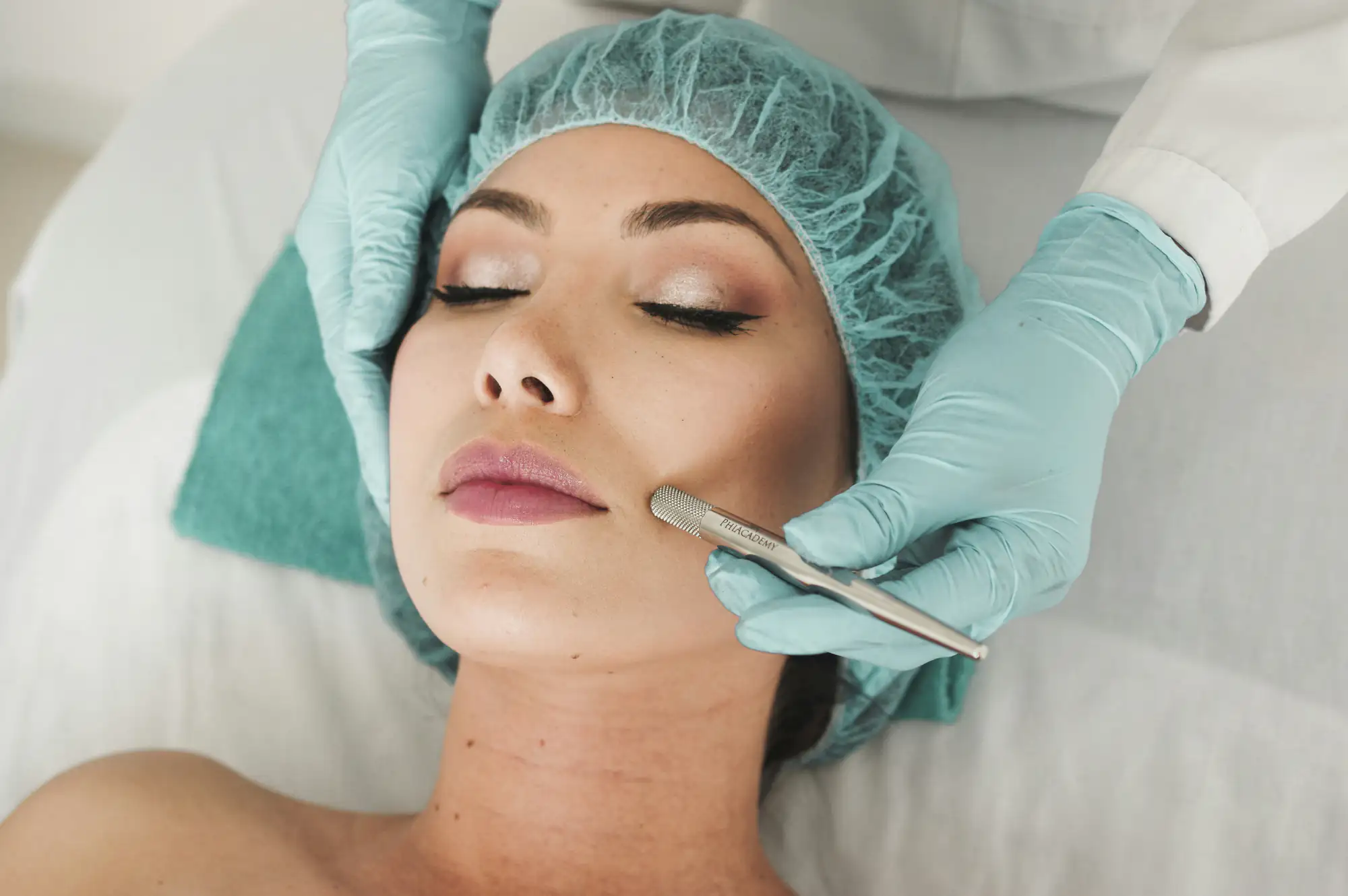
Once you’re in the treatment room, your skin gets cleansed. Then comes the actual dermaplaning: a sterile surgical scalpel held at a 45-degree angle, gently scraped across your skin in short strokes. It removes the top layer of dead skin cells and all the vellus hair (peach fuzz) in one pass.
It doesn’t hurt. Most people say it feels like a light scratching sensation—some even find it relaxing. The whole process takes 30 to 45 minutes, depending on whether you’re adding other treatments.
After dermaplaning, a hydrating mask or serum goes on. This is when your skin is most receptive, so whatever gets applied now absorbs deeply. You’ll leave with seriously smooth skin, an immediate glow, and zero redness or peeling. You can put makeup on the same day if you want, though most people skip it because their skin looks that good without it.

Ready to get started?
Every dermaplaning service includes a skin evaluation, the dermaplaning treatment itself, and a post-treatment application customized to your skin’s needs. If you’re new, you’ll also get a free consultation to discuss your goals and build a treatment plan.
Most clients in Apex book dermaplaning every three to four weeks. That’s how long it takes for dead skin cells to build back up and for vellus hair to return. Regular treatments keep your skin smooth, your pores clear, and your products working at full strength.
You can also combine dermaplaning with other treatments. A lot of people pair it with a HydraFacial for deeper hydration, or with a chemical peel for more aggressive exfoliation. We’ll walk you through what makes sense based on your skin type and what you’re trying to achieve.
One thing to know about the Apex market: there’s a lot of demand for quick, effective treatments that don’t interfere with work or social schedules. Dermaplaning fits that perfectly. No downtime, no redness, no flaking. You can book it on your lunch break and go straight back to your day.
No. This is the most common myth about dermaplaning, and it’s completely false.
Vellus hair—the peach fuzz on your face—is structurally different from terminal hair like what grows on your scalp or legs. It’s fine, light, and lacks the thick medulla that gives terminal hair its coarse texture. Shaving or removing vellus hair doesn’t change its structure or stimulate the follicle to produce thicker hair.
When the hair grows back after dermaplaning, it might feel slightly blunt at the tip because it was cut straight across. That can create a temporary illusion of thickness, but it’s the same hair. Same color, same texture, same growth rate. Within a few days, the tips soften and it feels exactly like it did before.
Technique, angle, and tool quality. Those three things make all the difference.
At-home dermaplaning tools are designed for safety, which means they’re not as sharp and they’re harder to control. A professional uses a sterile surgical-grade scalpel held at a precise 45-degree angle, applying the exact amount of pressure needed to remove dead skin and vellus hair without damaging the skin barrier.
Jacqueline has done this thousands of times. She knows how to adjust for different areas of your face, different skin thicknesses, and different skin conditions. She’s also trained to spot contraindications—situations where dermaplaning isn’t safe, like active breakouts or certain skin sensitivities.
You’re also getting a full treatment, not just hair removal. The pre-cleanse, the post-treatment serum, the professional-grade products—it all adds up to better results and zero risk of nicks, irritation, or uneven exfoliation.
Yes, in most cases. Dermaplaning is one of the gentlest exfoliation methods available because it’s entirely physical—no chemicals, no heat, no suction.
That said, it depends on the severity of your rosacea and whether your skin is currently flaring. If you’re dealing with active inflammation or broken capillaries, we might recommend waiting until your skin calms down, or we’ll adjust the treatment to avoid your most sensitive areas.
During your free consultation, we’ll evaluate your skin and ask about your triggers, your current skincare routine, and any treatments you’ve tried in the past. If dermaplaning isn’t the right move, we’ll tell you. And we’ll suggest what is—whether that’s a gentler enzyme treatment, a hydrating facial, or a combination approach that builds your skin’s tolerance over time.
Sensitive skin doesn’t mean you can’t have smooth, glowing skin. It just means you need someone who knows how to work with it.
Direct sun exposure and active ingredients for about 48 hours. Your skin is more vulnerable right after dermaplaning because you’ve just removed its outermost protective layer.
That means sunscreen is non-negotiable. Use a broad-spectrum SPF 30 or higher, and reapply throughout the day if you’re spending time outside. Apex gets plenty of sun year-round, so this isn’t optional.
You’ll also want to skip retinol, glycolic acid, salicylic acid, and any other exfoliating or active ingredients for two days. Your skin is already exfoliated—adding more will just cause irritation. Stick to gentle, hydrating products: a mild cleanser, a good moisturizer, and that sunscreen.
Avoid heavy workouts for 24 hours if you can. Sweat and friction can irritate freshly dermaplaned skin. And don’t pick or scratch, even if your skin feels a little tight or tingly as it adjusts. That’s normal and it’ll pass.
Most people feel totally fine immediately after treatment. But giving your skin a couple days to resettle ensures you get the full benefit without any setbacks.
Immediately. That’s one of the biggest advantages of dermaplaning—you walk out with visibly smoother, brighter skin the same day.
Your skin will feel softer to the touch because all the rough, dead cells and peach fuzz are gone. It’ll look more radiant because light reflects evenly off the smooth surface instead of scattering across texture. And if you apply makeup, you’ll notice it goes on flawlessly without clinging to dry patches or fuzz.
The deeper benefits take a little longer. Better product absorption means your serums and treatments start working more effectively right away, but you’ll see the cumulative effects—improved tone, reduced fine lines, smaller-looking pores—over the next few weeks as your skin regenerates.
If you’re prepping for an event, book your dermaplaning appointment one to three days before. That gives your skin time to fully settle while still looking its absolute best. If you’re building a long-term skincare routine, plan on treatments every three to four weeks to maintain that smooth, glowing baseline.
Yes. Dermaplaning is one of the few exfoliation treatments that’s safe for virtually every skin type and tone, including darker skin that’s more prone to hyperpigmentation.
Because it’s purely physical exfoliation—no chemicals, no heat, no light—there’s no risk of triggering post-inflammatory hyperpigmentation or damaging melanin-producing cells. That makes it a great option for clients who can’t tolerate chemical peels or laser treatments.
The only real contraindications are active acne (the blade can spread bacteria) and certain skin conditions like eczema or psoriasis in the treatment area. If you’re on Accutane or other medications that thin your skin, you’ll need to wait until you’re off them.
During your consultation, we’ll assess your skin and go over your medical history to make sure dermaplaning is the right fit. If it’s not, we’ll recommend an alternative that gets you the same results without the risk. The goal is always healthy, glowing skin—not just checking a treatment off a list.