
Hear from Our Customers
Your makeup sits flawlessly. Your skincare products actually absorb instead of sitting on the surface. That dull layer of dead skin and fine facial hair that catches light the wrong way? Gone.
Dermaplaning removes the outermost layer of dead skin cells and vellus hair in one smooth pass. You walk out with skin that feels softer and looks visibly brighter—not in a week, not after a series of treatments, but immediately.
There’s no peeling, no redness, no sitting at home waiting to look normal again. You can go straight back to work, run errands, meet friends for dinner. Most clients in Gorman and nearby Wake Forest schedule their dermaplane facial right before an event because the results show up instantly and photograph beautifully.
If you’ve been dealing with rough texture, makeup that won’t blend, or skincare that doesn’t seem to work anymore, this is the reset your skin needs. It’s not a miracle treatment—it’s just effective exfoliation done right.
We’re located in Wake Forest, just a short drive from Gorman, and we serve clients throughout Wake County—including Youngsville, Rolesville, Franklinton, and Raleigh. Jacqueline Grace, our founder and licensed esthetician, has been named Best Esthetician in Wake County three years running and holds HydraFacial Master Certification, a distinction earned by top practitioners worldwide.
She’s also won first place in the Pigmentation Artist of the Year category at The Skin Games, an international esthetician competition. Those aren’t just marketing credentials—they matter when someone’s holding a surgical blade near your face.
Every dermaplaning treatment starts with a free consultation. You’re not walking into a one-size-fits-all appointment. Jacqueline evaluates your skin, talks through what you’re trying to fix, and customizes the treatment to match your goals—whether that’s prepping for a wedding, improving product absorption, or just getting rid of the fuzz that shows up in every photo.

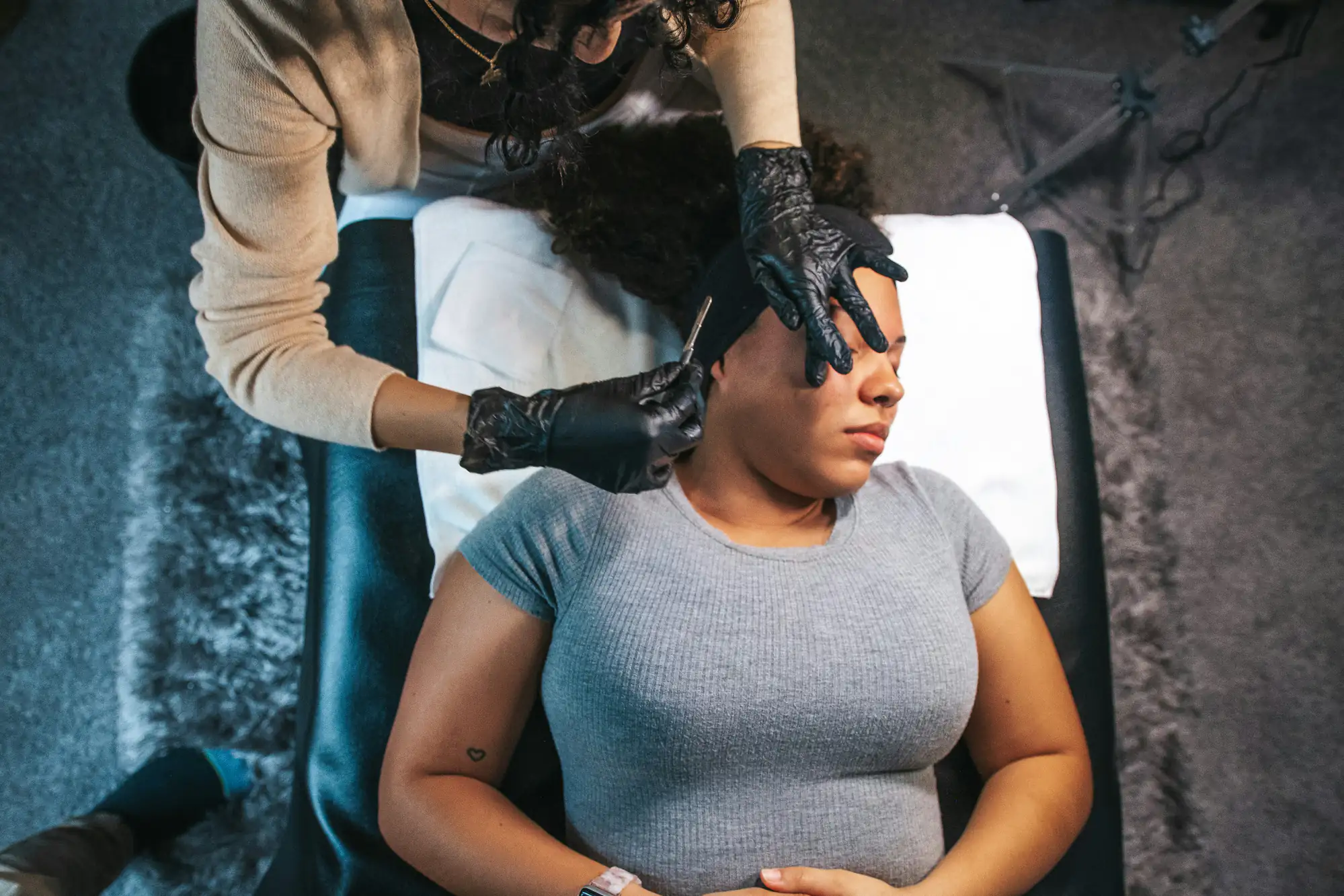
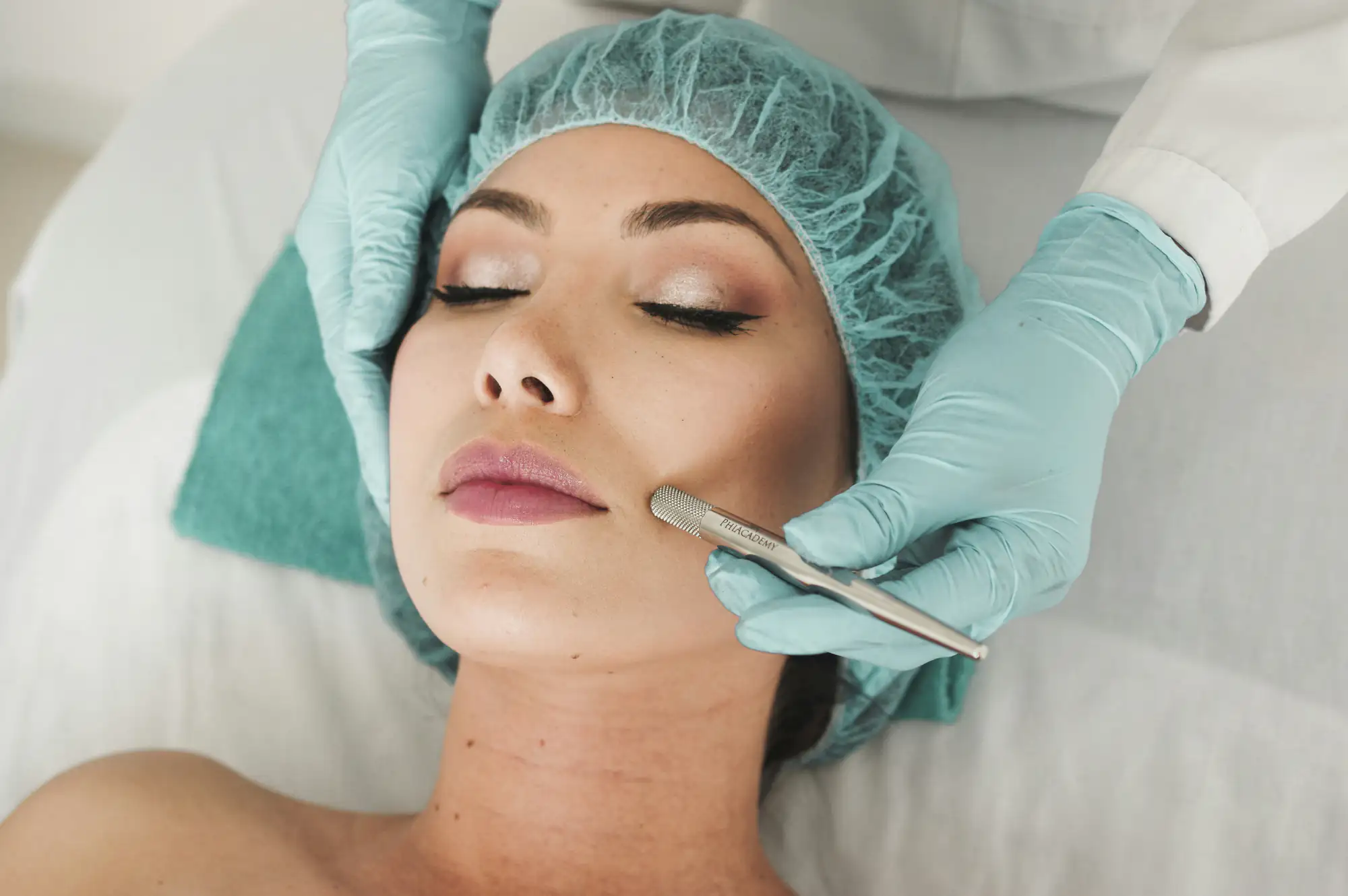
Your skin gets cleansed first to remove makeup, oil, and surface debris. Then Jacqueline uses a sterile surgical scalpel—a number 10 blade, held at a precise angle—to gently scrape away dead skin cells and fine hair. It’s not painful. Most people say it feels like a light scratching sensation, and some find it oddly satisfying.
The blade only removes what’s already dead or sitting on the surface. It doesn’t cut into live skin, and no, your hair won’t grow back thicker or darker. That’s a myth. Vellus hair grows back exactly the same way it was before—fine and soft.
After dermaplaning, a hydrating serum or mask goes on to calm and nourish your newly exposed skin. You’ll notice the difference immediately when you touch your face. It’s smoother, softer, and your skin looks brighter under normal lighting.
The whole appointment takes about 30 to 45 minutes. You can schedule it on your lunch break if you want. There’s no downtime, no peeling, no waiting period before you can wear makeup again. You’re good to go as soon as you walk out.

Ready to get started?
Every dermaplaning session at Wake Skincare includes a skin evaluation, the dermaplaning treatment itself, and a post-treatment serum or mask customized to your skin type. If you’re dealing with dryness, sensitivity, or acne-prone skin, Jacqueline adjusts the aftercare to match.
You also get guidance on how to maintain results at home. That means product recommendations based on what your skin actually needs—not what’s trendy or expensive. If you’re pregnant or nursing, dermaplaning is one of the few exfoliation treatments that’s completely safe because it’s mechanical, not chemical.
Clients in Gorman and surrounding areas like Zebulon, Wendell, and Knightdale typically book dermaplaning every three to four weeks. That’s the natural skin cell turnover cycle, and it’s when you’ll start noticing texture and dullness creeping back in. Some people come in more frequently before big events—weddings, photoshoots, reunions—because the results are immediate and reliable.
We combine dermaplaning with other treatments when it makes sense. If you’re already getting a HydraFacial or a chemical peel, adding dermaplaning first helps those treatments penetrate deeper and work more effectively. It’s not about upselling—it’s about layering treatments that actually complement each other.
No. This is the most common concern people have, and it’s based on a misunderstanding of how hair growth works.
Dermaplaning removes vellus hair—the fine, soft peach fuzz on your face. This type of hair doesn’t have the same structure as terminal hair (like the hair on your head or underarms). When you shave terminal hair, it can feel stubbly as it grows back because you’re cutting it at an angle, which makes the blunt edge more noticeable. Vellus hair doesn’t work that way.
After dermaplaning, your peach fuzz grows back at the same rate, same texture, same color. It doesn’t get coarser, darker, or more noticeable. If that were true, every esthetician who performs dermaplaning regularly would have a beard by now. The myth persists because people become more aware of the hair once it’s been removed, but the biology doesn’t change.
Yes, as long as you’re not dealing with active cystic acne or open wounds. Dermaplaning is actually one of the gentler exfoliation methods available because it’s entirely mechanical—no acids, no chemicals, no heat.
If you have sensitive skin that reacts to peels or retinoids, dermaplaning gives you the exfoliation benefits without the irritation. Jacqueline adjusts the pressure and technique based on your skin’s condition. She’ll also work around any active breakouts, moles, or areas of concern.
That said, if you have a full face of inflamed, cystic acne, dermaplaning isn’t the right move yet. You’d want to address the active breakouts first with a treatment plan that calms inflammation, then add dermaplaning once your skin is in a better place. During your free consultation, Jacqueline evaluates your skin and tells you honestly whether dermaplaning makes sense right now or if another treatment would serve you better.
The tools, the technique, and the training. At-home dermaplaning tools are smaller, duller, and designed with safety guards that limit how much they can actually remove. They’re fine for light maintenance, but they don’t give you the same level of exfoliation.
Professional dermaplaning uses a number 10 surgical scalpel held at a precise angle—usually 45 degrees. Jacqueline has the training to navigate around moles, active breakouts, and areas where the skin is thinner or more delicate. The margin for error is smaller than most people realize, and improper technique can lead to nicks, irritation, or uneven results.
There’s also the issue of sanitation. Professional dermaplaning is done in a controlled environment with sterile, single-use blades. At home, even if you’re careful, it’s harder to maintain that level of cleanliness. If you’re doing it yourself and you’re happy with the results, that’s fine. But if you want deeper exfoliation, smoother results, and zero risk of mistakes, professional dermaplaning is worth the investment.
Yes, but most people don’t want to. Your skin looks that good on its own.
Technically, you can apply makeup immediately after dermaplaning. There’s no downtime, no redness, no sensitivity that prevents it. In fact, your makeup will go on smoother than it ever has because there’s no peach fuzz or dead skin in the way.
That said, your skin is going to look noticeably brighter and more even right after treatment. A lot of clients skip makeup entirely for the rest of the day—or they just use a tinted moisturizer and call it done. If you do want to wear makeup, go for it. Just make sure your brushes and sponges are clean, since your skin will be more receptive to everything you put on it, including bacteria.
The only thing to avoid for the first 24 hours is heavy exfoliation or active ingredients like retinoids and strong acids. Your skin just got a deep exfoliation—it doesn’t need another one stacked on top. Stick to gentle, hydrating products for the first day, then resume your normal routine.
Every three to four weeks is the standard recommendation, and that timing is based on your skin’s natural cell turnover cycle. Your skin sheds dead cells constantly, and it takes about 28 days for a full cycle to complete. By the time you hit that three-to-four-week mark, you’ll start noticing the same dullness and texture creeping back in.
Some clients in Gorman, Raleigh, and the surrounding Wake County area come in more frequently if they have a string of events—engagement photos, a wedding, holiday parties. Dermaplaning doesn’t damage your skin, so it’s safe to do more often if you want to maintain that fresh, glowing look.
Other clients stretch it to every five or six weeks, especially if they’re also doing chemical peels or other exfoliating treatments. It really depends on your skin, your goals, and your budget. During your consultation, Jacqueline will give you a realistic timeline based on what she’s seeing and what you’re trying to achieve. There’s no pressure to book more often than makes sense for you.
If your at-home routine is working and you’re happy with your skin, you might not need it. But if you’re exfoliating regularly and still dealing with dullness, rough texture, or makeup that won’t sit right, dermaplaning gets to a level your scrubs and acids can’t reach.
Most at-home exfoliants work on the surface. Scrubs physically buff away some dead skin. Chemical exfoliants like AHAs and BHAs dissolve the bonds between dead cells. Both are effective to a point, but they don’t remove vellus hair, and they don’t give you the same immediate smoothness that dermaplaning does.
Dermaplaning also primes your skin to actually absorb the products you’re already using. If you’re investing in serums, treatments, or prescription skincare, dermaplaning makes sure those products can penetrate instead of sitting on top of a layer of dead skin and fuzz. You’re not replacing your routine—you’re making it work better. That’s the real value.