Hear from Our Customers
Your makeup sits differently. Foundation glides on instead of clinging to fine hairs you didn’t realize were there. Serums absorb faster because there’s no barrier of dead cells blocking penetration.
You’ll notice the difference when you look in the mirror under natural light. Skin looks brighter without feeling tight or irritated. The dullness that made you look tired even after a full night’s sleep is gone.
This isn’t a gradual improvement you track over weeks. Dermaplaning removes up to three weeks of dead skin buildup in one session. Your skin texture feels smoother immediately, and that glow people pay hundreds for with other treatments shows up the same day.
Most clients in Holly Springs book their dermaplane facial before weddings, photoshoots, or important presentations. Not because it takes time to work, but because they want that polished, camera-ready look on a specific date. The treatment takes less than 30 minutes, there’s zero downtime, and you can apply makeup right after if needed.
We’ve been serving Holly Springs and 21 other Wake County communities with medical-grade skincare treatments since opening in Wake Forest. Jacqueline Grace, our clinic’s founder and licensed esthetician, has been named Best Esthetician in Wake County three years running.
She’s also HydraFacial Master Certified and placed first internationally in the Pigmentation Artist of the Year category at The Skin Games. That level of recognition doesn’t come from following basic protocols—it comes from understanding skin at a deeper level and knowing how to customize treatments for real results.
Every dermaplaning session here starts with a free consultation. You’re not getting a one-size-fits-all facial. You’re getting an assessment of your specific skin type, concerns, and goals before a sterile surgical-grade blade ever touches your face.

Your esthetician starts by cleansing your skin to remove any makeup, oil, or surface debris. This ensures the dermaplaning blade works on clean skin without pushing contaminants deeper into pores.
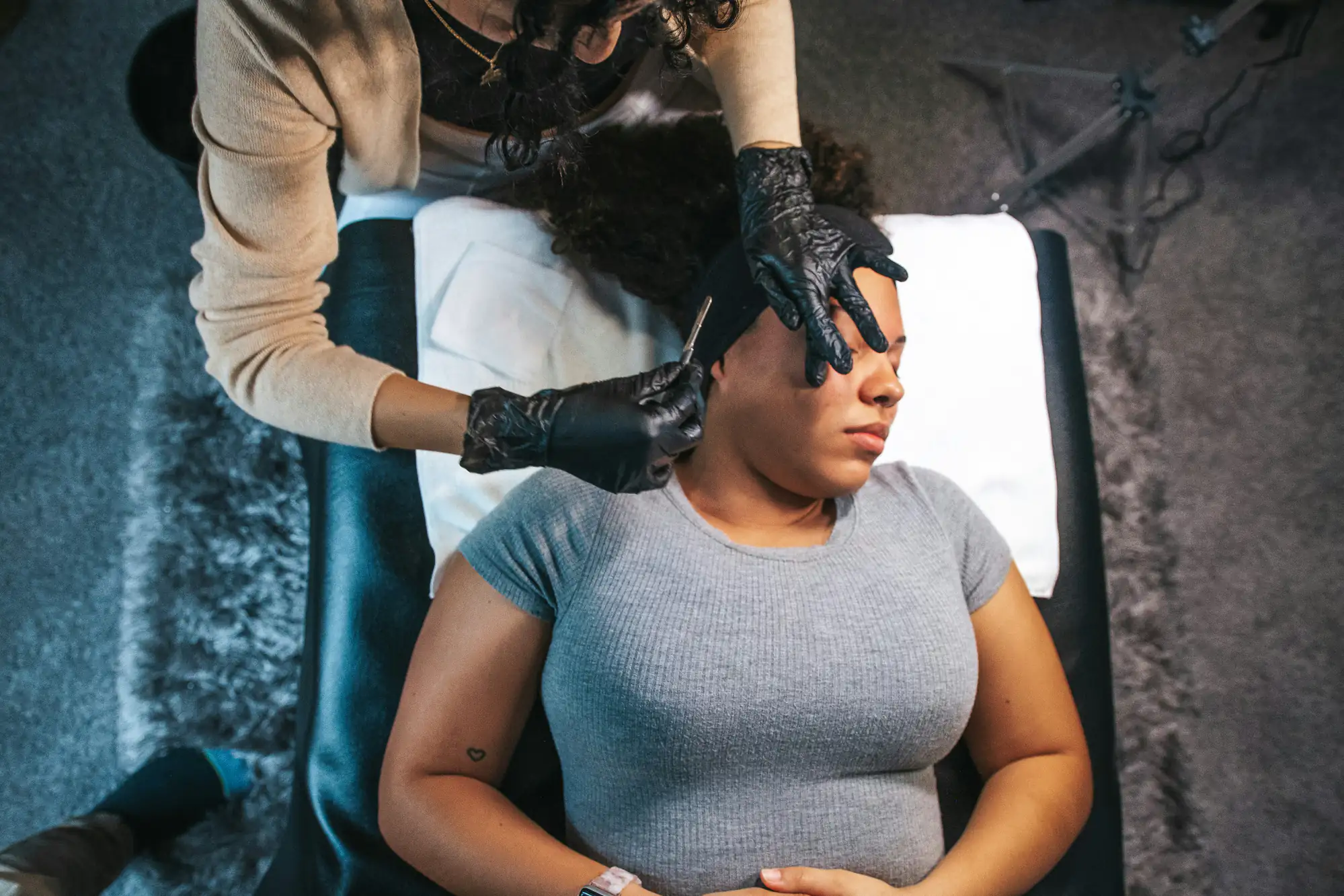
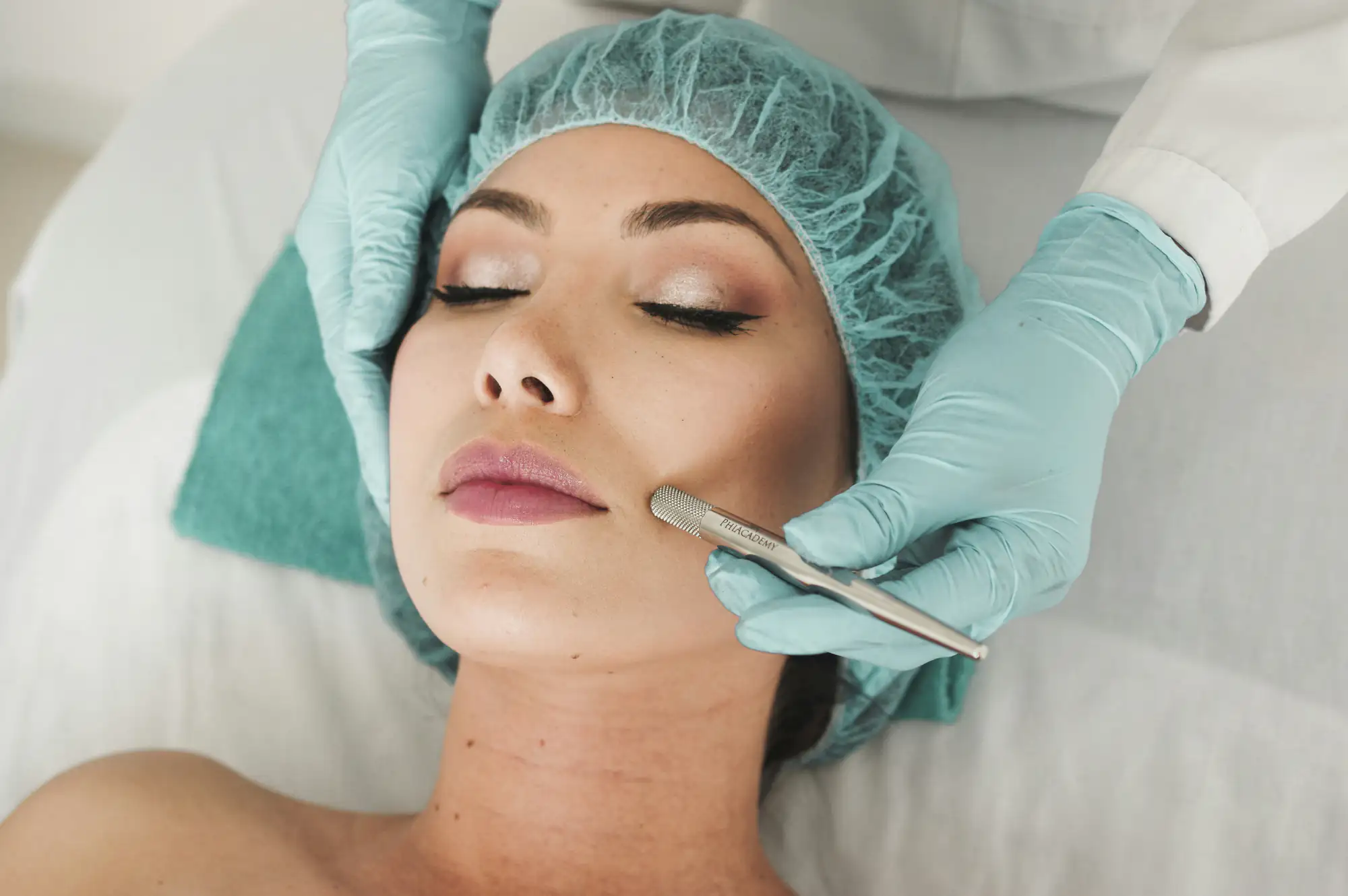
Next comes the actual dermaplaning. Using a sterile, surgical-grade scalpel held at a precise 45-degree angle, your esthetician makes light, feathering strokes across your face. You’ll feel a gentle scraping sensation—not painful, more like a light brushing. This process removes the top layer of dead skin cells along with vellus hair (peach fuzz) that traps dirt and makes makeup application uneven.
The entire dermaplaning portion takes about 20 minutes. After that, your esthetician applies a hydrating serum or mask. Because the dead skin barrier is gone, these products penetrate up to 20 times more effectively than they would on untreated skin.
There’s no recovery period. Your skin might look slightly pink for an hour or two, similar to how it looks after a good facial massage. You can return to work, apply makeup, or go straight to an event. Most clients in Holly Springs schedule their dermaplane facial during lunch breaks.

Ready to get started?
Every dermaplaning treatment at Wake Skincare includes a pre-treatment skin analysis, the dermaplaning procedure itself, and a customized post-treatment application based on what your skin needs that day. If you’re dealing with hyperpigmentation, you might get a brightening serum. If your skin runs dry, you’ll get intensive hydration.
You also have the option to combine dermaplaning with other treatments. Many clients pair it with a HydraFacial for deeper exfoliation and extraction, especially before major events. The combination addresses multiple skin concerns in one appointment and maximizes product absorption since dermaplaning removes the barrier that often blocks active ingredients.
For Holly Springs residents dealing with sun damage or uneven texture—common issues in North Carolina’s climate—dermaplaning helps fade hyperpigmentation faster by removing the damaged surface cells and revealing healthier skin underneath. It also softens the appearance of fine lines by eliminating the dulling effect of dead skin accumulation.
The treatment works for virtually every skin type and tone, even sensitive skin. The only exceptions are active acne breakouts or certain skin conditions, which your esthetician will identify during your free consultation before recommending the best approach for your specific situation.
No. This is the most common concern people have before their first dermaplane facial, and it’s based on a myth about shaving.
Vellus hair—the peach fuzz on your face—is structurally different from terminal hair like what grows on your scalp or legs. It’s fine, soft, and lacks the pigment that makes other body hair visible. Dermaplaning removes vellus hair at the surface level, just like shaving, but it doesn’t change the hair follicle itself.
When the hair grows back, it grows back exactly as it was: fine, soft, and light. The blunt edge created by cutting might make it feel slightly different for a day or two as it emerges, but it doesn’t become coarse or dark. Estheticians and dermatologists have been performing dermaplaning for decades, and there’s no clinical evidence showing it alters hair texture or growth patterns.
The blade, the angle, and the training make the difference between smooth results and potential scarring.
At-home dermaplaning tools sold online use different blade types and angles than what licensed estheticians use. Most aren’t surgical-grade, and many don’t allow for the precise 45-degree angle required to safely remove dead skin without cutting into healthy tissue. When you’re doing it yourself in a bathroom mirror, it’s difficult to maintain consistent pressure and angle across the contours of your face.
Professional dermaplaning uses sterile, single-use surgical scalpels. Your esthetician has been trained on facial anatomy, proper stroke direction, and how to adjust technique based on skin type and sensitivity. They can see areas you can’t easily reach or view clearly, like along the jawline or near the hairline.
The risk with DIY dermaplaning isn’t just ineffective exfoliation. It’s cutting yourself and potentially creating permanent scars or triggering infections. At Wake Skincare, you’re getting medical-grade treatment in a controlled environment with someone who’s performed thousands of these procedures.
Yes, and it’ll actually apply better than it did before the treatment.
One of the main benefits of dermaplaning is how it transforms makeup application. Without peach fuzz and dead skin cells, foundation spreads evenly instead of catching on fine hairs or settling into rough texture. Many clients schedule their dermaplane facial right before an event specifically because they can apply makeup immediately after.
That said, your skin will be more receptive to products right after dermaplaning—both the good and the bad. If you’re using makeup with potential irritants or low-quality ingredients, your skin might react more noticeably than usual. Stick with clean, non-comedogenic products for the first 24 hours if possible.
You’ll also want to avoid heavy exfoliating products, retinols, or acids for about three days post-treatment. Your skin has just been exfoliated at a deeper level than most at-home products can achieve, so adding more exfoliation on top of that can cause irritation. Your esthetician will give you specific aftercare instructions based on your skin type and the products you normally use.
Most clients come in every three to four weeks, which aligns with your skin’s natural cell turnover cycle.
Your skin regenerates itself approximately every 28 days. Dead cells accumulate on the surface during that time, which is why exfoliation matters for maintaining that fresh, glowing look. Dermaplaning every three to four weeks keeps you ahead of that buildup without over-exfoliating.
Some people come in more frequently before a series of events—wedding season, holiday parties, professional headshots. Others treat it as a monthly maintenance appointment, similar to how they’d schedule a haircut or facial. There’s no medical reason you need to stick to a rigid schedule, but consistency does give you better long-term results.
If you’re combining dermaplaning with other treatments like chemical peels or microneedling, your esthetician might adjust the timing. Some treatments work better when spaced further apart, while others complement each other when done in the same session. That’s something you’ll discuss during your consultation based on your specific skin goals and concerns.
It helps, but it’s not a standalone solution for deep scarring or significant pigmentation issues.
Dermaplaning removes the top layer of dead, often hyperpigmented skin cells. That can make dark spots appear lighter and help fade post-inflammatory hyperpigmentation faster than waiting for natural cell turnover. You’re physically removing the damaged surface layer and revealing fresher skin underneath.
For shallow acne scars or rough texture left behind from old breakouts, dermaplaning smooths the surface and makes those imperfections less noticeable. It won’t eliminate deep ice-pick scars or pitted scarring, but it does improve overall skin texture in a way that makes scars less prominent.
If hyperpigmentation or acne scarring is your primary concern, your esthetician will likely recommend combining dermaplaning with other treatments. Chemical peels, microneedling, or targeted serums work deeper than dermaplaning alone and address pigmentation at multiple skin layers. Dermaplaning enhances those treatments by removing the barrier that blocks product penetration, so you get better results from everything applied afterward. We offer free consultations to map out a treatment plan that actually addresses what you’re dealing with, not just what fits into a single appointment.
Yes. If you have active acne, open wounds, or certain skin conditions, dermaplaning isn’t the right treatment for you—at least not right now.
Active breakouts are the main contraindication. Dragging a blade across inflamed acne can spread bacteria, make breakouts worse, and increase the risk of scarring. If you’re dealing with cystic acne or widespread inflammation, your esthetician will recommend treating the acne first before adding dermaplaning to your routine.
Skin conditions like eczema, psoriasis, or rosacea in an active flare state also make dermaplaning risky. The treatment could irritate already compromised skin and trigger more inflammation. That doesn’t mean you can never get dermaplaning if you have these conditions—it just means timing matters, and your esthetician needs to assess your skin’s current state before proceeding.
If you’re on certain medications like Accutane or using high-strength retinoids, your skin might be too sensitive for dermaplaning. These treatments thin the skin and make it more vulnerable to damage from exfoliation. During your free consultation at Wake Skincare, you’ll go over your current skincare routine, medications, and any underlying conditions so your esthetician can determine whether dermaplaning is safe and effective for you right now.