Hear from Our Customers
Your makeup goes on smoother. That’s usually the first thing people notice—foundation doesn’t cake, and your skin actually looks like skin again instead of fighting against texture you can’t fix with product.
The dull, uneven tone you’ve been dealing with? Gone. Dermaplaning removes the layer of dead skin cells that make your face look tired even when you’re not. What’s left is brighter, fresher skin that reflects light the way it should.
And if you’ve been self-conscious about peach fuzz, this takes care of that too. The treatment removes vellus hair along with buildup, so your skin feels as smooth as it looks. No more worrying about how your face looks in certain lighting or whether people can see the fine hair you’ve been trying to ignore.
Your skincare products also start working better. When there’s no barrier of dead skin in the way, serums and moisturizers actually absorb instead of sitting on the surface doing nothing.
Wake Skincare is led by Jacqueline Grace, a licensed esthetician who’s been named Best Esthetician in Wake County three years running. She’s also HydraFacial Master Certified—one of the first hundred practitioners worldwide to earn that level of expertise.
Every dermaplaning session we do starts with a real consultation. Not a quick glance and a standard script, but an actual assessment of what your skin needs right now. That matters in Pittsboro, where seasonal humidity, sun exposure, and lifestyle factors all affect how your skin behaves.
Jacqueline has also placed first in international aesthetics competitions for pigmentation work, so if you’re dealing with uneven tone or sun damage on top of texture issues, you’re in the right place. This isn’t a one-size-fits-all spa. We’re a clinic that adapts every treatment to what you actually need.

You start with a consultation. Jacqueline looks at your skin, asks about your concerns, and maps out what the treatment will address. If you’re coming in before an event or dealing with a specific issue like acne scarring or dullness, that gets factored in.
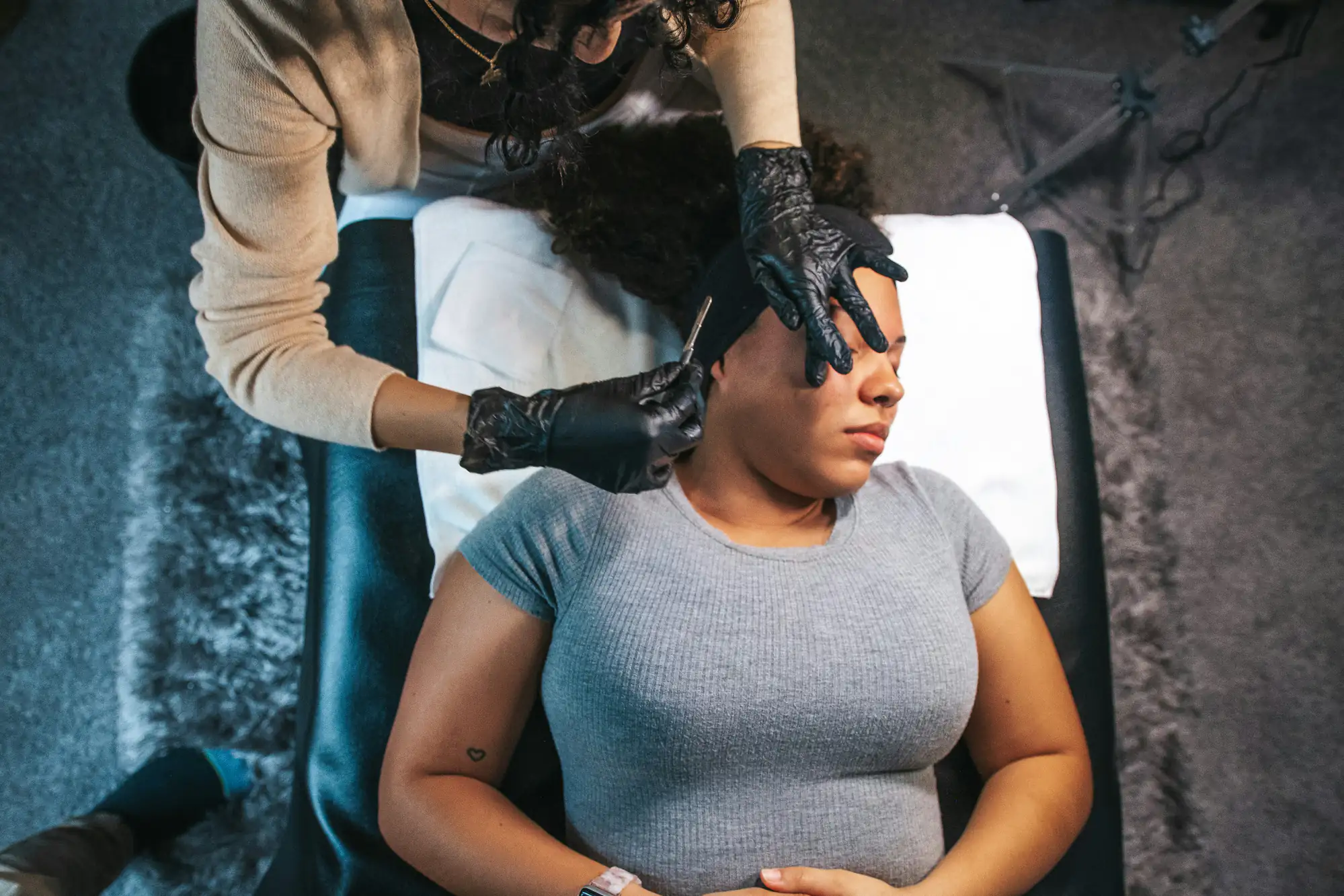
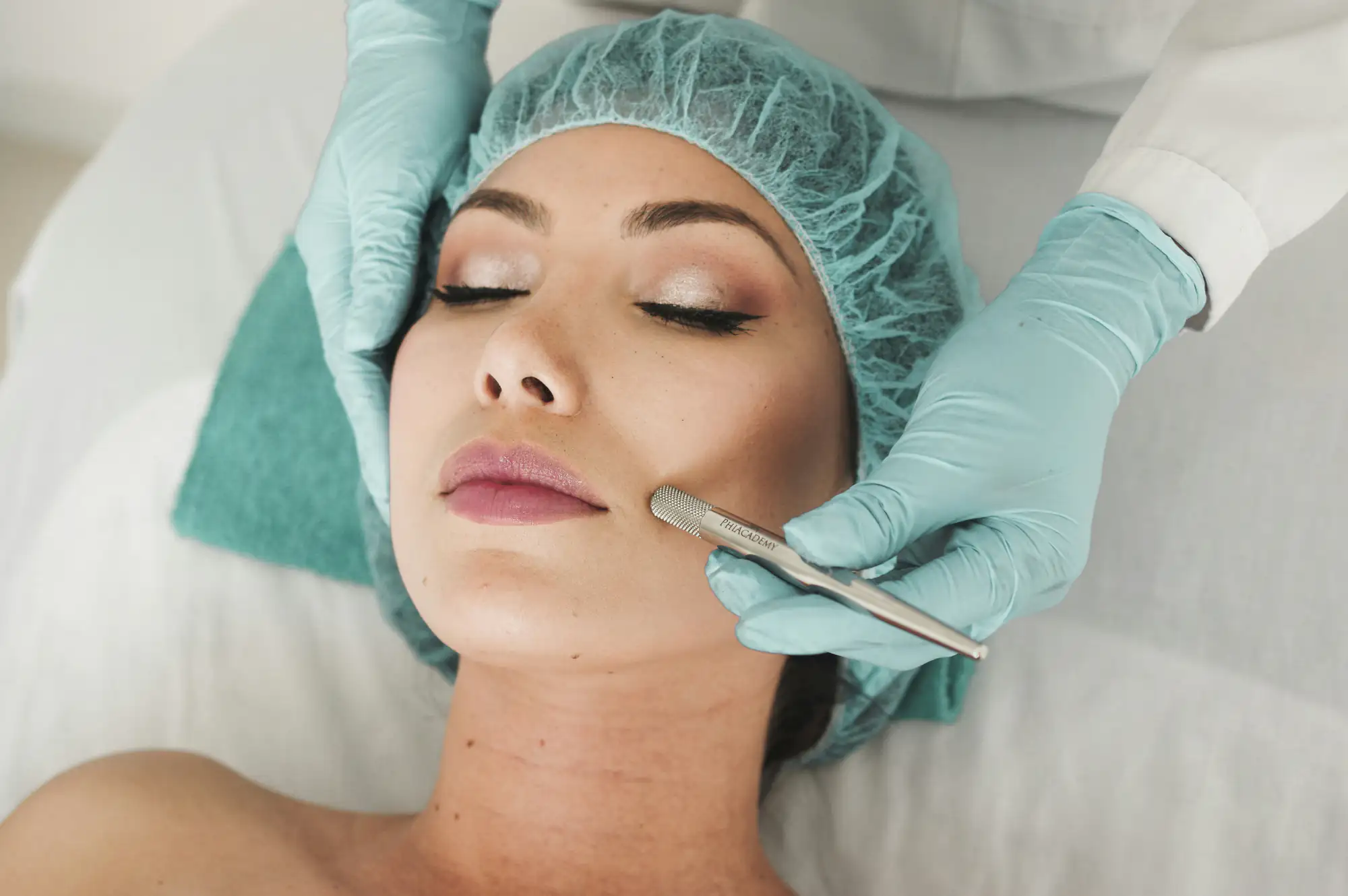
The dermaplaning itself is straightforward. A sterile surgical scalpel is used at a 45-degree angle to gently scrape away dead skin cells and vellus hair from the surface of your face. It’s not painful—most people describe it as a light scratching sensation, and some find it oddly satisfying.
The whole process takes about 30 to 45 minutes depending on your skin. There’s no downtime afterward. You might have some slight redness for an hour or two, but nothing that keeps you from going about your day.
After the treatment, your skin is more receptive to products, so this is when a good moisturizer and sunscreen matter most. You’ll leave with specific aftercare guidance based on your skin type. Results last around three weeks, and most people schedule treatments every three to four weeks to maintain that smooth, glowing look.

Ready to get started?
Every dermaplaning appointment at Wake Skincare includes a full skin consultation, the treatment itself, and personalized aftercare recommendations. You’re not rushed in and out. The focus is on doing it right.
In Pittsboro and the surrounding Wake County area, a lot of people deal with sun damage from spending time outdoors, whether that’s gardening, running, or just living in North Carolina. Dermaplaning helps address that by removing the damaged outer layer and allowing healthier skin to surface.
If you’re dealing with dry patches, rough texture, or clogged pores, this treatment handles all of that in one session. It’s also a great option if you’ve been hesitant about more invasive procedures—no needles, no lasers, no harsh chemicals. Just a blade, steady hands, and immediate results.
You can add dermaplaning to other treatments like a HydraFacial for even better results. A lot of clients do exactly that, especially before weddings, reunions, or any event where they want their skin to look its best. The combination gives you deep exfoliation, hydration, and that lit-from-within glow people always ask about.
No. This is one of the most common myths about dermaplaning, and it’s not true. The treatment removes vellus hair, which is the fine, soft peach fuzz on your face. Vellus hair is different from terminal hair—the thicker, coarser hair that grows on your scalp or eyebrows.
When vellus hair grows back after dermaplaning, it comes back exactly the same texture and color it was before. It doesn’t get darker, thicker, or more noticeable. The reason people sometimes think it does is because the hair has a blunt edge right after it’s cut, which can feel slightly different for a day or two. But as it grows, it tapers naturally and returns to normal.
Dermaplaning doesn’t change your hair follicles or stimulate new growth. It’s a surface-level treatment that only affects what’s above the skin. If your hair was fine and light before, it’ll be fine and light after.
Most people see results for about three weeks. That’s how long it takes for your skin to go through its natural cell turnover cycle and for vellus hair to grow back to a noticeable length.
During those three weeks, your skin stays smoother, brighter, and more even. Makeup applies better, skincare products absorb faster, and you don’t have to deal with the dull, rough texture that builds up over time. Some people notice the glow starts to fade around the two-week mark, especially if they’re not keeping up with a good skincare routine at home.
You can get dermaplaning done every three to four weeks. Going more frequently than that isn’t recommended because your skin needs time to regenerate between treatments. Spacing it out properly also reduces the risk of irritation and gives you consistent results without overdoing it.
Yes, for most people. Dermaplaning is actually one of the gentler exfoliation methods because it’s entirely physical—no chemicals, no heat, no suction. That makes it a good option if your skin reacts badly to peels or harsh scrubs.
That said, there are some situations where dermaplaning isn’t recommended. If you have active acne, rosacea flare-ups, eczema, or any open wounds on your face, you should wait until those clear up. The blade can irritate inflamed skin and make things worse instead of better.
During your consultation, Jacqueline will assess your skin and let you know if dermaplaning is a good fit right now. If it’s not, she’ll recommend an alternative treatment that’ll get you similar results without the risk. Sensitive skin doesn’t automatically disqualify you—it just means the approach needs to be customized, which is exactly what we do here.
You can, but it’s better to wait at least 24 hours if possible. Right after dermaplaning, your skin is more exposed and sensitive because the outer layer of dead cells has been removed. Putting makeup on immediately can clog your pores or cause irritation, especially if you’re using products with heavy fragrances or certain active ingredients.
If you absolutely need to wear makeup the same day—like if you’re getting the treatment done right before an event—use something lightweight and clean. Mineral-based makeup is usually the safest bet. Avoid anything with retinol, glycolic acid, or other exfoliating ingredients for at least a few days after your appointment.
Most people schedule dermaplaning when they have a day or two to let their skin breathe. That way, you get the full benefit of the treatment without risking a reaction. Your skin will look good enough on its own that you might not even want makeup for a while.
Dermaplaning uses a surgical-grade scalpel held at a precise angle to remove dead skin cells and vellus hair. Shaving uses a regular razor designed to cut hair at the surface without exfoliating the skin. The tools, technique, and results are completely different.
When you shave your face at home, you’re mostly just removing hair. You might get a little exfoliation depending on the razor, but it’s not controlled or consistent. Dermaplaning, on the other hand, is a medical-grade treatment performed by a licensed esthetician who’s trained to work at the right depth and angle to exfoliate evenly without causing damage.
The other big difference is safety and precision. A professional dermaplaning treatment is done in a sterile environment with proper prep and aftercare. At home, it’s easy to apply too much pressure, use a dull blade, or skip steps that protect your skin. The results aren’t comparable, and the risk of irritation or cuts is much higher when you’re doing it yourself.
Pricing varies depending on whether you’re getting dermaplaning as a standalone treatment or adding it to something else like a HydraFacial. On average, you can expect to pay anywhere from $75 to $150 for a professional dermaplaning session in the Wake County area.
At Wake Skincare, every treatment is customized, so the cost reflects what your skin actually needs. If you’re booking dermaplaning on its own, that’s one price. If you’re pairing it with another service for a more comprehensive result, that’s factored in differently. The best way to get an accurate number is to schedule a free consultation.
What you’re paying for isn’t just the treatment itself—it’s the expertise, the personalized approach, and the fact that you’re seeing someone who’s been recognized as one of the best estheticians in the area. You’re not getting a quick, generic session. You’re getting a treatment that’s adapted to your skin, your goals, and your timeline.