Hear from Our Customers
Your makeup stops settling into fine lines. Your skincare products actually absorb instead of sitting on the surface. That dull, tired look you’ve been covering up with filters? Gone after one session.
Dermaplaning removes the top layer of dead skin cells and vellus hair—the peach fuzz that catches foundation and dulls your complexion. The result is immediate. Smoother texture, brighter tone, and a canvas that makes everything you put on your face work better.
There’s no redness, no peeling, no hiding at home for three days. You can get dermaplaning done during lunch and go straight back to work. For anyone in Selma, NC dealing with makeup that won’t blend, skincare that won’t sink in, or skin that just looks flat no matter what you try, this is the reset you’ve been looking for.
We’re not new to this. Jacqueline Grace has been named Best Esthetician in Wake County three years in a row, and she’s one of fewer than 100 HydraFacial Master Certified practitioners worldwide. She’s also taken first place internationally in the Pigmentation Artist of the Year category at The Skin Games.
That’s not luck. It’s consistency, skill, and a refusal to treat every face the same way. Clients from Selma, NC and across Wake County come here because the results show up fast and the approach is personal. You’re not getting a one-size-fits-all facial. You’re getting a treatment built around what your skin actually needs right now.
Every dermaplaning session starts with a free consultation. No pressure, no upselling—just an honest conversation about what’s realistic and what’s worth your time.

Your session starts with a skin evaluation. Jacqueline looks at your skin type, texture, concerns, and goals before touching your face. If dermaplaning isn’t the right move—say you have active acne—she’ll tell you and recommend what actually makes sense.
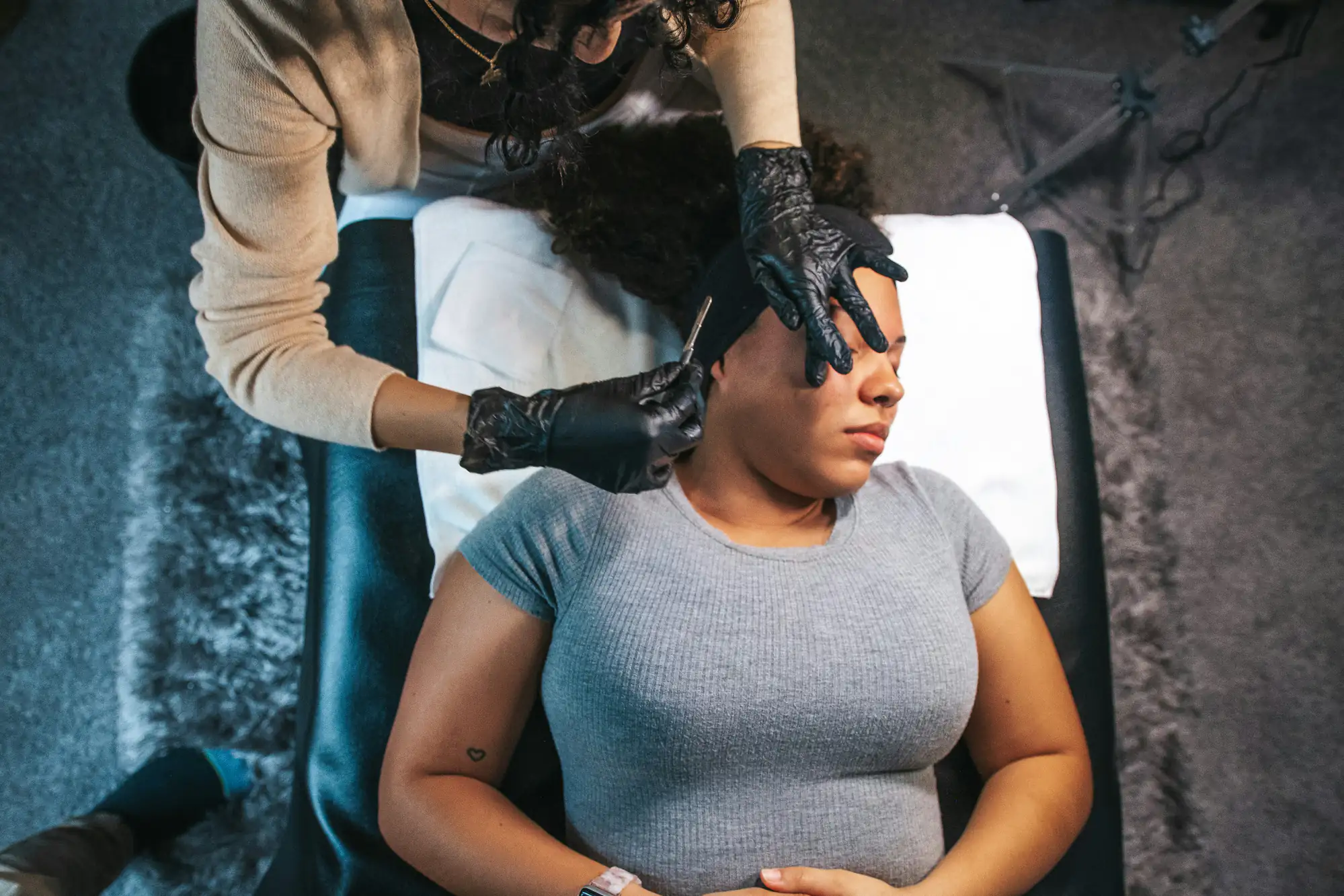
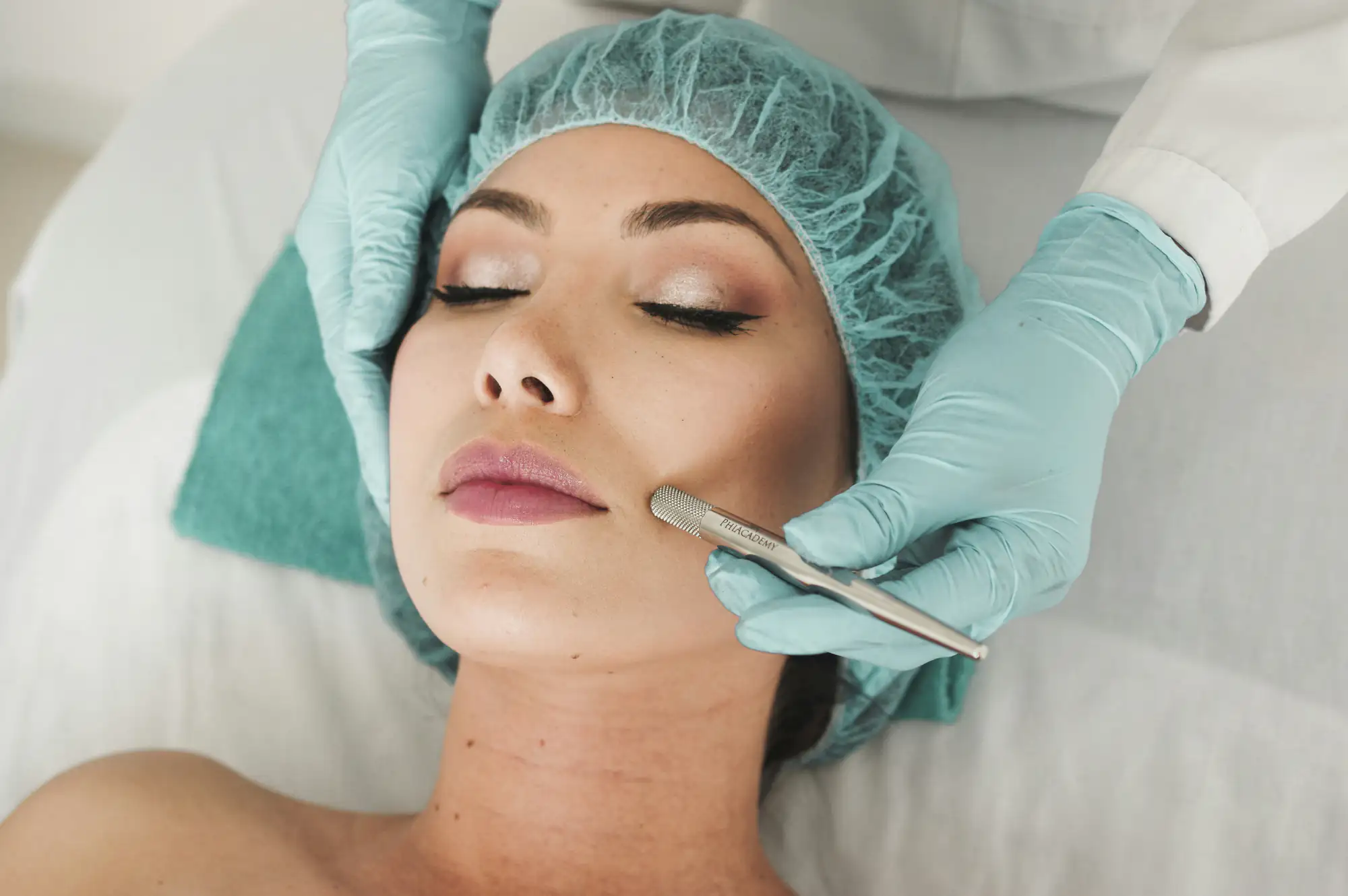
If you’re good to go, your skin gets cleansed and prepped. Then a sterile surgical scalpel is used at a 45-degree angle to gently scrape away dead skin cells and peach fuzz. It’s not painful. Most people say it feels like a light scratching sensation, almost relaxing.
The whole process takes about 30 to 45 minutes. Afterward, your skin might feel a little tight or look slightly pink for an hour or two, but that fades fast. You leave with visibly smoother, brighter skin. No downtime, no recovery period. You can put on makeup the next day if you want, though most people don’t feel like they need to.
For best results, plan on coming back every three to four weeks at first. Once your skin’s in a good rhythm, you can stretch it to every four to eight weeks depending on how your skin responds.

Ready to get started?
Every dermaplaning service at Wake Skincare includes a full skin consultation, the dermaplaning treatment itself, and post-treatment skincare to protect and hydrate your newly exfoliated skin. You’re not rushed in and out. This is a one-on-one appointment designed around your skin’s needs.
For clients in Selma, NC, this matters more than you might think. The area’s mix of humidity and seasonal dryness can leave skin looking uneven or feeling rough. Add in makeup that’s supposed to look dewy but ends up patchy, and you’ve got a frustrating cycle. Dermaplaning breaks that cycle by removing the barrier that’s keeping your skin from looking and feeling its best.
You can get dermaplaning as a standalone treatment, or pair it with other services like a HydraFacial, chemical peel, or LED light therapy. Dermaplaning actually makes those treatments more effective because it allows active ingredients to penetrate deeper. If you’ve been doing facials or using expensive serums without seeing much change, this could be why.
We also offer medical-grade skincare recommendations based on what your skin shows during your appointment. You’re not walking out with a generic routine. You’re walking out with a plan that actually fits your life and your goals.
No. This is one of the most common myths about dermaplaning, and it’s not true. The hair on your face—called vellus hair or peach fuzz—is different from the hair on your head or body. It’s fine, soft, and light in color.
Dermaplaning removes hair at the surface level, not at the root. It doesn’t change the structure of the hair follicle, so it can’t make hair grow back thicker, darker, or coarser. When the hair grows back, it grows back exactly the same as it was before—soft and fine.
The myth probably comes from the blunt edge you feel when hair first starts growing back after shaving. But that’s just because the tip of the hair was cut, not because the hair itself changed. Within a few days, it softens and you won’t even notice it.
Most people start with treatments every three to four weeks. That’s roughly how long it takes for your skin to complete a full cell turnover cycle, so you’re removing the new layer of dead skin that’s built up since your last appointment.
Once your skin is in a good place and you’re just maintaining results, you can space it out to every four to six weeks, or even six to eight weeks depending on your skin type and goals. Some clients come in before big events—weddings, photoshoots, vacations—because they know their skin will look its best right after.
During your consultation, Jacqueline will give you a realistic recommendation based on your skin’s condition and what you’re trying to achieve. There’s no one-size-fits-all schedule. It depends on how quickly your skin builds up dead cells, how much peach fuzz you have, and how your skin responds to the treatment.
Yes, dermaplaning is safe for all skin types and skin tones. Unlike some exfoliation methods that use heat or chemicals, dermaplaning is purely physical exfoliation with a sterile blade. There’s no risk of hyperpigmentation or damage to melanin in the skin, which makes it a great option for darker skin tones.
That said, it’s not recommended if you have active acne, open wounds, or certain skin conditions like eczema or rosacea flare-ups. The blade can irritate inflamed skin or spread bacteria if you have active breakouts. If you’re dealing with any of those issues, Jacqueline will let you know during your consultation and suggest a better treatment option.
For clients in Selma, NC—where the population is diverse and includes a significant percentage of Black and Hispanic residents—this is an important distinction. Dermaplaning doesn’t carry the same risks as treatments that involve heat or aggressive chemicals, so it’s a safer, more inclusive option for professional exfoliation.
The tools, the technique, and the results are completely different. At-home dermaplaning tools are designed for safety, which means they’re less effective. They don’t exfoliate as deeply, and they’re not sharp enough to remove dead skin the way a professional-grade scalpel does.
Professional dermaplaning uses a sterile surgical blade held at a precise 45-degree angle. Jacqueline has years of training and experience, so she knows how much pressure to use, which direction to move the blade, and how to work around delicate areas like your eyes and lips. She’s also trained to spot skin conditions that would make dermaplaning unsafe.
At-home tools might remove some peach fuzz, but they won’t give you the same level of exfoliation or glow. And if you’re not careful, you can cause nicks, irritation, or uneven results. If you want real, visible results without the risk, professional dermaplaning is worth it.
You can, but it’s better to wait at least 24 hours. Right after dermaplaning, your skin is freshly exfoliated and more sensitive than usual. Putting makeup on immediately can clog your pores or cause irritation, especially if you’re using products with heavy fragrances or active ingredients.
Most people don’t feel like they need makeup the day after dermaplaning anyway. Your skin looks that good. It’s smooth, bright, and even-toned—the kind of skin you usually have to filter to get. When you do start wearing makeup again, you’ll notice it goes on smoother and blends better because there’s no peach fuzz or dead skin getting in the way.
If you have an event coming up and you want your skin to look flawless with makeup on, schedule your dermaplaning appointment two to three days before. That gives your skin time to settle while still looking fresh and glowing.
Dermaplaning can improve the appearance of both, but it’s not a miracle cure. For fine lines, dermaplaning smooths the skin’s surface and removes the dead skin that can make lines look deeper. It also stimulates circulation, which helps with cell turnover and can make skin look plumper and more youthful over time.
For acne scars, dermaplaning works best on superficial scarring—the kind that’s mostly texture-based rather than deep pitting. By removing the top layer of dead skin, it can make shallow scars less noticeable and create a smoother overall texture. It also preps your skin to absorb treatments like chemical peels or microneedling, which are more effective for deeper scarring.
If you’re dealing with significant acne scars or deep wrinkles, Jacqueline will likely recommend combining dermaplaning with other treatments. Dermaplaning alone won’t erase those issues, but it’s a strong first step that makes everything else work better. During your free consultation, she’ll walk you through what’s realistic and what combination of treatments will get you the results you’re after.