
Hear from Our Customers
Your makeup goes on smoother. Foundation doesn’t catch on peach fuzz or settle into dry patches anymore.
Serums and moisturizers actually sink in instead of sitting on top of dead skin. You’re not wasting product on a barrier that shouldn’t be there.
The texture you see in the mirror shifts. Fine lines look softer. Acne scars fade a bit. Your skin reflects light differently because the surface is even again.
Most people notice the difference for three to four weeks before scheduling their next appointment. It’s not permanent, but it’s also not complicated. You come in, the treatment takes about thirty minutes, and you’re back to your day without looking like you just had work done.
If you’ve been dealing with dull skin, stubborn peach fuzz, or products that don’t seem to work anymore, dermaplaning removes what’s blocking progress. It’s a reset that doesn’t require you to cancel plans or hide at home.
We’ve been serving clients across Wake County for six years, including South Henderson, NC and the surrounding areas. Jacqueline Grace, the licensed esthetician behind our clinic, trained in New York and earned recognition as Best Esthetician in Wake County three years running.
She’s also HydraFacial Master Certified—one of the first hundred practitioners worldwide to reach that level. That’s not marketing language. It means she’s logged the hours, passed the advanced training, and consistently delivers results that hold up under scrutiny.
Clients from South Henderson come to us because the consultation is free, the approach is personalized, and the focus stays on what actually works for your skin. You’re not getting a one-size-fits-all facial. You’re getting a treatment plan based on what your skin needs right now, whether that’s addressing acne scarring, sun damage, or just maintaining healthy skin between events.

You start with a complimentary consultation. Jacqueline evaluates your skin, asks about your concerns, and determines if dermaplaning is the right fit. If you have active acne or certain sensitivities, she’ll tell you upfront and suggest alternatives.
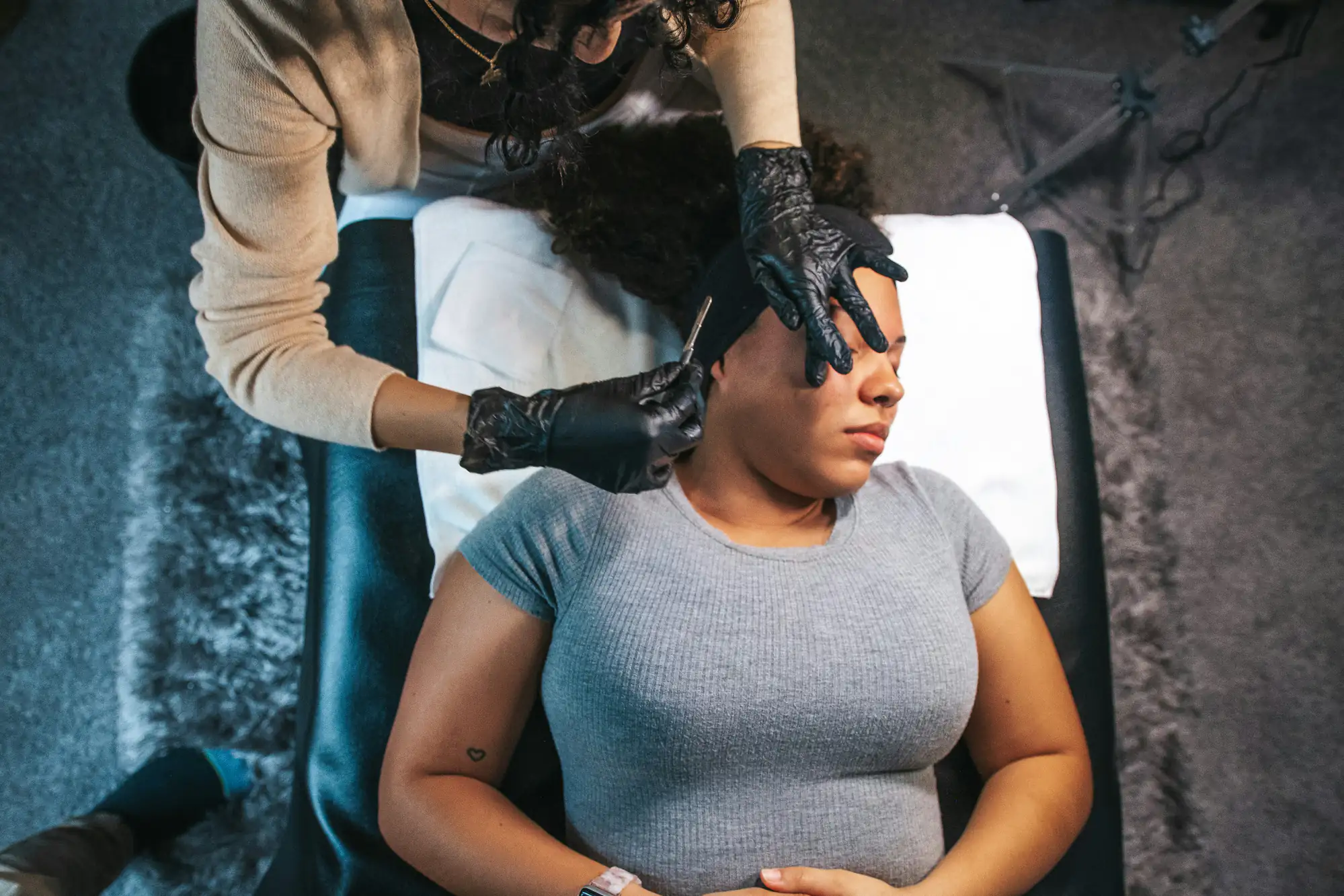
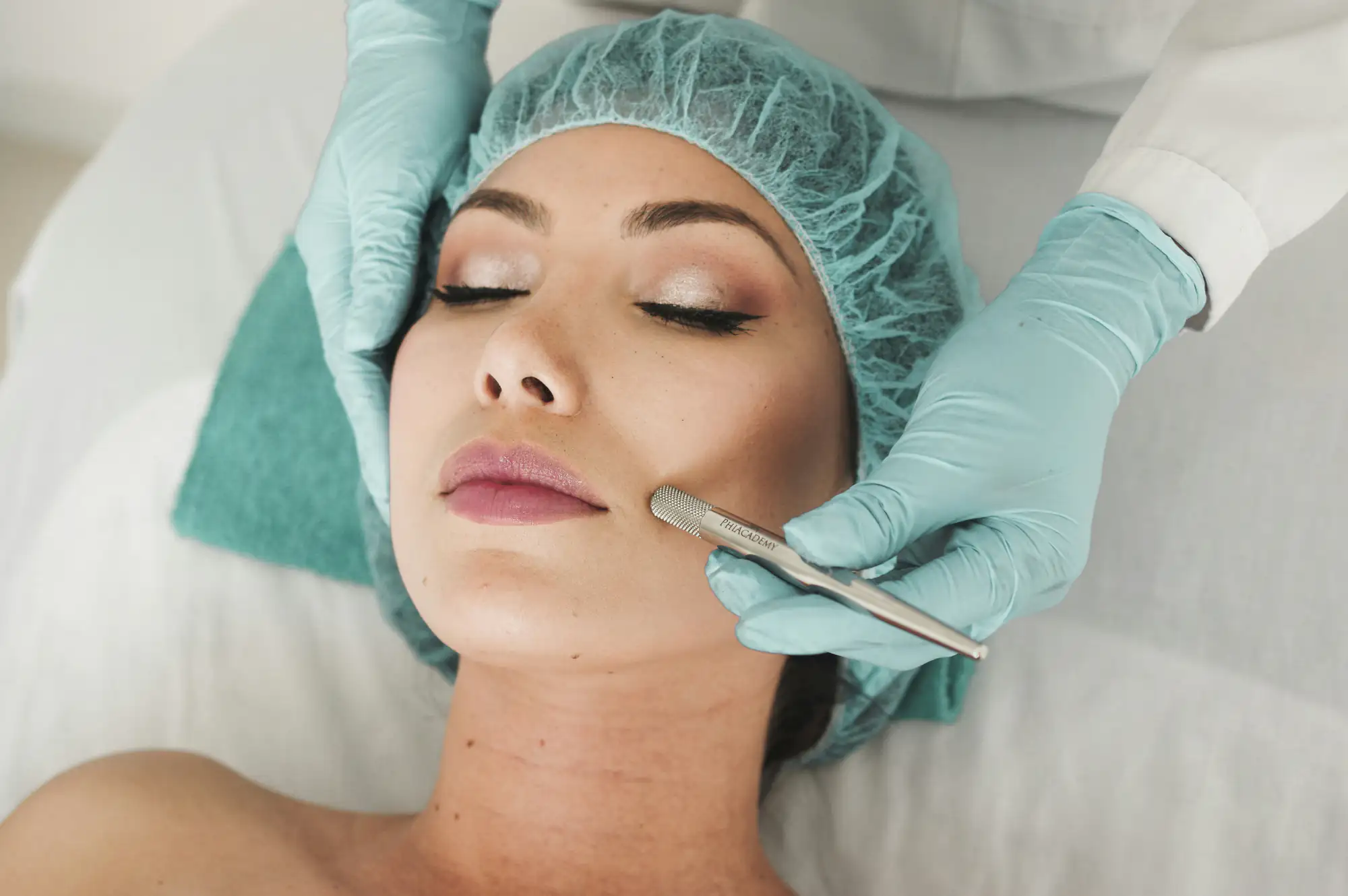
If you move forward, the actual dermaplaning treatment is straightforward. Your skin gets cleansed. Then a sterile surgical scalpel is used at a precise angle to gently remove dead skin cells and vellus hair from the surface. It feels like shaving—because functionally, that’s part of what’s happening—but it’s controlled, professional, and pain-free for most people.
The blade doesn’t cut you. It’s not digging into your skin. It’s skimming the surface to lift away what’s already dead or ready to shed.
After dermaplaning, we apply a soothing treatment. You might get a hydrating mask or serum depending on your skin type. Then you’re done. No bandages, no peeling, no waiting period before you can wash your face or put on makeup.
You leave with immediately softer skin and a noticeable glow. That’s not an exaggeration—it’s the most common feedback we hear from first-time clients.

Ready to get started?
Dermaplaning removes two things: the top layer of dead skin cells and fine vellus hair, commonly called peach fuzz. Both create texture and dullness. Both prevent your skincare products from penetrating properly.
Once they’re gone, your skin absorbs serums and moisturizers more efficiently. Ingredients like hyaluronic acid and vitamin C can actually reach the layers where they’re supposed to work. You’re not just applying expensive products to a layer of dead cells anymore.
The treatment also reduces the appearance of fine lines, hyperpigmentation, and shallow acne scars. It won’t erase deep scarring or stop new wrinkles from forming, but it does make existing texture less noticeable by creating an even surface.
For clients in South Henderson, NC and nearby areas, this matters because the local climate—humid summers, unpredictable spring pollen, dry winter air—can all contribute to uneven skin texture and clogged pores. Dermaplaning gives you a clean slate to build your skincare routine on, especially when seasonal changes are affecting how your skin behaves.
You’re also getting professional-grade exfoliation that’s safer than trying this at home with drugstore tools. The risk of scarring yourself with an unsteady hand or improper angle is real, and permanent. This is one area where professional training makes a measurable difference in outcome and safety.
No. This is the most persistent myth about dermaplaning, and it’s not true.
Vellus hair—the peach fuzz on your face—is structurally different from terminal hair like what grows on your scalp or legs. Shaving or removing vellus hair doesn’t change the follicle, the texture, or the color. It grows back exactly the same as it was before.
The reason people think hair grows back thicker is because of how it feels when it’s short. When you shave, you’re cutting the hair at skin level, which leaves a blunt edge. That blunt edge feels stubbly compared to the tapered end of hair that’s never been cut. But it’s the same hair. Same thickness. Same color. Just a different shape at the tip.
Dermaplaning has been studied and performed professionally for years. If it caused thicker or darker regrowth, dermatologists and estheticians wouldn’t recommend it. Your face won’t suddenly sprout a beard.
Dermaplaning typically costs between $75 and $150 per session depending on location and provider experience. At Wake Skincare, our price reflects the level of training, the quality of the consultation, and the fact that you’re working with a HydraFacial Master Certified esthetician who’s been recognized regionally and internationally for her work.
Whether it’s worth it depends on what you’re comparing it to. If you’re used to buying drugstore exfoliators that don’t do much, this will feel like a significant upgrade. If you’ve tried at-home dermaplaning tools and ended up with nicks or uneven results, the professional version removes that risk entirely.
The value also comes from how long the results last. You’re looking at three to four weeks of smoother skin, better product absorption, and easier makeup application. For someone preparing for an event—wedding, photoshoot, reunion—that timing matters.
You also get a free consultation before committing to anything. That’s not standard everywhere, and it gives you a chance to ask questions, see the space, and make sure you’re comfortable before spending money.
Dermaplaning is safe for most skin types, but not all skin conditions. If you have active acne, inflamed breakouts, or certain sensitivities like eczema or rosacea, dermaplaning can make things worse by irritating already compromised skin.
If your skin is generally healthy—even if it’s dry, oily, or combination—you’re likely a good candidate. Dermaplaning works well for people dealing with dullness, uneven texture, fine lines, or peach fuzz that affects how makeup sits.
During your free consultation at Wake Skincare, Jacqueline evaluates your skin in person. She’s not going to push a treatment that isn’t right for you. If dermaplaning isn’t a fit, she’ll recommend something else—like a HydraFacial or chemical peel—that addresses your concerns without causing irritation.
The other safety factor is who’s performing the treatment. Dermaplaning involves a surgical-grade blade on your face. Technique, angle, and pressure all matter. A licensed, trained esthetician knows how to work around sensitive areas, avoid cuts, and get consistent results. Trying this at home with a cheap razor or inadequate training significantly increases your risk of scarring or infection.
Before your appointment, avoid retinoids, exfoliating acids, and any aggressive treatments for at least three to five days. Your skin needs to be calm and intact, not already irritated or peeling from other products.
Don’t get a spray tan right before dermaplaning. The treatment removes the top layer of skin, which means it’ll also remove some of that tan. If you’re planning both, get dermaplaning done first, then tan a few days later.
After your treatment, your skin will be more sensitive to the sun than usual. Wear sunscreen—SPF 30 or higher—every day, even if you’re just running errands around South Henderson. UV damage happens fast on freshly exfoliated skin, and you don’t want to undo your results with hyperpigmentation or sunburn.
Avoid heavy workouts, saunas, or anything that makes you sweat heavily for 24 hours. Sweat plus open pores can lead to irritation or breakouts. Stick to gentle cleansers and hydrating products for the first few days. Skip the retinol and acids until your skin has had about a week to settle.
Most people don’t experience redness or downtime, but your skin might feel slightly sensitive. That’s normal. If you notice anything unusual—prolonged redness, swelling, or breakouts—reach out to us.
Most people schedule dermaplaning every three to four weeks. That’s roughly how long it takes for your skin to complete its natural cell turnover cycle and for vellus hair to grow back to a noticeable length.
If you’re using dermaplaning as part of a regular skincare routine, monthly treatments keep your skin consistently smooth and help your products work better over time. If you’re booking it for a specific event, plan to come in about a week before. That gives your skin time to settle and glow without any risk of sensitivity on the actual day.
You can do it more frequently than once a month, but there’s not much benefit. Your skin needs time to regenerate between sessions. Going too often doesn’t speed up results—it just increases the chance of irritation.
Some clients combine dermaplaning with other treatments like HydraFacial or chemical peels for deeper exfoliation and hydration. Jacqueline can walk you through what makes sense based on your skin goals, your budget, and how much maintenance you’re willing to commit to.
The key is consistency. One session will give you immediate results, but regular treatments give you long-term improvement in texture, tone, and how well your skin responds to the products you’re already using.
Yes, but it’s better to wait at least a few hours if you can. Your skin is freshly exfoliated, and your pores are more open than usual right after treatment. Putting makeup on immediately increases the chance of clogging those pores or introducing bacteria.
If you have somewhere to be the same day and need to wear makeup, go light. Use clean brushes or applicators, stick to non-comedogenic products, and avoid anything heavy or full-coverage. A tinted moisturizer or BB cream is a safer choice than a thick foundation.
Most clients find they don’t need as much makeup after dermaplaning anyway. Your skin looks smoother and more even on its own, so you’re not covering up as much texture or dullness. That’s one of the reasons people book this treatment before big events—it makes getting ready easier and gives you a natural glow that doesn’t require as much product.
If you’re planning to get professional makeup done for a wedding or photoshoot, let your makeup artist know you recently had dermaplaning. They’ll adjust their application and products accordingly. In most cases, makeup goes on better and lasts longer because it’s sitting on a smooth, even surface instead of catching on dry patches or peach fuzz.