
Hear from Our Customers
Your makeup stops settling into fine lines and texture. That’s usually the first thing you notice after a dermaplane facial. The foundation glides on smooth instead of catching on peach fuzz or dry patches.
Your skincare products absorb better too. When you remove that top layer of dead cells, serums and moisturizers can actually penetrate instead of sitting on the surface. You’re not wasting product anymore.
And if you’ve been dealing with dull skin that looks tired no matter how much sleep you get, dermaplaning brings back that light-reflecting smoothness. It’s not dramatic in a scary way. It’s just clearer, brighter skin that looks like you actually take care of it. Because now you do.
We’re based in Wake Forest and serve Stem, NC along with 21 other cities across Wake County. Jacqueline Grace, our founder and lead esthetician, has been named Best Esthetician in Wake County three years running. She’s also taken first place internationally in the Pigmentation Artist of the Year category at The Skin Games, which is about as legit as it gets in medical aesthetics.
That’s not name-dropping. It’s context. When you’re letting someone take a blade to your face, you want to know they’ve done it thousands of times and earned recognition for doing it well.
Every dermaplaning treatment here starts with a free consultation. You’re not walking into a one-size-fits-all situation. Jacqueline evaluates your skin, talks through your goals, and customizes the approach based on what you actually need.

You come in for a free consultation first. Jacqueline looks at your skin, asks about your routine, and makes sure dermaplaning is the right move for what you’re dealing with. If you have active acne or certain skin conditions, she’ll tell you straight up and recommend something else.
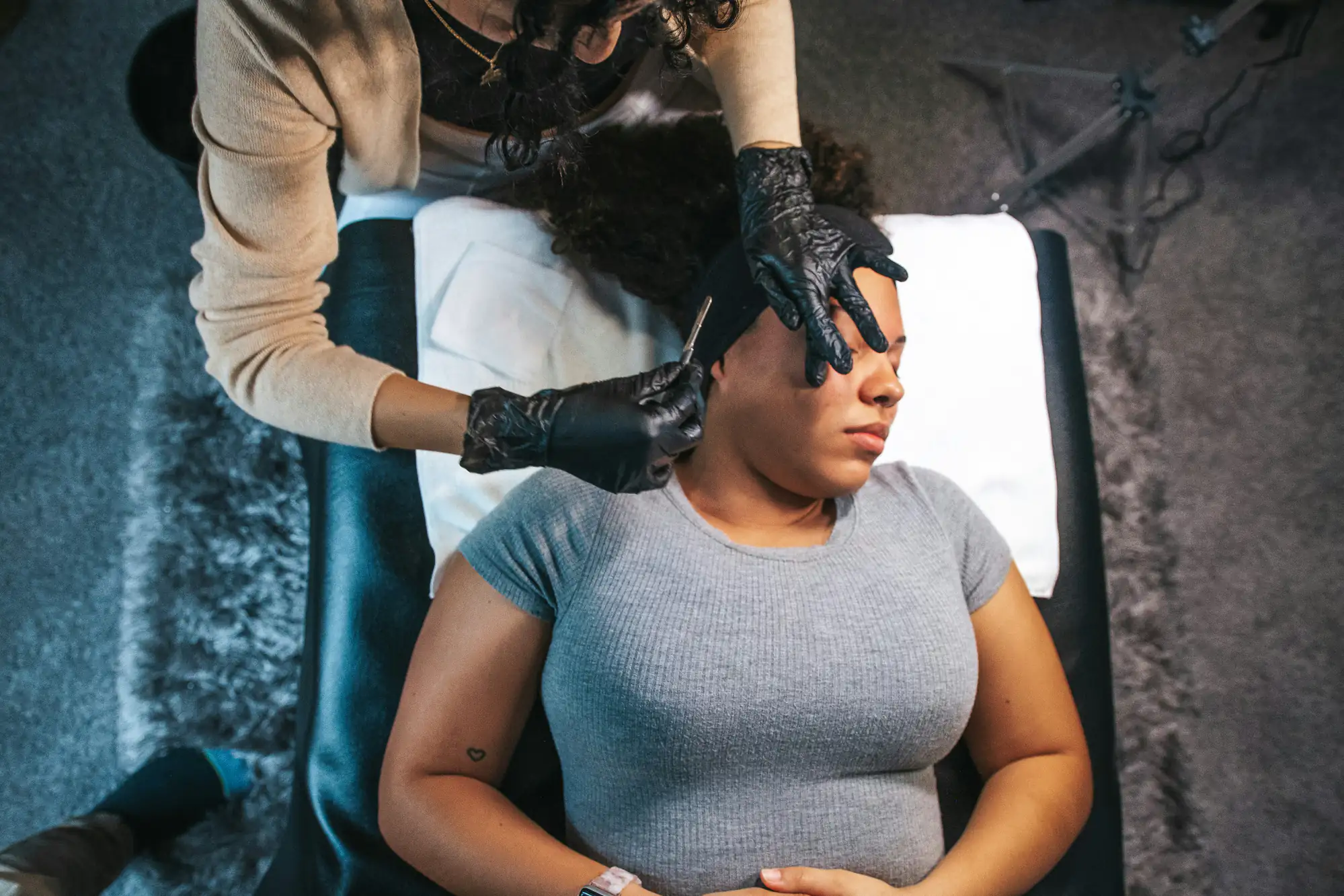
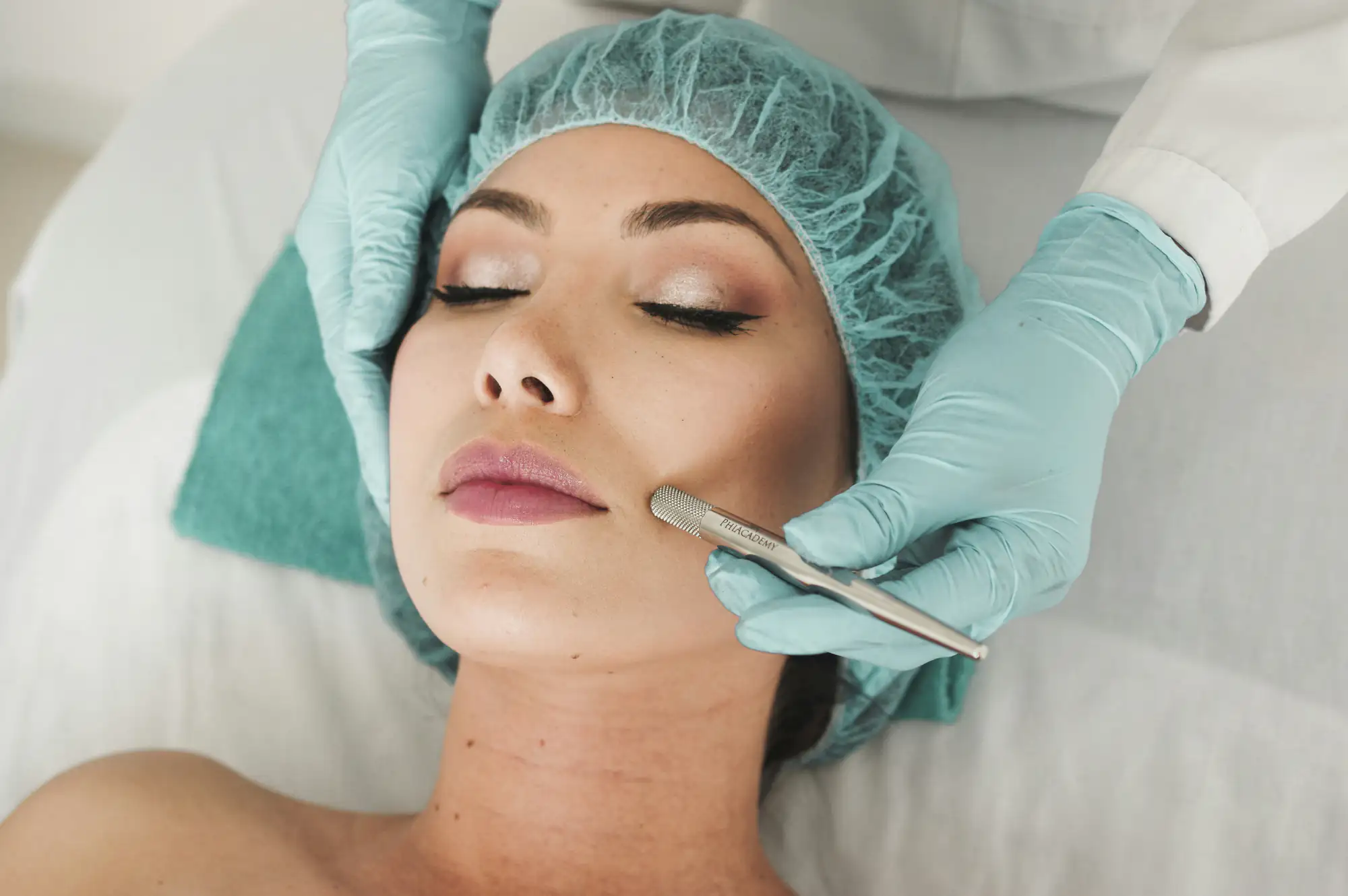
If you’re good to go, the actual treatment takes about 20 to 30 minutes. Your skin gets cleansed, then a sterile surgical scalpel is used at a 45-degree angle to gently scrape away dead skin cells and vellus hair. It’s not painful. Most people say it feels like a light scratching sensation, and some even find it relaxing.
Right after, your skin might look a little pink, but that fades fast. There’s no downtime, so you can go back to work, run errands, or head to an event. You’ll see the difference immediately. Smoother texture, better makeup application, and that glow people keep talking about but rarely deliver.

Ready to get started?
Every dermaplaning session at Wake Skincare includes a full skin evaluation and consultation at no charge. You’re not paying for a cookie-cutter treatment. Jacqueline assesses your skin type, texture, and any concerns like hyperpigmentation, fine lines, or uneven tone before she starts.
The treatment itself uses medical-grade tools in a clinical setting. That matters more than you’d think. Stem and the surrounding Wake County area has plenty of spas, but not all of them operate under the oversight of a licensed physician. We do. Dr. Joseph Hummel is our overseeing physician, which means you’re getting medical-grade care, not just a spa service.
You also get post-treatment guidance. What to avoid for the next 24 hours, which products to use, when to come back. If you’re prepping for a wedding, photoshoot, or just want to maintain results long-term, Jacqueline maps that out with you. Most clients in Stem and nearby areas like Wake Forest, Franklinton, and Creedmoor come back every three to four weeks to keep their skin smooth and glowing.
No. This is one of the most common myths, and it’s been debunked repeatedly. Dermaplaning removes vellus hair, which is the fine, soft peach fuzz on your face. Vellus hair is different from terminal hair, which is thicker and coarser like what grows on your scalp or eyebrows.
When you shave vellus hair, it grows back at the same texture and color it was before. The reason people think it looks darker is because the hair has a blunt tip after being cut, which can make it more noticeable for a day or two. But it doesn’t change the hair follicle or stimulate thicker growth.
If you’ve been avoiding dermaplaning because you’re worried about stubble or dark regrowth, you can let that go. It’s not how the biology works. Your peach fuzz will come back exactly as it was, and you can repeat the treatment as often as every three to four weeks without any negative effects.
The tool, the technique, and the training. At-home dermaplaning tools are designed to be safer for untrained hands, which usually means they’re less effective. They don’t exfoliate as deeply, and they’re not as precise.
Professional dermaplaning uses a sterile surgical scalpel held at a specific angle to remove dead skin cells and hair without damaging the skin barrier. Jacqueline has been trained in medical aesthetics and has performed thousands of these treatments. She knows how much pressure to use, which areas to avoid, and how to customize the treatment based on your skin type and concerns.
There’s also the prep and aftercare. Before your treatment, your skin is properly cleansed and prepped. Afterward, you get guidance on what products to use and what to avoid so your skin heals correctly and you get the best results. At home, you’re guessing. Here, you’re working with someone who’s won international awards for this exact type of work.
None. You can go straight back to your day. Your skin might be a little pink right after the treatment, but that usually fades within an hour or two. Some people have slight sensitivity, but it’s not the kind of thing that keeps you home or requires covering up.
You’ll want to avoid direct sun exposure for about 24 hours and skip any harsh exfoliants or retinoids for a few days. But you can wear makeup the next day, go to work, exercise, and do everything else you normally do.
That’s one of the biggest reasons people in Stem and surrounding areas book dermaplaning before events. You can get it done on a Thursday and look incredible by Saturday without worrying about redness, peeling, or any recovery period. It’s effective but not disruptive, which is rare for treatments that actually work.
It helps, but it’s not a standalone solution for deeper scarring. Dermaplaning removes the outermost layer of dead skin cells, which can improve the appearance of mild acne scars and surface-level pigmentation. It also allows your treatment products to penetrate better, so if you’re using serums or prescriptions for hyperpigmentation, they’ll work more effectively after dermaplaning.
For deeper acne scars or more stubborn pigmentation, Jacqueline usually recommends combining dermaplaning with other treatments like chemical peels or microneedling. She’s actually won first place internationally for pigmentation work, so she knows how to layer treatments to get real results without overdoing it.
During your free consultation, she’ll look at your skin and tell you exactly what combination makes sense for your goals. If dermaplaning alone will get you there, great. If not, she’ll map out a plan that will. Either way, you’re not guessing.
Most people come back every three to four weeks. That’s about how long it takes for your skin to complete a full cell turnover cycle, and it’s when you’ll start to notice texture building up again.
If you’re using dermaplaning as part of a bigger treatment plan for acne scars, sun damage, or aging, Jacqueline might recommend a different schedule. Some clients come in every four to six weeks for maintenance. Others book more frequently leading up to an event, then space it out after.
There’s no hard rule. It depends on your skin type, your goals, and how your skin responds. During your consultation, Jacqueline will give you a realistic timeline based on what she’s seeing. And if your schedule or budget doesn’t allow for monthly treatments, she’ll tell you what to prioritize and what you can skip without losing progress.
If you have active acne, open wounds, or certain skin conditions like eczema or rosacea flare-ups, dermaplaning isn’t a good idea. The treatment can irritate already inflamed skin and make things worse instead of better.
You’ll also want to avoid it if you’re on certain medications like Accutane or using high-strength retinoids, since those thin your skin and make it more sensitive. Jacqueline will ask about your current routine and any prescriptions during your consultation to make sure it’s safe.
If dermaplaning isn’t right for you, she won’t push it. She’ll recommend something else that will actually work for your skin. That’s the benefit of working with someone who offers multiple treatments and has the training to know when to say no. You’re not getting sold a service. You’re getting honest advice from someone who’s seen thousands of skin types and knows what works.