Hear from Our Customers
Your makeup goes on smoother. You’re not dealing with peach fuzz catching foundation or that dull texture no scrub seems to fix.
Dermaplaning removes weeks of dead skin buildup in one pass. It’s physical exfoliation at a level you can’t replicate at home, and your skincare products actually penetrate instead of sitting on the surface doing nothing.
You walk out with skin that feels different immediately. Not red. Not sensitive. Just smooth and noticeably brighter. The kind of result that makes you want to skip makeup for a day or two because your skin actually looks good on its own.
If you’ve got an event coming up or you’re just tired of texture you can feel every time you touch your face, this is the reset that works. North Carolina humidity doesn’t make things easier, but dermaplaning gives you a head start your routine can’t match on its own.
We’re based in Wake Forest and serve Warrenton and the surrounding Wake County area with medical-grade treatments you won’t find at a chain spa. Jacqueline Grace, our founder, is a licensed esthetician who’s been named Best Esthetician in Wake County three years running—and took first place internationally in the Pigmentation Artist of the Year category at The Skin Games.
She’s also one of fewer than a hundred HydraFacial Master Certified practitioners in the world. That’s not marketing language. It’s a credential that requires advanced training, consistent results, and a level of skill most providers don’t reach.
Every dermaplaning treatment here starts with a free consultation. You’re not walking into a one-size-fits-all appointment. Jacqueline evaluates your skin, talks through what you’re dealing with, and customizes the treatment based on what your skin actually needs—not what’s on a menu. If you’re in Warrenton and you’ve been searching for “dermaplaning near me” hoping to find someone who knows what they’re doing, this is it.

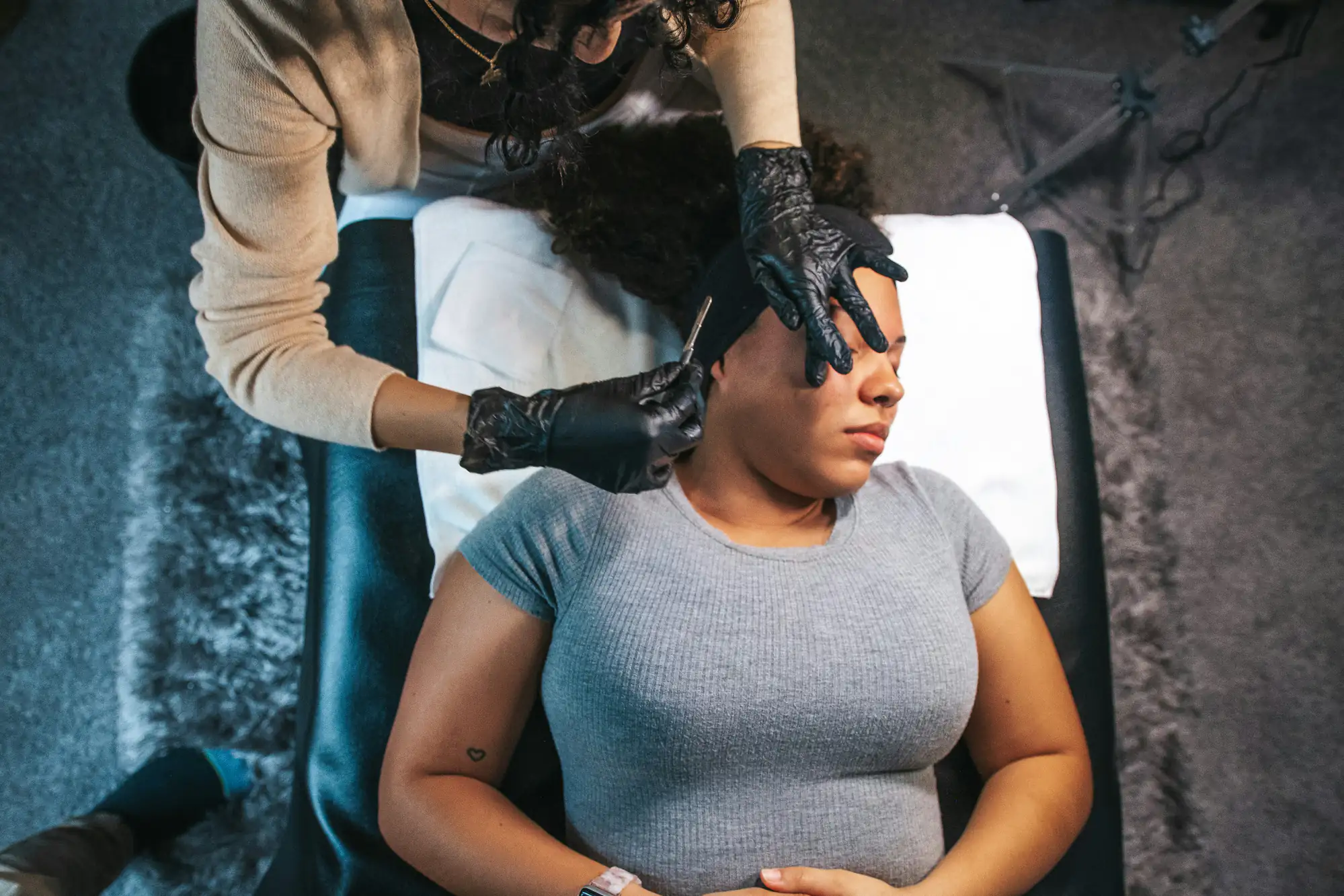
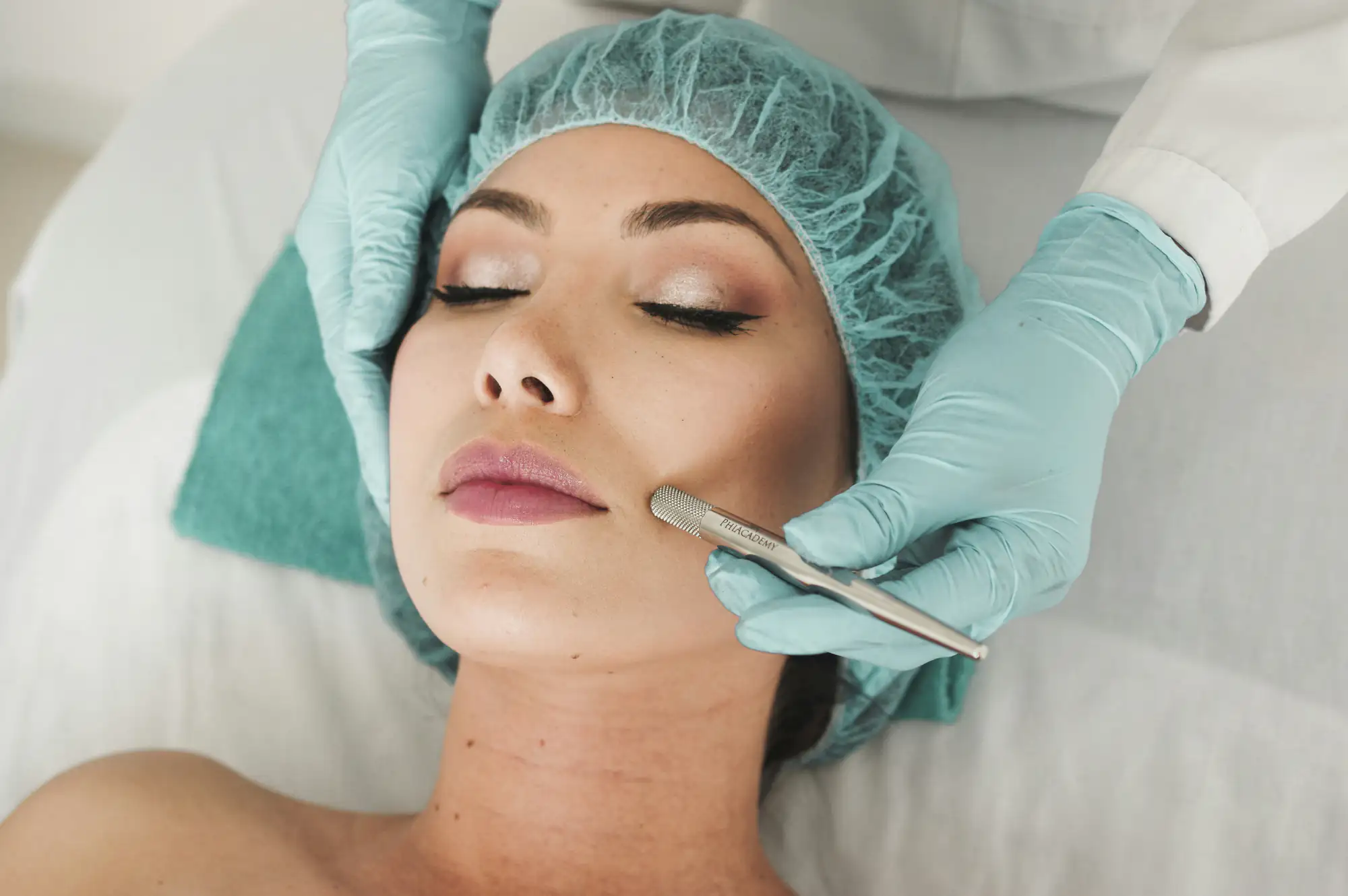
You come in. Your skin gets cleansed to remove makeup, oil, and anything sitting on the surface. Then Jacqueline uses a sterile surgical scalpel at a 45-degree angle to gently scrape away dead skin cells and vellus hair—that’s the peach fuzz.
It’s not painful. Most people say it feels like a light scratching sensation, and some even find it relaxing. The blade only touches the outermost layer of skin, so there’s no cutting, no bleeding, no downtime.
The whole process takes about 30 minutes. Once it’s done, a hydrating serum or mask goes on to calm and nourish the newly exposed skin. You leave with a face that’s smoother than it’s been in months, and your skin keeps improving over the next few days as cell turnover kicks in.
You can wear makeup the same day if you want. You can go back to work. There’s no peeling, no redness that lasts. It’s one of the few treatments that delivers visible results immediately without requiring you to hide for a week.

Ready to get started?
Every dermaplaning session includes a skin evaluation, the treatment itself, and post-treatment care that primes your skin for whatever comes next. If you’re layering this with other treatments—like a HydraFacial, chemical peel, or microneedling—dermaplaning makes those treatments work better because you’ve removed the barrier.
Warrenton sits in a part of North Carolina where humidity averages over 70% in summer and the sun doesn’t quit even in winter. That combination accelerates everything: clogged pores, uneven texture, hyperpigmentation, fine lines. Dermaplaning helps you stay ahead of it by removing the buildup that makes all of that worse.
You can typically schedule dermaplaning once a month. That aligns with your skin’s natural regeneration cycle, which is about 30 days. Some people come in before big events—weddings, photos, work trips. Others make it part of their regular routine because it keeps their skin looking consistently clear and smooth.
If you’ve been dealing with dullness, rough texture, or makeup that just won’t sit right, dermaplaning addresses all three in one appointment. It’s not a temporary fix. It’s a reset that gives your skin a foundation to actually improve.
No. This is one of the most common myths, and it’s completely false.
Dermaplaning removes vellus hair, which is the fine, soft peach fuzz on your face. Vellus hair is different from terminal hair—the kind that grows on your head or in areas like your eyebrows. When you shave terminal hair, it can feel stubbly or coarse as it grows back because the blunt edge is more noticeable. Vellus hair doesn’t work that way.
When vellus hair grows back after dermaplaning, it comes back with the same fine texture it had before. It doesn’t get thicker, darker, or coarser. The structure of the hair follicle doesn’t change just because the hair was removed at the surface. You’re not altering anything below the skin.
Most people benefit from dermaplaning once a month. That timing matches your skin’s natural turnover cycle, which is roughly 30 days.
If you’re coming in for a specific event—a wedding, photos, a big presentation—booking your appointment about a week before gives your skin time to fully settle and look its best. You’ll get the immediate smoothness right after the treatment, but the glow continues to improve over the next few days as your skin adjusts.
Some people with very sensitive skin or certain conditions like active acne might space treatments out a bit more. That’s something Jacqueline evaluates during your consultation. The goal is consistent results without overdoing it, and monthly appointments tend to hit that balance for most skin types.
None. You can go straight back to your day.
Dermaplaning doesn’t cause redness, peeling, or irritation the way some exfoliating treatments do. You might notice your skin feels a little more sensitive to touch immediately after, but that fades within an hour or two. You can wear makeup the same day if you want, though a lot of people skip it because their skin looks good enough without it.
The only real aftercare is sun protection. Your skin will be more receptive to UV exposure after dermaplaning because you’ve removed that top layer of dead cells, so wearing SPF is non-negotiable. If you’re already using a daily sunscreen, just keep doing that. If you’re not, start. It’s the easiest way to protect your results and keep your skin from aging faster than it needs to.
Yes. Dermaplaning is actually recommended for people with sensitive skin and rosacea because it’s one of the gentlest forms of exfoliation available.
Chemical exfoliants and scrubs can trigger flare-ups or irritation if your skin is reactive. Dermaplaning is purely physical, and it doesn’t involve acids, heat, or abrasive particles. The blade removes dead skin and hair without disturbing the deeper layers or causing inflammation.
That said, if you’re currently experiencing an active rosacea flare-up or have open wounds, it’s better to wait until your skin calms down. Jacqueline evaluates your skin before every treatment to make sure it’s the right time. If dermaplaning isn’t the best option that day, she’ll tell you and recommend an alternative that works better for where your skin is at.
Absolutely. That’s one of the most immediate and noticeable benefits.
Peach fuzz and dead skin create texture that foundation clings to. You end up with makeup that looks cakey, settles into fine lines, or just doesn’t blend the way it should. Dermaplaning removes both of those barriers, so your makeup has a smooth surface to sit on.
A lot of people say their foundation looks airbrushed after dermaplaning. It goes on more evenly, blends faster, and lasts longer without breaking down or looking patchy. If you’ve ever felt like your makeup looks better on some days than others for no clear reason, texture is usually the culprit. Dermaplaning eliminates that variable.
Even if you don’t wear makeup regularly, the smoothness is something you’ll notice every time you touch your face or catch your reflection in good lighting. It’s one of those treatments that makes a difference you can see and feel right away.
The tools, the technique, and the results are completely different.
At-home dermaplaning tools are designed for safety, which means they’re not as sharp or precise as the surgical-grade scalpels we use in professional treatments. You’re also working at the wrong angle most of the time because you can’t see or reach certain areas of your face properly. That leads to uneven exfoliation, missed spots, and a higher risk of nicks or irritation.
Professional dermaplaning is done by a licensed esthetician who’s trained in the exact angle, pressure, and movement needed to remove dead skin and hair without damaging the skin underneath. The blade is sterile, sharp, and controlled. The results are smoother, more consistent, and longer-lasting than anything you can achieve at home.
If you’ve tried at-home dermaplaning and didn’t see much of a difference, that’s why. The professional version is a different experience entirely, and the results reflect that.