
Hear from Our Customers
You’re not looking for a temporary fix. You want skin that actually improves—smoother texture, faded acne scars, smaller pores, fewer fine lines. The kind of change that makes you stop reaching for heavy foundation every morning.
Microneedling triggers your skin to produce 400% more collagen and elastin over six months. That’s not marketing speak—that’s what happens when controlled micro-injuries activate your body’s natural healing response. Your skin rebuilds itself from the inside out.
The best part? You’re not sidelined for a week. Most people see redness for a few hours, maybe into the next day. Then you’re back to normal life while your skin continues improving beneath the surface. No peeling. No crusting. No explaining to coworkers why your face looks like you fell asleep in the sun.
This works for acne scarring that’s stuck around for years. It works for sun damage you’ve been covering up. It works for texture issues that make your skin look tired even when you’re not. And it’s safer for darker skin tones than laser treatments that carry higher pigmentation risks.
Jacqueline Grace opened Wake Skincare in Wake Forest two weeks before COVID shut everything down. Not ideal timing, but the Gorman area and surrounding Wake County communities kept showing up because the results spoke louder than any pandemic uncertainty.
She’s been named Best Esthetician in Wake County three consecutive years. She’s one of the first hundred practitioners worldwide to earn HydraFacial Master Certification. She took first and second place at The Skin Games international competition for pigmentation work. These aren’t participation awards—they’re recognition that she knows what she’s doing with your skin.
Every treatment starts with a free consultation. You’re not walking into a sales pitch. You’re sitting down with someone who’s going to look at your actual skin, ask about your actual concerns, and build a plan that makes sense for your goals and your schedule. That’s how we work here.
You’ll start with a free skin evaluation. This isn’t a five-minute glance—it’s a real conversation about what’s bothering you, what you’ve already tried, and what results you’re actually hoping to see. If microneedling isn’t the right fit, you’ll hear that too.
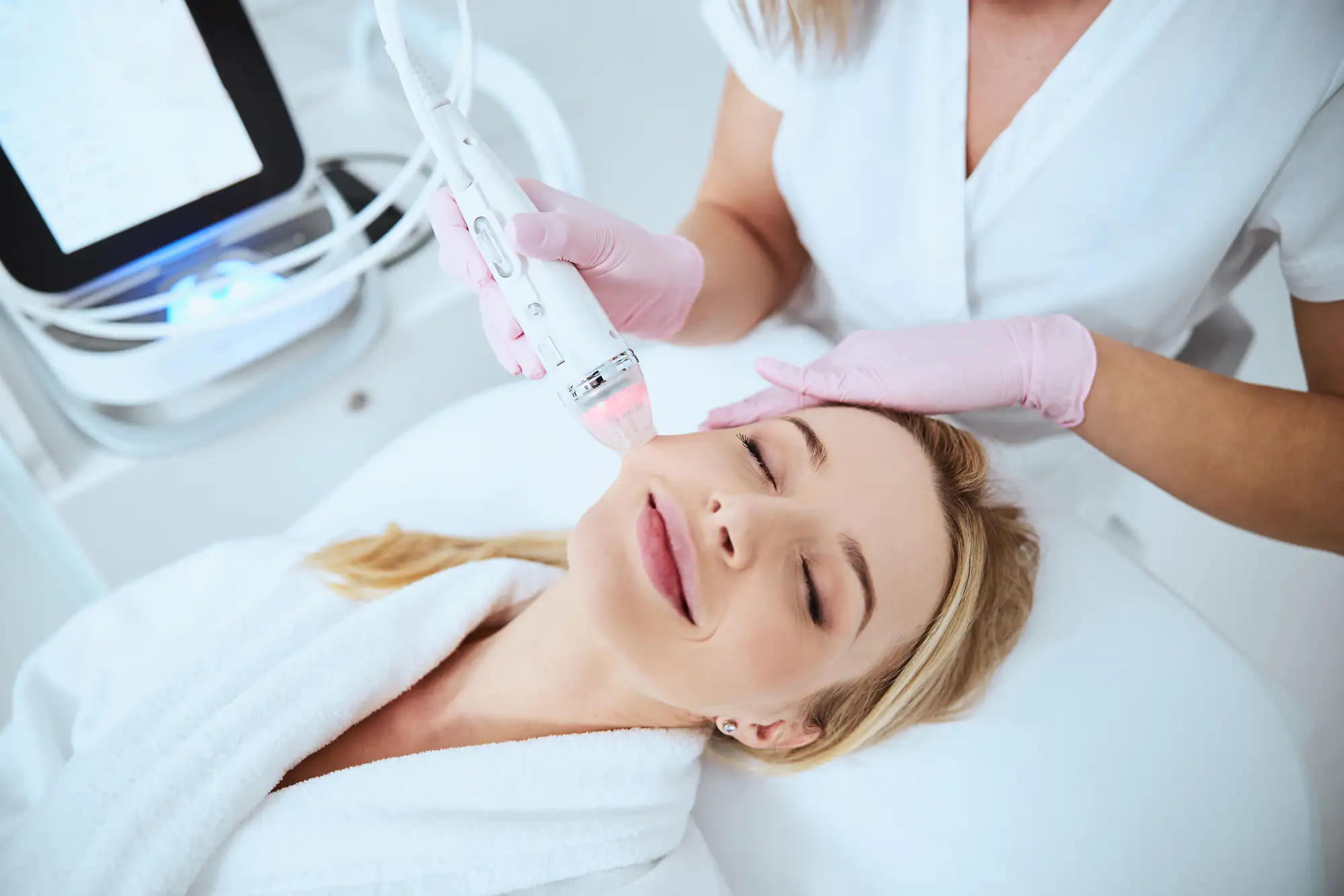
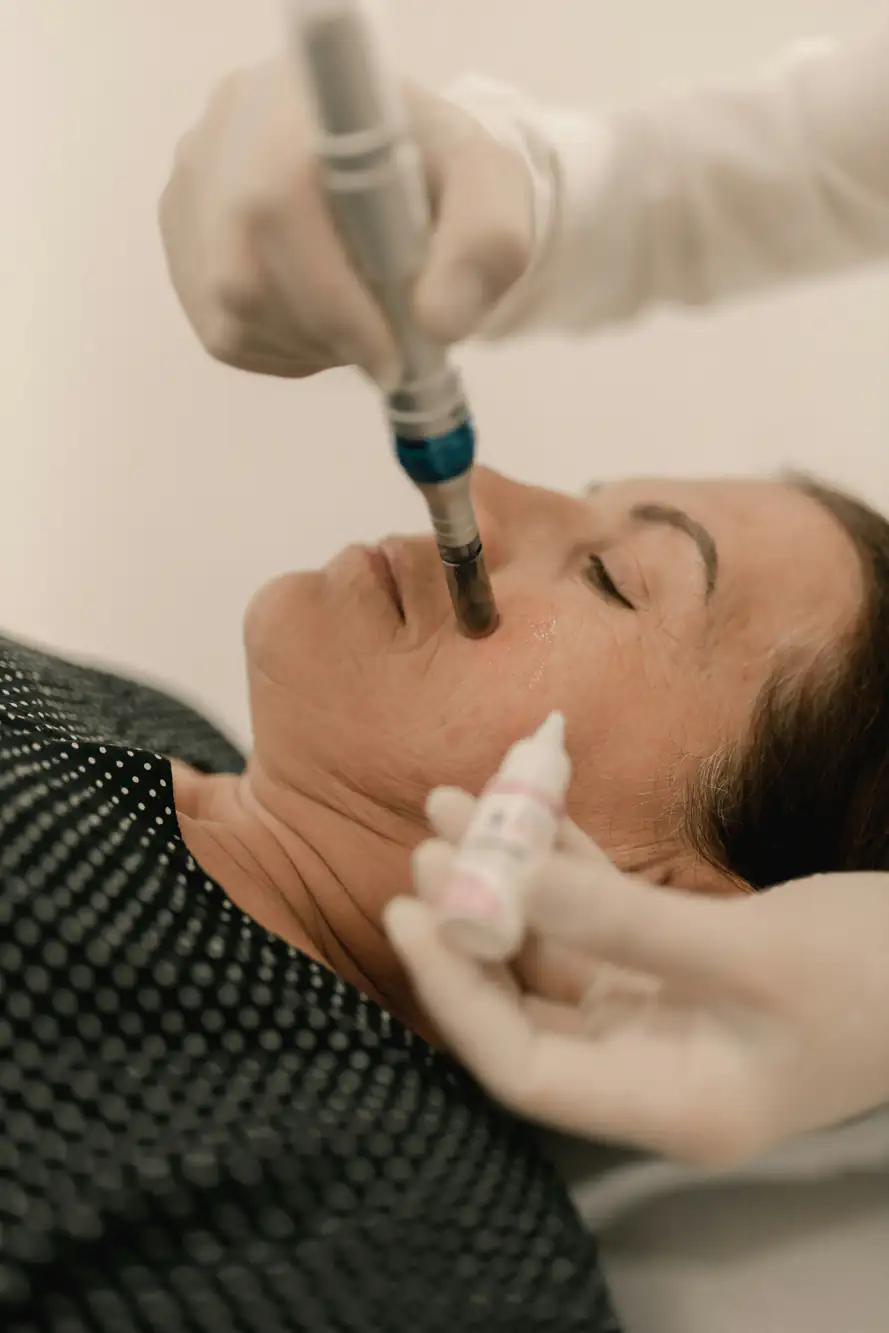
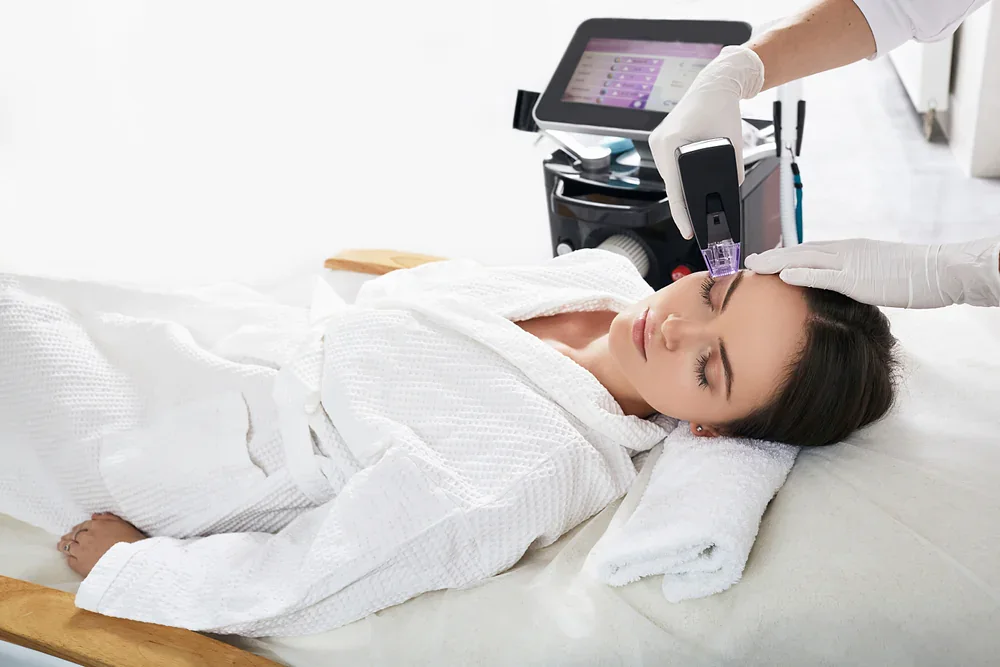
On treatment day, your skin gets cleansed and prepped. A topical numbing cream goes on for about 30 minutes so you’re comfortable throughout the process. Then the SkinPen device—the first FDA-approved microneedling tool for wrinkles and acne scars—creates controlled micro-channels in your skin. These tiny injuries trigger your body’s healing response without causing the damage that comes with at-home rollers or untrained practitioners.
The device penetrates 2-3mm deep, compared to 0.25mm for at-home versions. That depth matters. It’s the difference between surface-level irritation and actual collagen induction therapy that rebuilds your skin’s foundation.
Your skin will look red afterward, similar to a mild sunburn. That fades within hours for most people, sometimes into the next day. You’ll use a specific post-care regimen to soothe your skin and support the healing process. Then you go about your life while collagen production ramps up over the following weeks and months.

Ready to get started?
This treatment addresses acne scars that haven’t responded to topical products. It reduces the appearance of large pores that make your skin texture look uneven. It helps with rosacea redness, dark spots from sun damage, and loose skin that’s starting to sag. Fine lines around your eyes and mouth respond well. So does overall skin texture that just looks tired or rough.
Wake County residents deal with specific skin challenges. The humidity helps in some ways, but sun exposure here is significant—especially if you’re outdoors for work or spend time at Falls Lake or the Neuse River. That UV damage accumulates. Microneedling helps reverse it by stimulating new, healthy skin cell production.
You’re getting FDA-cleared equipment, not some knockoff device ordered online. You’re getting a practitioner who’s treated thousands of faces and won international competitions for her work. You’re getting a customized treatment plan, not a one-size-fits-all approach that ignores your specific skin type and concerns.
The process works for most skin types, including darker tones that can’t safely do certain laser treatments. But it’s not right for everyone. If you have active acne, a bleeding disorder, or a weakened immune system, this isn’t the treatment for you. That’s why the consultation comes first—to make sure you’re a good candidate before you invest time or money.

Professional microneedling typically costs between $200-$700 per session depending on the treatment area and your specific needs. At-home devices run $30-$300 upfront, which sounds cheaper until you understand what you’re actually getting.
At-home rollers penetrate about 0.25mm into your skin. Professional devices like the SkinPen go 2-3mm deep. That’s the difference between surface irritation and actual collagen induction therapy that rebuilds your skin’s structure. You’re also dealing with sterilization issues at home—those needles can harbor bacteria and cause infections if not properly cleaned, and most people don’t have medical-grade sterilization equipment in their bathroom.
The bigger cost is what happens when at-home microneedling goes wrong. Cross-contamination, scarring, and post-inflammatory hyperpigmentation can cost thousands to fix. Professional treatments use single-use, sterile needle cartridges and proper technique to avoid those complications. You’re paying for safety, depth, and results that actually last.
Traditional microneedling uses fine needles to create controlled micro-injuries that trigger collagen production. RF microneedling adds radiofrequency energy through those same needles, heating the deeper layers of your skin for additional tightening and collagen stimulation.
RF microneedling tends to work faster for skin tightening and can be more effective for deep wrinkles or significant laxity. It also comes with a higher price tag and slightly more downtime. Traditional microneedling is excellent for acne scars, texture issues, pore size, and pigmentation problems without the added intensity.
Which one you need depends on your specific concerns. If you’re dealing with acne scarring and uneven texture, traditional microneedling usually delivers the results you want. If loose skin and deep wrinkles are your main issues, RF microneedling might be worth the upgrade. That’s something we determine during your consultation by looking at your actual skin, not guessing based on your age or a checklist.
Most people see visible improvement after one session, but real transformation takes a series. For acne scarring, expect 3-6 treatments spaced 4-6 weeks apart. For general skin rejuvenation and texture improvement, 3-4 sessions usually do it. Deeper concerns like significant sun damage or pronounced wrinkles might need 6+ treatments.
Your skin needs time between sessions to complete its healing and collagen-building process. Rushing treatments closer together doesn’t speed up results—it just irritates your skin without giving it time to actually rebuild. The 4-6 week spacing is based on your skin’s natural healing cycle, not arbitrary scheduling.
You’ll see the best results around six months after your final treatment. That’s when collagen production peaks. Some people maintain with one session every 6-12 months after their initial series. Others are happy with their results and don’t need ongoing treatments. It depends on your skin, your goals, and how your skin ages over time.
With topical numbing cream applied for 30 minutes before treatment, most people describe the sensation as mild pressure or light scratching—not painful. Without numbing, it would be uncomfortable. That’s why we don’t skip that step.
Your skin will be red immediately after, similar to a moderate sunburn. That redness typically fades within a few hours, though some people stay pink into the next day. You might feel some warmth or tightness. Light scratches or tiny pinpoint marks are normal and disappear quickly. Mild swelling can happen, especially around the eyes, but it’s usually gone by morning.
You can wear makeup the next day if needed, though giving your skin 24 hours to breathe is better. Avoid intense workouts, saunas, and direct sun exposure for 24-48 hours. Use the post-care products provided to support healing. Most people return to normal activities immediately—this isn’t a treatment that requires hiding at home for a week. You might look like you got a little sun, but that’s about it.
Microneedling is generally safer for darker skin tones (Fitzpatrick types III-VI) than many laser treatments, which carry higher risks of post-inflammatory hyperpigmentation. The mechanical injury from needles doesn’t generate the same heat and melanin disruption that lasers can cause.
That said, darker skin tones do have a higher baseline risk for pigmentation changes with any skin injury. Proper technique, appropriate needle depth, and correct post-care are critical. This is where practitioner experience matters—someone who understands how melanin-rich skin responds to treatment and adjusts accordingly.
If you’ve had hyperpigmentation issues with other treatments, mention that during your consultation. We can do a test spot first or adjust the treatment protocol to minimize risk. The goal is improvement, not trading acne scars for dark spots. With the right approach, microneedling can actually help fade existing hyperpigmentation while improving texture and scarring.
Yes. Microneedling stimulates collagen production around your pores, which helps tighten and shrink their appearance. Pores don’t actually open and close—that’s a myth—but they can stretch out over time from oil production, sun damage, and aging. Rebuilding the collagen structure around them makes them look smaller.
Oily skin often comes with enlarged pores because excess sebum production stretches the pore opening. Microneedling doesn’t stop oil production, but it does improve the overall texture and firmness of your skin, which makes pores less noticeable. You’ll still need a good home care routine to manage oil, but the structural improvement from microneedling gives you a better foundation to work with.
You’ll see the most dramatic pore reduction after a series of treatments, not just one. As collagen builds over several months, the cumulative tightening effect becomes more visible. Maintenance treatments every 6-12 months help sustain those results as your skin continues aging and producing oil.