Summary:
You got a mosquito bite. You scratched it — because of course you did — it healed, and now there’s a dark spot where it used to be. Weeks later, it’s still there. Maybe it’s faded a little, maybe it hasn’t moved at all. Either way, it’s been long enough that you’ve started wondering if it’s permanent.
It’s not a scar. It’s post-injury hyperpigmentation, and it’s more common than most people realize — especially here in Wake County, where mosquito season runs hard from spring through fall. Here’s what’s actually going on, and what it takes to treat it properly.
Post-Inflammatory Hyperpigmentation from Bug Bites: Why It Happens
When your skin gets injured — whether from a bite, a scratch, or a burn — it triggers an inflammatory response. That’s your immune system doing its job. The problem is that inflammation also signals your melanocytes, the cells responsible for producing pigment, to kick into overdrive.
They produce more melanin than the skin needs, and that excess melanin gets deposited in the surrounding tissue. Once the wound heals, the dark spot is what’s left behind.
This process is called post-inflammatory hyperpigmentation, or PIH. It’s not a bruise, it’s not a scar, and it doesn’t behave like either one. It’s a pigmentation response — and that distinction matters a lot when it comes to choosing the right treatment.
Post-Inflammatory Hyperpigmentation from Mosquito Bites: Who's Most at Risk
Mosquito bites are one of the most common triggers for PIH, and the reason has everything to do with what happens after the bite. The initial bite causes a localized inflammatory reaction — that’s the redness, swelling, and itch. When you scratch it, you extend and intensify that inflammation, which gives melanocytes more time and more signal to produce excess pigment.
The longer the inflammation lasts, the more pronounced the resulting dark spot tends to be. This is why some people walk away from a summer outdoors with a tan, while others end up with a map of dark spots across their arms and legs that takes months to fade. It’s not random.
Skin tone plays a significant role. Research shows that post-inflammatory hyperpigmentation is considerably more common in people with deeper skin tones — in studies of acne-related PIH, incidence reached 65% in African-American patients, over 52% in Hispanic patients, and nearly 47% in Asian patients. The same pattern holds for insect-bite-induced PIH.
In Wake County, this matters. The county’s population includes large Black, Asian, and Hispanic communities — demographics that are statistically more susceptible to PIH and, critically, more likely to be treated incorrectly by providers who don’t have specific experience with melanin-rich skin. Applying the wrong peel or the wrong laser setting to deeper skin tones doesn’t just fail to help — it can actively make hyperpigmentation worse by triggering a new round of inflammation and melanin overproduction.
There’s also a local factor worth naming directly: Wake County’s mosquito season is long and aggressive. It runs from roughly March through October, with peak activity in July and August. The Asian tiger mosquito — an invasive species now established throughout North Carolina — bites during daylight hours, not just at dawn and dusk. That means residents spending time in their yards, on the greenways, or at outdoor dining spots are getting bitten throughout the day, all season long.
In 2024, Raleigh braced for a record mosquito season, with pest management organizations reporting notably increased activity due to sustained moisture and precipitation. More bites, more scratching, more PIH.
Hyperpigmentation After a Mosquito Bite: How Long Will It Actually Last?
This is the question most people are really asking when they start searching. And the honest answer is: it depends on two things — where the melanin has been deposited, and whether you’re protecting the area from further UV exposure.
PIH can be epidermal, meaning the excess pigment is concentrated in the upper layers of the skin, or dermal, meaning it’s been deposited deeper. Epidermal PIH tends to respond faster to treatment and fades more predictably. Dermal PIH is harder to address and may require more targeted intervention. You generally can’t tell which type you’re dealing with just by looking at it — that’s part of why a proper skin evaluation before starting any treatment is so important.
Without treatment, epidermal PIH can fade on its own over several months to a year, depending on the individual. Dermal PIH may linger significantly longer, and some spots — particularly on the legs — may not fully resolve without professional help. What accelerates the timeline in the wrong direction is sun exposure.
UV radiation stimulates melanin production, which means every time an unprotected dark spot gets sun, it gets darker and takes longer to fade. This is especially relevant in Wake County’s sunny climate, where outdoor activity continues well into fall. What actually moves the needle is professional treatment that targets the melanin directly — whether through chemical exfoliation, microneedling, or a combination approach — paired with consistent sun protection.
OTC brightening products can offer some support, but they typically work on the surface and don’t address deeper pigmentation or accelerate cell turnover at the rate that medical-grade treatments do. If you’ve been using a vitamin C serum for three months and the spot hasn’t changed, that’s not a failure of patience — it’s a signal that the treatment isn’t matched to the problem.
Post-Burn Hyperpigmentation Treatment: What's Different About Burns
Burns — from outdoor grilling, a hot pan, a curling iron, or even a bad sunburn — follow the same basic biological pathway as bug bites. Intense heat damages the skin, triggers inflammation, and that inflammation overstimulates melanocyte activity. What’s left after healing is often a patch of darker skin that can range from faint to quite pronounced depending on the severity of the burn and how quickly it was treated.
The key difference with post-burn hyperpigmentation is that the initial injury tends to be more significant, which means the inflammatory response is stronger and the resulting pigmentation can be more deeply deposited. Early intervention — starting treatment once the skin has fully healed — generally produces better outcomes than waiting.
Is Post-Burn Hyperpigmentation Permanent? What to Expect from Treatment
Post-burn hyperpigmentation is not the same as a burn scar. Scars involve changes to the skin’s structural tissue — collagen remodeling, texture changes, sometimes raised or depressed areas. Hyperpigmentation is a pigmentation response. The skin’s texture may be completely normal; it’s just darker where the burn occurred.
That distinction matters because PIH, even from a burn, is treatable. It’s not a permanent mark in the way that scar tissue can be.
That said, treating it correctly requires understanding the depth of the pigmentation and the skin type of the person being treated. For melanin-rich skin tones, certain treatments carry more risk than others. Aggressive laser protocols that rely on thermal energy can trigger new inflammation — and new PIH — in darker skin.
This is one reason why microneedling has become a preferred option for treating hyperpigmentation in clients with deeper skin tones: it creates controlled micro-injuries without heat, stimulating collagen and accelerating cell turnover without the risk of thermal damage. Research published in the Journal of Cosmetic Dermatology found that microneedling combined with targeted topical treatments reduced hyperpigmentation by up to 60% within a few months.
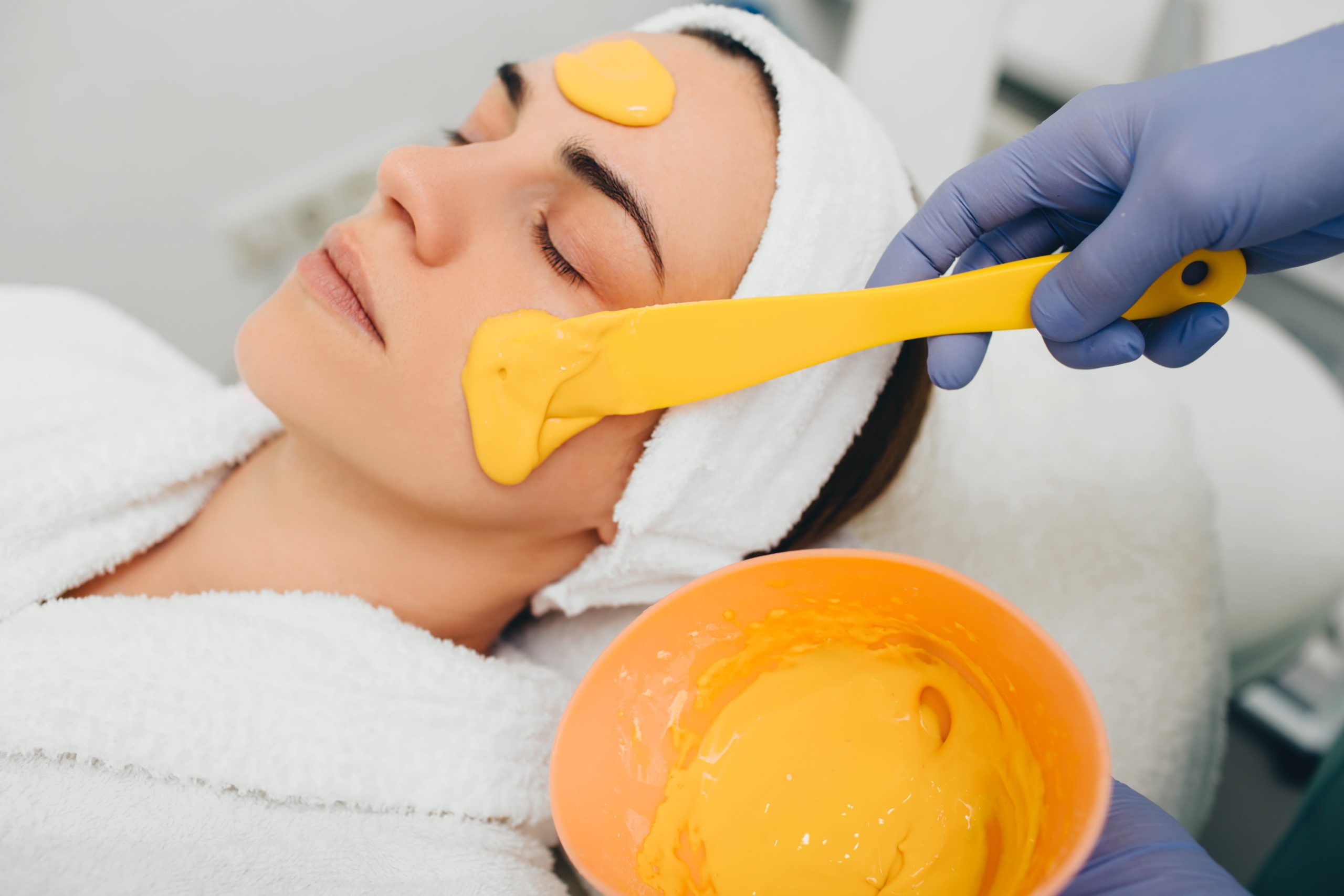
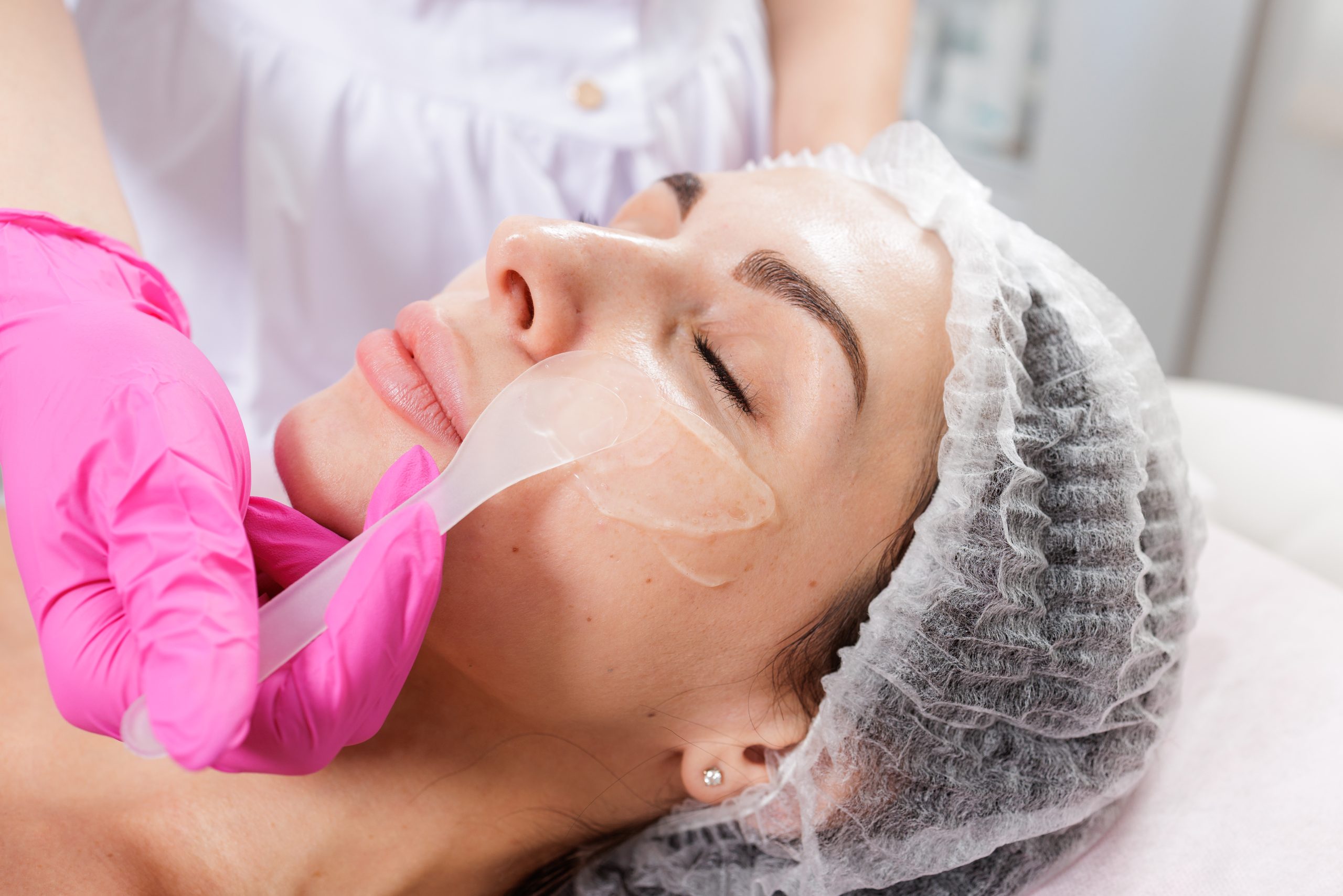
Chemical peels are another effective option, but formulation and application matter enormously. A medical-grade peel like the VI Peel — which combines TCA, retinoic acid, salicylic acid, phenol, and vitamin C — works at a level that OTC exfoliants simply can’t match. It accelerates cell turnover, interrupts the melanin production cycle, and addresses pigmentation across multiple skin layers. But it has to be applied by someone who knows how to calibrate the treatment to your specific skin type and the depth of your pigmentation.
A peel that’s too aggressive for your skin tone can cause more harm than good. The bottom line with post-burn hyperpigmentation: it responds well to treatment when the approach is right. The first step is a proper assessment — understanding what you’re actually dealing with before committing to any protocol.
What Professional Hyperpigmentation Treatment Actually Looks Like
A good treatment plan for post-injury hyperpigmentation isn’t a single procedure — it’s a combination of modalities matched to your skin type, the depth of your pigmentation, and your history with prior treatments. That’s not marketing language; it’s just how the condition works. There’s no universal peel or universal laser setting that’s right for every person walking in with dark spots.
At Wake Skincare, every client starts with a free skin evaluation. That consultation isn’t a formality — it’s where we figure out what’s actually going on with your skin before recommending anything. We look at your skin type, your Fitzpatrick scale (which determines how your skin responds to light-based treatments), the depth and character of your pigmentation, and what you’ve already tried. That last part matters more than most people expect.
If you’ve had chemical peels elsewhere that didn’t work or made things worse, that tells us something important about how to approach your treatment differently. Our founder, Jacqueline Grace, won first place in Pigmentation Artist of the Year at The Skin Games — an international esthetics competition where practitioners are judged specifically on their ability to treat complex pigmentation cases. That’s not a local popularity vote; it’s a credential earned against the best practitioners in the industry.
It means that when you come in with dark spots from a summer’s worth of mosquito bites or a burn that won’t fade, you’re being assessed by someone who has demonstrated mastery in exactly this area. Jacqueline has also been recognized as Best Esthetician in Wake County for three consecutive years, and is among the first 100 practitioners in the world to achieve HydraFacial Master Certification — certified at the Professional, Expert, and Master levels.
We also operate under the medical oversight of a named physician from the Triangle region, which means our treatment decisions sit within a clinical framework — not just an esthetics one. For clients who have been told by other providers that their skin is “too sensitive” or “too dark” for certain treatments, that level of oversight and expertise makes a real difference.
Getting Rid of Dark Spots from Bug Bites and Burns: Where to Start
If you’ve been waiting for dark spots to fade on their own and they’re not moving, you’re not doing anything wrong — you’re just dealing with a condition that typically needs more than time and OTC products to resolve. Post-injury hyperpigmentation responds to treatment. The key is making sure the treatment is actually matched to your skin.
Wake County’s long mosquito season and diverse population make this a more common concern here than in a lot of markets — and it’s one we see regularly. Whether your dark spots came from a summer of bites, a burn that healed months ago, or something else entirely, the starting point is the same: a real assessment of what’s happening with your skin before anything else.
If you’re ready to stop guessing, Wake Skincare offers a free consultation. Come in, let us take a look, and we’ll tell you honestly what we think will work — and why.