
Summary:
You’ve tried the vitamin C serums. You’ve been consistent. And your dark spots are still there, maybe a little lighter, maybe exactly the same. It’s frustrating — especially when you’re not sure if you’re one good treatment away from real results or just wasting money on the next thing that won’t work.
Microneedling for dark spots is one of the more talked-about options right now, and for good reason. But the before and after photos you see online don’t always tell the full story. This page does — including the honest timeline, the real risks, and what separates a provider who gets results from one who doesn’t.
How Microneedling Actually Works on Dark Spots
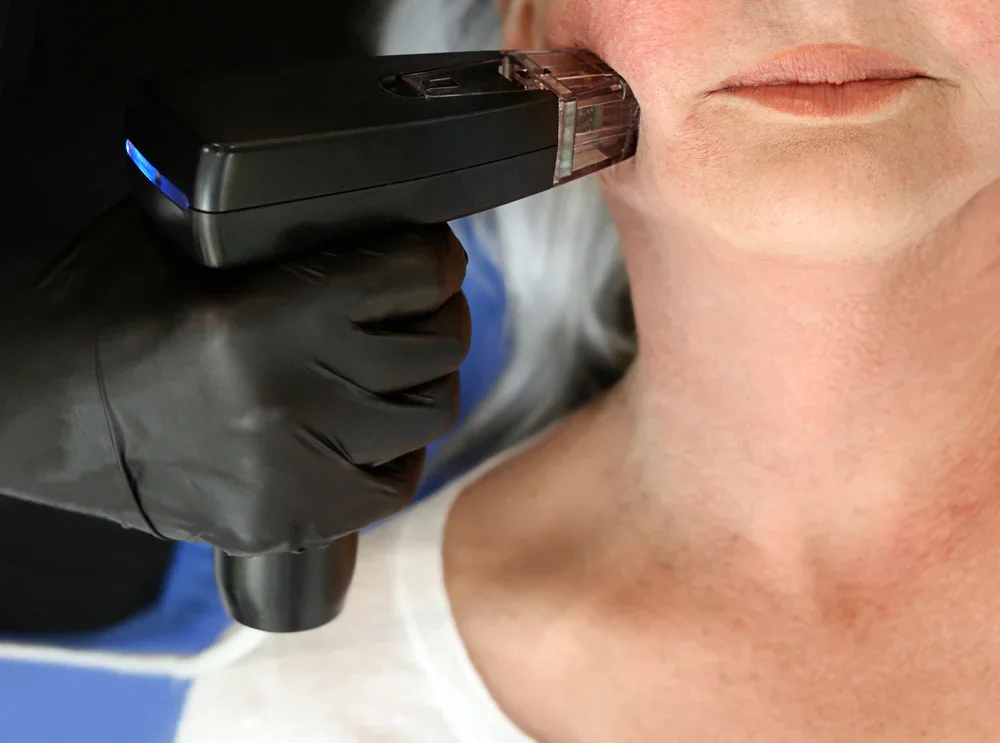
Microneedling creates tiny, controlled punctures in the skin’s surface using a device with fine needles — in our case, the SkinPen, the first FDA-cleared microneedling device in the United States. Those micro-injuries trigger your skin’s natural healing response, which includes a surge of collagen and elastin production.
For dark spots specifically, that healing process helps break up concentrated melanin deposits and encourages the skin to resurface more evenly over time. It’s not an instant fix. The fading happens gradually as your skin cycles through its natural renewal process.
Most people start noticing improvement within several weeks of their first session, with more significant changes appearing after a series of treatments. Full results for dark spots typically develop over three to six months — and that timeline is worth understanding before you book anything.
Microneedling Before and After Dark Skin: What You Need to Know First
This is the part most clinics gloss over, and it’s the part that matters most if you have a deeper skin tone.
Microneedling is safe and effective for all skin types — including darker Fitzpatrick types. But there’s a catch. When microneedling is done too aggressively, or by someone who isn’t experienced with melanin-rich skin, it can trigger post-inflammatory hyperpigmentation. That means the treatment itself creates new dark spots rather than fading the ones you came in with. It’s a real, documented risk, and it’s not rare when the wrong technique is used.
The depth of the needles matters. The session spacing matters. The post-care protocol matters. For pigmentation-focused treatments, the standard needle depth range is 0.5 to 1.5mm — but that range needs to be calibrated to your specific skin type, the nature of your pigmentation, and where on your face or body you’re being treated. A provider who uses the same settings for everyone isn’t doing this right.
This is exactly why our approach matters for anyone in Wake County dealing with dark spots on deeper skin tones. Jacqueline Grace holds first place in the Pigmentation Artist of the Year category at The Skin Games — an international aesthetics competition with peer-judged results. That’s not a local popularity award. It’s a credential earned by demonstrating technical skill in pigmentation treatment specifically, in front of industry judges. She’s also placed second in the same category, which means the first result wasn’t a fluke.
If you’ve hesitated to book microneedling because you weren’t sure if a provider could handle your skin safely — that hesitation is valid. The answer is that the right provider absolutely can. We specialize in skin of color, acne, and hyperpigmentation, and every treatment plan starts with a thorough skin evaluation before anything touches your face.
Microneedling for Age Spots Before and After: What the Timeline Really Looks Like
Age spots — the flat, darker patches that show up after years of sun exposure — are one of the most common concerns we see at our Wake Forest clinic. Wake County’s climate is a big part of why. With more than 200 sunny days a year, residents here accumulate UV exposure faster than most people realize.
Time outdoors at Falls Lake, Umstead State Park, or just commuting and running errands adds up. By the time age spots become visible, the sun damage behind them has been building for years.
Microneedling addresses age spots by disrupting the concentrated melanin at the surface and stimulating fresh skin cell turnover. The micro-channels created during treatment also allow brightening serums — like vitamin C or tranexamic acid — to penetrate far deeper than they could on intact skin, which significantly amplifies the depigmenting effect. It’s the combination of the mechanical stimulation and the topical support that makes the difference.
In the first few weeks after your initial session, you may notice some overall brightening and a more even tone — but the spots themselves typically take longer to fade. After a series of three sessions spaced four to six weeks apart, most patients see meaningful reduction in spot intensity and size. The full picture emerges over three to six months as collagen remodeling continues working beneath the surface even after your last appointment.
Maintenance matters too. Sun-triggered spots can return with continued UV exposure, which is why annual touch-up treatments and consistent sun protection are part of any honest long-term plan. We’ll talk through all of this during your consultation — not to upsell you on more sessions, but because it’s the realistic picture of how this works.
Choosing the Right Microneedling Provider for Dark Spots in Wake County
The treatment itself is only part of the equation. Who performs it — and how they assess your skin before they start — determines whether you walk away with the results you came for or a new problem to manage.
In Wake County and across the Triangle, there are plenty of clinics offering microneedling. What’s harder to find is a provider with verifiable, specific expertise in pigmentation and skin of color. We bring that standard of care to Wake Forest, backed by a medical director from the Triangle region who provides physician oversight for our clinical treatments.
Jacqueline Grace has been named Best Esthetician in Wake County three consecutive years running, recognized by the Wake Weekly Best of the Best — a community-based award that reflects consistent performance, not a one-time nomination. She trained in New York and brings that standard of care to our practice here.
What to Expect From a Microneedling Consultation for Dark Spots
A consultation for dark spots isn’t a formality. It’s where the real work starts.
Before any microneedling session at Wake Skincare, we do a thorough skin evaluation. That means looking at your specific pigmentation — whether it’s post-inflammatory marks from acne, sun-triggered age spots, or melasma — and assessing your Fitzpatrick skin type, skin thickness, and any factors that could affect how your skin responds. From there, we build a treatment plan that’s specific to you: the right needle depth, the right session spacing, the right topical support to pair with each visit.
This matters because dark spots aren’t a monolith. Post-inflammatory hyperpigmentation from a breakout behaves differently than a solar lentigo from years of sun exposure. Melasma — hormonally influenced pigmentation — is the most complex of all, often requiring a combination approach and honest expectations about what’s achievable. A provider who treats all of these the same way isn’t giving you a real plan.
We also walk through post-care in detail. The 24 to 72 hours after microneedling involve redness and mild sensitivity — that’s normal, and it’s actually the sign that the collagen induction response has been triggered. What you do during that window (sun avoidance, gentle skincare, no actives) directly affects your results. We don’t hand you a pamphlet and send you home. We make sure you know exactly what to expect and exactly what to do.
For Wake County residents who’ve had a previous bad experience elsewhere, or who’ve been told microneedling “isn’t for their skin type,” the consultation is also a chance to get a straight answer about whether and how this treatment can work for you. We’d rather tell you the honest truth in a free consultation than have you book a session that isn’t the right fit.
Ice Pick Scars Before and After Microneedling: Honest Answers
Ice pick scars are among the most structurally challenging acne scars to treat. They’re deep, narrow, and pitted — caused by severe acne that damaged the skin’s deeper layers. If you’ve been researching microneedling for ice pick scars and wondering whether the before and after photos you’re seeing are realistic for your situation, here’s the honest version.
Microneedling does improve ice pick scars. The collagen induction triggered by each session gradually fills in the depression from below, improving the depth and appearance of the scar over time. Multiple sessions are needed — this isn’t a one-and-done treatment for structural scarring. Most patients see gradual, cumulative improvement across a series of three or more sessions, with results continuing to develop for months after the last appointment.
That said, complete elimination of deep ice pick scars through microneedling alone is rarely achieved. Very deep scars may benefit from a combination approach — microneedling paired with chemical peels or other modalities that address both the surface and the underlying structure. We offer both, which means we can sequence treatments in a way that addresses your scars from multiple angles rather than relying on a single method.
What we won’t do is promise you a complete erasure after one session. That’s not how it works, and any provider who tells you otherwise isn’t being straight with you. What we can tell you is that with the right protocol, the right number of sessions, and the right post-care, ice pick scars look meaningfully different — less deep, less defined, and less visible in everyday light.
For Wake County residents who’ve been living with acne scarring for years, that kind of gradual, real improvement is worth understanding clearly before you decide. If you’re not sure whether your scars are ice pick, rolling, or boxcar — or some combination — a skin evaluation will give you a clear picture of what you’re working with and what approach makes the most sense.
Ready to See What Microneedling Can Do for Your Dark Spots?
The most important thing to take away from this page is simple: microneedling works for dark spots, age spots, and acne scarring — but the results depend on who’s doing it and how well they understand your skin specifically. Realistic timelines, the right technique for your skin type, and honest expectations aren’t extras. They’re the baseline of a provider worth trusting.
If you’re in Wake County and you’ve been sitting on this decision, the lowest-risk next step is a free skin evaluation. You’ll get a clear read on your specific pigmentation, an honest assessment of what’s achievable, and a treatment plan that’s built around your skin — not a one-size-fits-all menu. No pressure, no commitment required to show up.
Wake Skincare is here when you’re ready to have that conversation.