
Summary:
You’ve probably seen prices all over the place — $75 at a chain spa, $150 at a boutique clinic, and everything in between. It’s hard to know what you’re actually paying for, and even harder to know whether it’ll work. If you’ve been dealing with persistent breakouts and you’re finally considering professional help, that price confusion is one of the first things worth clearing up.
We walk you through what a professional acne facial actually costs in Wake County, what goes into the treatment, and how to figure out whether the provider you’re considering is worth it.
What Is a Professional Acne Facial — and What Does It Actually Include?
A professional acne facial is not the same thing as a relaxation facial. It’s a targeted treatment designed specifically for breakout-prone skin — and the protocol reflects that.
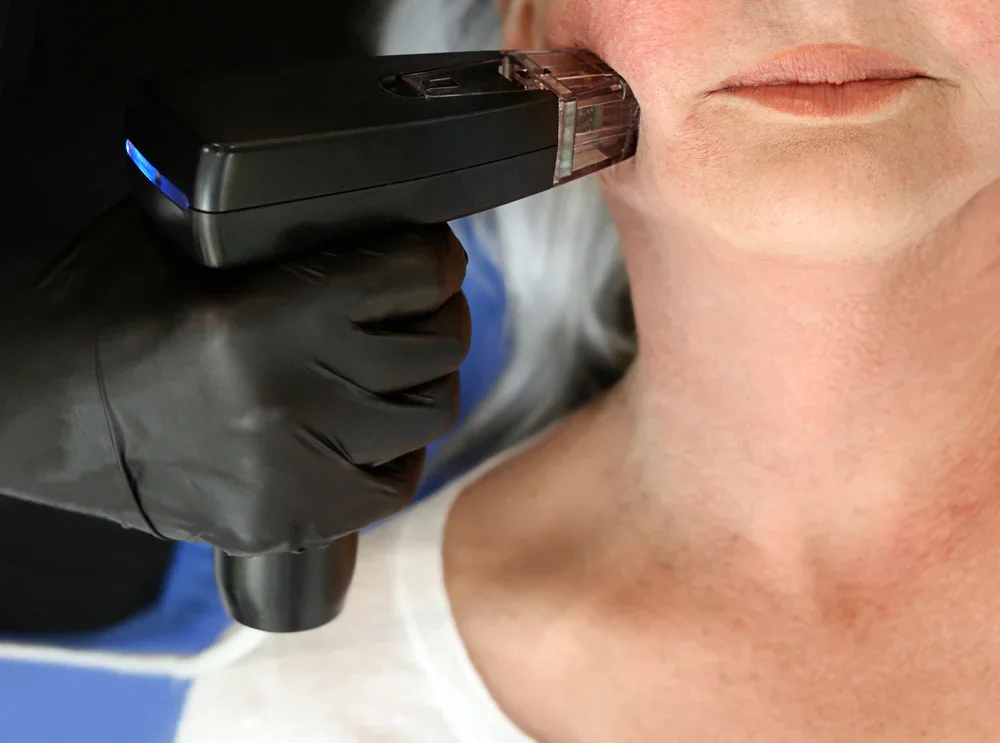
At its core, it typically includes a thorough cleanse, gentle exfoliation to loosen congestion, manual extractions to clear blackheads and clogged pores, and a soothing mask to calm inflammation after the deeper work is done. Every step is focused on reducing active breakouts, minimizing pore congestion, and supporting the skin’s barrier — not just making you feel relaxed for an hour.
Some providers also incorporate LED blue light therapy to target acne-causing bacteria, which can be added as a complement to the core treatment. The quality of that experience varies significantly depending on who’s performing it, what products they’re using, and how much they’ve customized the protocol to your specific skin.
Acne Treatment Cost: What Drives the Price Up or Down?
Nationally, acne facials typically range from $75 to $150 per session. Add-ons like LED blue light therapy can bring that up by another $25 to $75. In Wake County — where providers range from national chain spas to independent medical aesthetics clinics — the spread is wider, and the reasons behind it matter.
The biggest cost drivers are credentials, customization, and the level of medical oversight behind the treatment. A chain spa running a standardized acne protocol with a rotating staff of estheticians is a fundamentally different service from a specialized clinic where a single practitioner builds a custom plan around your skin.
Product quality plays a role too. Medical-grade formulations are more potent and more targeted than what’s used in most day spa treatments. You’re not just paying for someone’s time — you’re paying for products that are actually strong enough to make a difference.
Then there’s the question of medical oversight. In North Carolina, estheticians must complete 600 hours of licensed training — but the scope of what a practice can offer expands significantly when it operates under a licensed medical director. Treatments like IPL, certain chemical peel strengths, and laser options require that level of supervision. A clinic that offers the full spectrum — from a basic acne facial to advanced scar revision — can treat you as your skin evolves, rather than referring you out the moment your needs go beyond a standard facial.
One more thing worth understanding: the cheapest option isn’t always the safest one for your skin. Improper extractions, wrong-strength peels, or mismatched products can cause post-inflammatory hyperpigmentation — especially for people with deeper skin tones. That’s a reason to choose your provider carefully.
How Many Acne Facial Sessions Do You Actually Need to See Results?
For mild congestion or occasional breakouts, a single session can produce a noticeable improvement in texture and clarity within a few days. Most clients leave with visibly smoother, calmer skin after their first treatment.
For persistent or moderate acne, a series of treatments is typically more effective than a one-time visit. Acne is a chronic condition, not a one-session fix. The underlying causes — excess sebum, clogged follicles, bacteria, inflammation — are ongoing, and professional treatment works best when it’s part of a consistent plan rather than a once-in-a-while event.
If acne scarring is part of the picture, the conversation shifts. Treatments like SkinPen microneedling address texture and scarring at a deeper level than a facial alone. A single microneedling session typically costs around $300, and most people with moderate scarring or significant texture issues benefit from three to four sessions spaced about a month apart. That’s a different investment than a facial — but it’s also targeting a different problem.
The most useful thing you can do before committing to a series or a specific treatment is get a proper skin evaluation. Not a sales consultation — an actual assessment of your skin, your acne type, and what’s realistically going to help. That’s the only way to know whether you need a monthly acne facial, a targeted peel series, microneedling, or some combination of all three.
Finding Professional Acne Treatment in Wake County
Wake County is growing fast — more than 103,000 new residents since 2020, with northern Wake County towns like Wake Forest expanding steadily. With that growth comes more options for skincare, which is good. But more options also means more noise to cut through when you’re trying to find a provider who actually knows what they’re doing with acne-prone skin.
The credential gap between providers in Wake County is real. There’s a meaningful difference between a national chain offering a standardized acne add-on and a specialist who has spent years focused on exactly the skin concerns you’re dealing with. Knowing what to look for makes that distinction easier to spot.
Should I See an Esthetician or a Dermatologist for Acne?
For mild to moderate acne — recurring clogged pores, surface congestion, blackheads, occasional inflammatory breakouts — a skilled esthetician can make a real difference. Professional facials, targeted chemical peels, and consistent skincare plans are all within an esthetician’s scope, and they’re often more effective for this category of acne than anything you can do at home.
For moderate to severe acne — cystic breakouts, nodular acne, or anything that’s leaving significant scarring — a dermatologist is the right first call. They can prescribe medications and interventions that go beyond what any esthetic treatment can address. A good esthetician knows this too, and will refer you out when something is outside their scope.
Where it gets interesting is the space in between. For people dealing with adult acne — which now accounts for roughly 40% of diagnosed cases, with the 25–45 age group being the fastest-growing segment — the best outcomes often come from working with both. A dermatologist manages the medical side; an esthetician manages the skin’s surface health, barrier function, and the cosmetic concerns like hyperpigmentation that medications don’t always address.
In Wake County specifically, the diversity of the population adds another layer to this conversation. Post-inflammatory hyperpigmentation — the dark marks that linger after a breakout — is a significant concern for people with deeper skin tones, and not every esthetician or dermatologist has the training to treat it correctly. Finding a provider who has specific, demonstrated expertise in skin of color isn’t just a nice-to-have. For many Wake County residents, it’s the difference between treatment that helps and treatment that causes new problems.
Why We Specialize in Acne Treatment for Wake County
Wake Skincare was founded by Jacqueline Grace, a licensed esthetician who trained in New York before establishing her practice in Wake Forest. She has been named Best Esthetician in Wake County three consecutive years running — not a self-declared title, but an independently awarded recognition. She has also competed internationally at The Skin Games, where she earned first and second place in the Pigmentation Artist of the Year category. That specific credential matters for acne patients, because post-inflammatory hyperpigmentation is one of the most common and distressing outcomes of acne — and it requires a practitioner who knows exactly what they’re doing.
Jacqueline also holds a Master certification in HydraFacial, placing her among fewer than 100 practitioners in the world to reach that level. HydraFacial is particularly effective for acne-prone skin because of its ability to deeply cleanse, extract, and infuse targeted serums in a single treatment — and at the Master level, that protocol is customized in ways that go beyond what most providers offer. We operate under the medical oversight of Dr. Joseph Hummel, one of the Triangle’s most respected medical directors, which expands the range of treatments we can offer and raises the standard of care across the board.
What that means practically for someone dealing with acne in Wake County is this: you’re not choosing between a spa facial and a dermatologist visit. You have access to a provider who can treat your skin across a full spectrum — from a targeted acne facial to advanced scar revision — without having to piece together care from multiple practices.
We offer a free skin evaluation and consultation to every new client. Not a sales pitch — an actual assessment of your skin, your concerns, and a clear treatment plan with transparent pricing before you commit to anything.
What to Do Next If You're Ready to Treat Your Acne in Wake County
Acne facial costs in Wake County range based on who’s treating you, what’s actually being done to your skin, and whether the provider has the credentials to back it up. A $75 chain spa facial and a customized treatment from a credentialed specialist are not the same thing — and understanding that difference is worth your time before you book anything.
If you’ve been cycling through products, trying different providers, or just wondering whether professional treatment is actually worth it, the most useful first step is a real conversation about your skin. Not a pressure-filled sales appointment — just an honest assessment of what’s going on and what’s likely to help.
We offer that free consultation to every new client. If you’re in Wake County and you’re ready to stop guessing, reach out to us and we’ll start there.