Summary:
You’ve been consistent. Vitamin C serum in the morning, retinol at night, SPF every single day. You’ve read the ingredient labels, done the research, and spent real money on products that promised to fade your dark spots. And yet — three months later, six months later — they’re still there. Maybe lighter, maybe not.
This isn’t a routine problem. It’s a depth problem. Topical skincare has a ceiling, and for a lot of people dealing with hyperpigmentation, they’ve already hit it. What comes next isn’t a better serum. It’s understanding why the spots are there in the first place — and what it actually takes to address them.
Skin Care for Pigmentation: Why the Serum Isn't Enough
Vitamin C, niacinamide, tranexamic acid, kojic acid — these are real ingredients with real science behind them. They work at the surface of the skin, interrupting melanin production and helping fade discoloration over time. For mild, recent pigmentation, they can make a meaningful difference.
But here’s the part most product marketing glosses over: they can only penetrate so far. Stubborn hyperpigmentation — the kind that’s been sitting on your skin for months, the dark spots that showed up after a breakout or a summer of sun exposure — is often anchored deeper in the skin than any topical ingredient can reach. No matter how high the concentration or how consistent the application, a serum physically cannot get to where that pigment lives.
That’s not a failure of your routine. That’s just biology.
What Type of Hyperpigmentation Do You Actually Have?
This is the question most people skip — and it’s probably the most important one. Not all dark spots are the same, and treating them like they are is one of the main reasons OTC routines stall out.
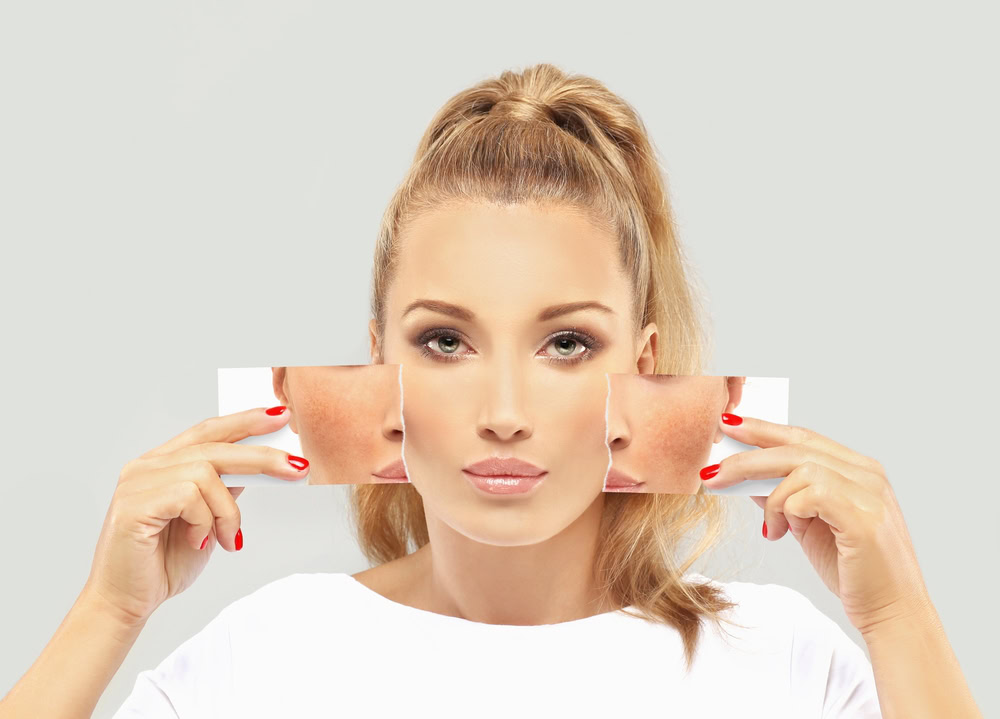
Post-inflammatory hyperpigmentation, or PIH, is what’s left behind after a breakout or skin injury. The inflammation triggers your skin to overproduce melanin in that area, and the result is a flat, darkened patch where the pimple used to be. It’s incredibly common, especially in medium-to-deep skin tones, and it can take months to fade on its own — longer if you’re still breaking out.
Melasma is a different animal. It’s driven by hormones, often triggered or worsened by sun exposure, and it tends to appear in larger, more diffuse patches — commonly across the cheeks, upper lip, and forehead. It’s more common in women, particularly during pregnancy or while on hormonal birth control. Melasma is notoriously difficult to treat with topicals alone because it involves both the surface and deeper layers of the skin, and it has a strong tendency to come back if the underlying triggers aren’t managed.
Solar lentigines — what most people call sun spots or age spots — are a direct result of cumulative UV exposure. In Wake County, where summers run long and hot, these are extremely common. They tend to appear on the face, chest, and hands, and they respond well to certain professional treatments but are largely unaffected by most OTC brightening products.
Knowing which type you’re dealing with changes everything about how it should be treated. A dark spot corrector designed for PIH isn’t going to do much for melasma. A product that helps with sun spots may not touch post-acne marks. This is why a professional skin evaluation — before any treatment — matters so much. It’s the step that most skincare routines never include.
Why Darker Skin Tones Face a Higher-Stakes Decision
If you have a medium-to-deep complexion and you’ve been hesitant about professional treatment, that hesitation is understandable — and it’s not unfounded. Aggressive treatments applied incorrectly to darker skin tones can actually trigger more hyperpigmentation, not less. Heat-based lasers and certain chemical peels, when used without a proper understanding of Fitzpatrick skin types, can cause rebound pigmentation that’s harder to treat than what you started with.
This is why expertise in skin of color isn’t a nice-to-have — it’s a safety requirement. The practitioner needs to understand how different skin tones respond to heat, light, and chemical exfoliation before recommending anything. They need to know which treatments are appropriate, which carry risk, and how to adjust protocols based on your specific skin.
Wake County’s population reflects exactly this reality. With over 218,000 Black or African American residents and approximately 100,000 Asian residents — plus a growing international community — the demand for skin of color-competent hyperpigmentation care is significant, and the gap in providers who genuinely specialize in it is real. Fitzpatrick skin types III and IV account for the largest share of hyperpigmentation treatment in the U.S. precisely because these skin tones are most susceptible to the condition. Finding a provider who understands that isn’t just about getting better results. It’s about not making things worse.
At Wake Skincare, expertise in skin of color is a core part of how we practice. Our founder Jacqueline Grace specifically focuses on skin of color as one of her primary specializations, and treatments like SkinPen microneedling — which is FDA-cleared for all Fitzpatrick skin types — are part of how we treat pigmentation safely across the full range of complexions we see in Wake Forest, Cary, Raleigh, and across the county.
Hyperpigmentation Treatment vs. Dermatologist: What's the Right Call?
A lot of people reach this point and wonder whether they should see a dermatologist instead. It’s a fair question, and the honest answer is: it depends on what you’re dealing with.
If your hyperpigmentation is tied to an underlying medical condition — a hormonal disorder, an autoimmune issue, a prescription medication — a dermatologist is the right first stop. They can diagnose, prescribe, and rule out anything that needs medical attention.
But for the vast majority of people dealing with cosmetic hyperpigmentation — dark spots from sun exposure, post-acne marks, melasma from hormonal changes — a medical aesthetic spa with the right credentials and a medical director on staff can deliver results that are just as effective, and often more personalized.
What Professional Skin Care for Hyperpigmentation Actually Does Differently
The fundamental difference between professional treatment and a home skincare routine is depth. Professional treatments are designed to work at the layers of the skin where stubborn pigmentation actually lives — not just the surface.
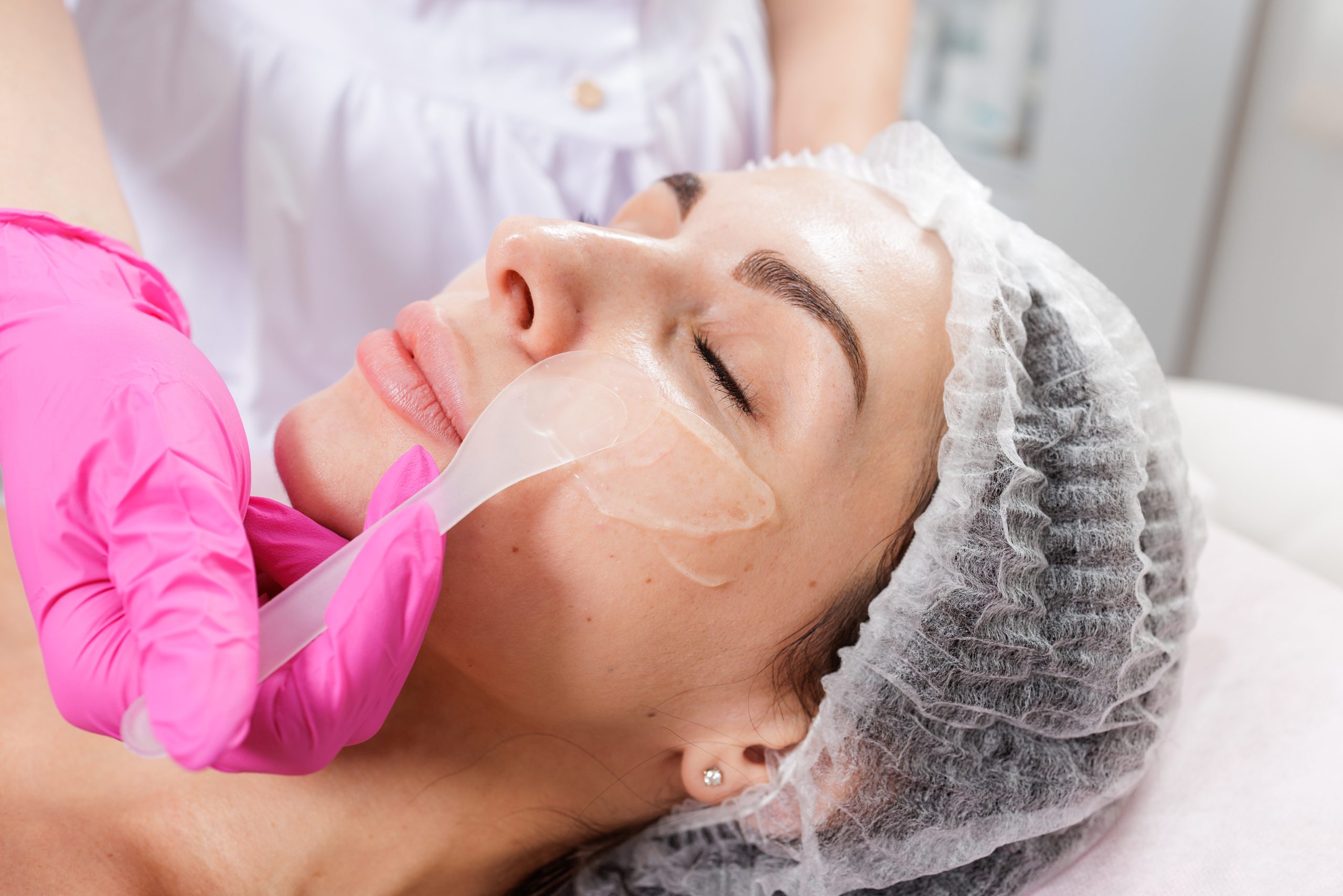
A chemical peel, for example, uses a controlled acid solution to exfoliate through the outer layers of the skin, triggering cell turnover and bringing newer, more evenly pigmented skin to the surface. The VI Peel — one of the treatments we offer — combines TCA, retinoic acid, and salicylic acid in a formulation that’s effective for melasma and PIH, often with visible improvement after a single treatment. That’s a different category of result than a brightening serum.
Lumecca IPL uses intense pulsed light to target pigmented lesions directly — breaking up the melanin deposits that cause sun spots and uneven tone without affecting the surrounding skin. It’s particularly effective for solar lentigines and redness, and it delivers results that topical products simply cannot replicate.
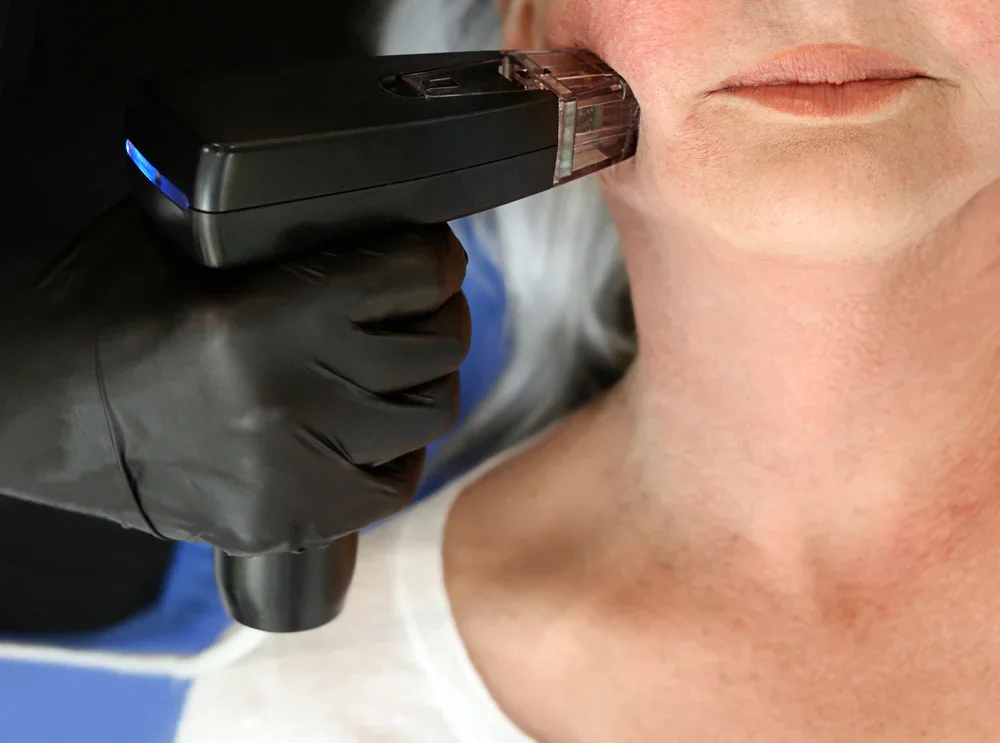
SkinPen microneedling works differently again. It creates controlled micro-injuries in the skin that stimulate collagen production and accelerate cell turnover, which helps fade pigmentation over time while also improving overall skin texture. Because it doesn’t use heat or light energy, it’s one of the safest options for darker skin tones — which is why its FDA clearance for all Fitzpatrick skin types matters.
HydraFacial can be customized with brightening boosters — including Britenol, a targeted brightening complex — to address surface pigmentation and uneven tone in a single session. Jacqueline is among the first 100 practitioners in the world to achieve HydraFacial Master Certification, the highest of three certification tiers. That level of training changes what’s possible with the treatment.
None of these are interchangeable, and none of them are one-size-fits-all. The right treatment depends on what type of hyperpigmentation you have, how deep it is, your skin tone, and your skin’s current condition. That’s why every client at Wake Skincare starts with a free consultation and professional skin evaluation before anything else.
When Is the Best Time to Treat Hyperpigmentation in Wake County?
Timing matters more than most people realize, and in Wake County specifically, the seasonal pattern is worth understanding.
Wake County summers are intense — high UV index, long sun exposure hours, and the kind of heat and humidity that keeps skin under constant stress. Summer is when most hyperpigmentation gets worse. Sun damage accumulates, melasma flares, and post-acne marks darken with UV exposure. By the time September arrives, a lot of people are looking at their skin and wondering what happened.
That’s actually the ideal moment to act. Fall and winter in Wake County are the optimal treatment window for hyperpigmentation. Sun exposure drops significantly, which means treatments like chemical peels, IPL, and microneedling can work without the interference of ongoing UV damage — and the risk of post-treatment sun sensitivity causing new pigmentation is much lower. Starting a treatment plan in the fall gives your skin the full winter season to respond, heal, and stabilize before the next summer.
This isn’t just a general principle — it’s directly relevant to how we plan treatment timelines for clients across Wake Forest, Cary, Raleigh, and the surrounding areas. If you’ve been putting off addressing your dark spots, the cooler months are genuinely the best time to start. And if you’ve noticed your pigmentation getting worse every summer and then partially improving over winter, that cycle is telling you something: your skin needs more than a seasonal reprieve. It needs treatment that breaks the pattern.
Wake County is growing fast — more than 66 new residents per day, many relocating from other states or internationally. A lot of people arriving here haven’t yet found a skincare provider they trust, and they’re starting fresh in a climate that’s harder on skin than they might expect. If that’s you, getting a professional skin evaluation early — before another North Carolina summer — is one of the smarter things you can do for your skin.
What to Do When Your Skincare Routine Has Taken You as Far as It Can
If you’ve been consistent with your routine and still aren’t seeing the results you want, the answer probably isn’t a different serum. It’s a conversation with someone who can actually look at your skin, identify what type of hyperpigmentation you’re dealing with, and tell you honestly what it’s going to take to address it.
That’s exactly what the free consultation at Wake Skincare is for. No pressure, no generic protocol — just a real evaluation of what your skin needs and a clear plan for getting there. Jacqueline Grace has won first and second place in the Pigmentation Artist of the Year category at The Skin Games, an international aesthetics competition, and has been recognized as the Best Esthetician in Wake County for three consecutive years. That’s not background noise. That’s the specific expertise this problem calls for.
If you’re in Wake County and ready to stop guessing, we’re here to help.