Summary:
If you’ve been filling in your brows every single morning — pencil, powder, blending, starting over — you already know how much mental energy that takes. Twenty minutes a day adds up fast. And if your brows are sparse, uneven, or never quite match, that routine probably feels less like self-care and more like a chore you can’t skip.
Microblading is the reason a lot of people across Wake County finally stop doing that. But before you book anything, you deserve a clear, honest picture of what the process actually involves — not just the polished before-and-afters, but the full story. That’s what this page is for.
Brow Microblading: What It Is and How It Actually Works
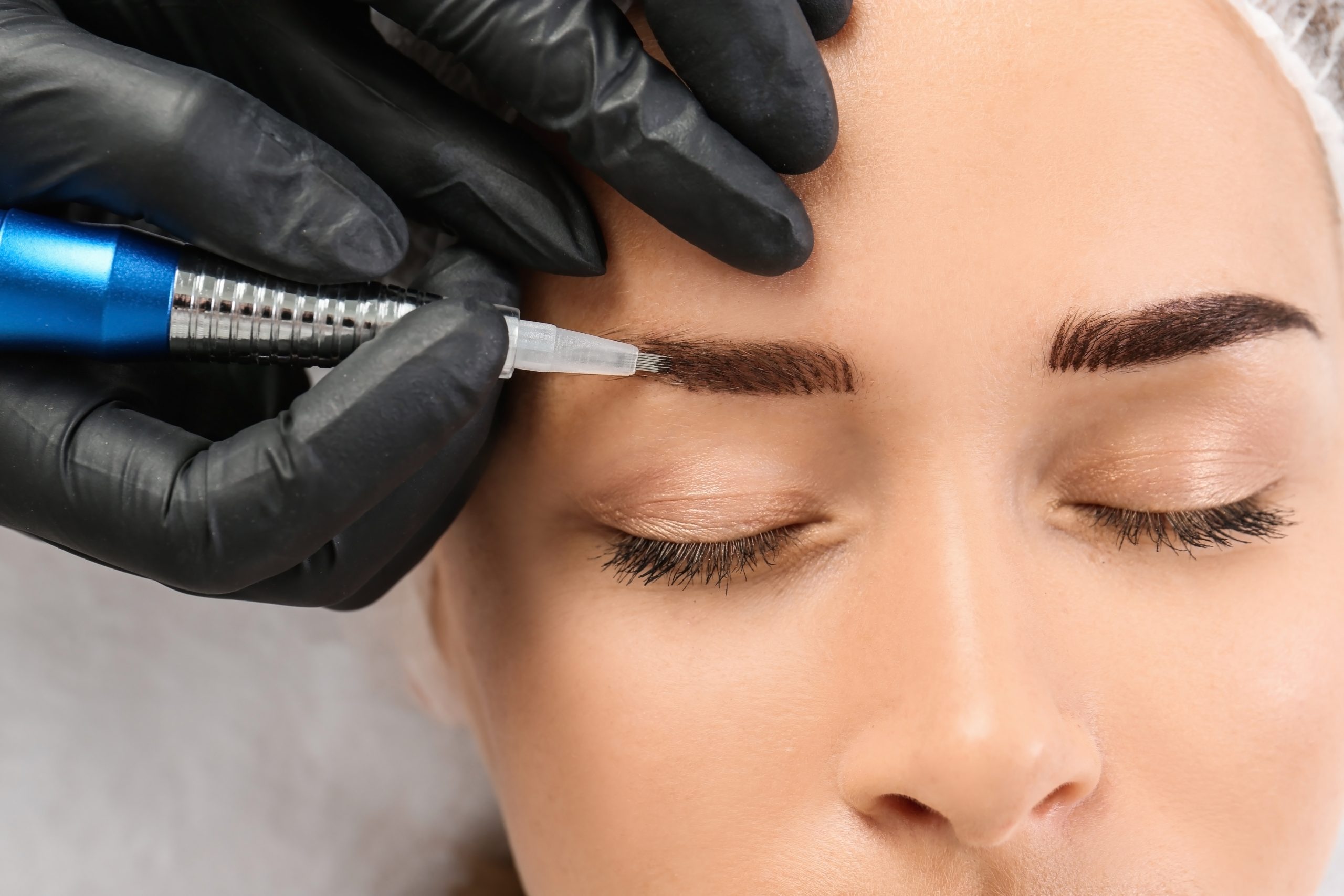
Microblading is a semi-permanent eyebrow technique where a trained artist uses a fine, manual blade to create small, precise incisions in the skin and deposit pigment into each one. The result is a series of hair-like strokes that blend with your natural brows — or, for clients with very sparse growth, build the appearance of a full brow from scratch.
The key word is semi-permanent. Microblading is not a traditional tattoo. The pigment sits in the upper layers of the skin rather than deep tissue, which is why results fade gradually over 12 to 18 months rather than lasting indefinitely. That also means touch-ups are part of the long-term picture, which we’ll get into below.
Permanent Eyebrow Tattoo vs. Microblading: What's the Difference?
This is one of the most common points of confusion, and it’s worth clearing up before you go any further. A permanent eyebrow tattoo uses a machine to push ink deep into the dermis — the same basic process as any body tattoo. The ink stays put for years, sometimes decades, and can shift in color over time toward gray, blue, or orange depending on the pigment used.
Microblading works differently. The blade creates shallow, controlled incisions, and the pigment used is typically organic or iron oxide-based rather than synthetic tattoo ink. That matters because organic pigments are formulated to fade cleanly over time rather than migrate or change color in unpredictable ways. The result looks softer and more natural than a traditional brow tattoo — individual strokes rather than a solid filled shape.
There’s also a practical difference in how the two age. A permanent tattoo might look fine at first, but as the ink spreads slightly under the skin over years, what started as crisp hairstrokes can blur into a block. Microblading, done correctly and maintained with periodic touch-ups, keeps its definition because you’re refreshing the work before that degradation has a chance to happen.
The “done correctly” part is where provider selection becomes critical. The technique requires precision — a single microblading session can involve more than 100 individual incisions. Depth, angle, and stroke direction all affect how the result heals. An artist who rushes, uses stencils instead of mapping your face by hand, or works outside their licensing scope is going to produce a very different outcome than someone who treats this as a craft.
At Wake Skincare, we don’t use cookie-cutter stencils. Every brow is drawn by hand before any blade touches your skin, mapped to your face shape, bone structure, and natural hair growth pattern. You approve the shape before we begin — because once we start, the direction matters.
What Does the Microblading Healing Process Actually Look Like?
This is the part most provider pages gloss over, and it’s also the part that causes the most anxiety for first-time clients. So here’s the honest, day-by-day picture.
In the first one to three days after your appointment, your brows will look darker and more defined than the final result. This is normal. The pigment is sitting at the surface while your skin begins to close around each incision. Most clients can go back to work the next day — any scabbing is typically thin and light, not the heavy crusting you might be imagining.
Around days seven to fourteen, something that surprises almost everyone happens: your brows will look significantly lighter. Sometimes almost gone. This is called the ghosting phase, and it’s a completely normal part of the healing process. The outer layer of skin is shedding, and the pigment underneath hasn’t fully settled yet. If you’re in this phase and panicking, take a breath — it’s not permanent.
By weeks four to six, the pigment stabilizes and the final color emerges. This is when you’ll see what your brows actually look like healed. The full healing process takes four to six weeks, which is why we schedule a follow-up appointment around that mark. That session lets us correct any spots where pigment faded unevenly, reinforce strokes that need more definition, and make sure both brows are balanced.
For clients in Wake County who are planning around a specific event — a wedding, a reunion, a vacation — we generally recommend booking your initial appointment at least eight weeks out. That gives your brows time to fully heal and your touch-up appointment time to land before the big day.
One more thing worth knowing: oily skin types tend to experience faster pigment fading than dry skin, because the oil disrupts how the pigment bonds during healing. If you have oily skin, microblading can still work well — but it’s worth discussing at your consultation whether traditional microblading or an alternative technique like powder brows or nano brows might give you better long-term retention.
How to Choose a Microblading Artist in Wake County, NC
Wake County has no shortage of providers offering microblading — salons, med spas, independent artists, and everything in between. The range in quality is just as wide. Because microblading breaks the skin and involves pigment that will live on your face for over a year, the person doing it matters more than almost any other aesthetic service you could book.
In North Carolina, microblading falls under the jurisdiction of the NC Board of Cosmetic Art Examiners, which means practitioners are required to hold an active esthetics or cosmetology license. That’s a baseline, not a ceiling. What separates a technically licensed artist from a genuinely skilled one comes down to training depth, portfolio quality, and whether they’ve had their work evaluated by anyone other than their own clients.
What Credentials Should a Microblading Artist Actually Have?
When you’re evaluating a microblading provider in Wake County, there are a few things worth looking for beyond a license number.
First, ask to see healed results — not just fresh work photographed immediately after the procedure. Fresh microblading always looks dramatic. What matters is how the strokes look four to six weeks later, once the skin has fully closed and the pigment has settled. A provider who can only show you day-one photos is a provider who isn’t confident in their healed outcomes.
Second, look for verifiable credentials. Competition placements, named certifications, and peer-evaluated awards carry more weight than self-issued claims. Anyone can write “highly trained” on a website. Fewer can point to a first-place finish at an internationally recognized competition.
Jacqueline Grace, the founder of Wake Skincare, placed first and second in Pigmentation Artist of the Year at The Skin Games — an international aesthetics competition where practitioners are judged by industry peers, not marketing teams. She also placed second in Lash and Brow Artist of the Year at the same competition. She’s been named Best Esthetician in Wake County three consecutive years running, including First Place in Wake Weekly’s Best of the Best 2022. These aren’t internal awards. They’re credentials you can look up.
Third, consider whether the provider has medical director oversight. Wake Skincare operates under the medical direction of Dr. Joseph Hummel, a physician from the Triangle region. That layer of medical-grade accountability isn’t something you’ll find at a home studio or a nail salon offering microblading as an add-on service.
Finally, pay attention to the consultation process. A qualified microblading artist will always pre-draw your brows for your approval before any blade touches your skin. They’ll ask about your skin type, your health history, any medications you’re taking, and your lifestyle. If a provider skips that step or rushes through it, that’s a signal worth taking seriously.
Frequently Asked Questions About Microblading
**Does microblading hurt?**
Most clients describe the sensation as similar to eyebrow plucking — noticeable, but not the ordeal some people expect. A topical anesthetic is applied before the procedure begins, which significantly reduces discomfort. In our own client data, over 3,500 clients rated their pain level at a 5 or lower on a 10-point scale.
**How long does microblading last?**
Results typically last 12 to 18 months before a touch-up is needed. How quickly the pigment fades depends on your skin type, sun exposure, skincare routine, and how well you follow aftercare instructions. Oily skin and frequent exfoliation both accelerate fading.
**Who is a good candidate for microblading?**
Most adults in good general health are candidates. Microblading is commonly used for sparse brows, asymmetry, over-plucked brows, and hair loss from conditions like alopecia. It’s not recommended during pregnancy or while breastfeeding. Certain skin conditions — active eczema, psoriasis, or acne in the brow area — may also affect candidacy, which is why a consultation matters before you commit.
**What is microblading hairline treatment?**
Microblading hairline is a distinct technique from eyebrow microblading. It’s used to address hair loss or a receding hairline along the scalp, using different tools, pigments, and aftercare protocols than brow work. If you’re exploring options for scalp-related hair loss, that’s a separate conversation from eyebrow microblading — and worth asking about specifically during a consultation at Wake Skincare.
**What should I avoid before my appointment?**
In the days leading up to your appointment, avoid alcohol, blood thinners, and excessive sun exposure. Retinol and exfoliating acids should be paused in the brow area. Your artist will give you a complete pre-care list at your consultation.
**Is microblading available across Wake County?**
Yes. We serve clients from Wake Forest, Cary, Raleigh, Apex, Holly Springs, Fuquay-Varina, Morrisville, Knightdale, Wendell, and more than 20 cities across Wake County, NC and the surrounding Triangle region. Whether you’re commuting from Cary or heading over from Wendell, our clinic is accessible from across the county.
**How much does microblading cost in Wake County?**
Industry pricing for microblading generally ranges from $300 to over $600 depending on the provider’s experience level and location. Our service includes the initial session, a follow-up appointment, and a personalized aftercare plan — not just the procedure itself. For current pricing specific to Wake Skincare, we recommend reaching out directly or scheduling a free consultation.
Is Microblading Worth It? Here's How to Decide
If you’re spending significant time every morning on your brows and still not happy with the result, microblading is worth a serious look. The math is straightforward: at 20 minutes a day, that’s over 120 hours a year reclaimed — and you’d be waking up with brows that don’t smudge, sweat off, or wash away in the pool at Falls Lake.
The key is making sure the process is done right, by someone whose credentials you can actually verify. The healing phase is real. The variation by skin type is real. And the difference between a skilled artist and an underprepared one shows up on your face for the next 12 to 18 months.
If you’re ready to get a clear picture of what microblading could look like for your specific face and skin type, Wake Skincare offers free consultations — no pressure, no commitment, just an honest conversation. Reach out to us and we’ll take it from there.