
Summary:
You’ve probably noticed a spot or two that’s been sitting quietly on your hand or cheek for years. Then one day it looks a little different — maybe a bit redder, a little raised, or just not quite the same as it was. And now you’re here, trying to figure out if that’s something to worry about.
That’s a completely reasonable thing to wonder. The tricky part is that age spots and more serious skin changes can look surprisingly similar, especially in the early stages. This page is here to help you understand what you’re looking at, what changes actually matter, and what your next step should be if something doesn’t feel right.
What Age Spots Look Like — and What's Actually Normal
Age spots, sometimes called liver spots or solar lentigines, are flat, smooth patches of darker pigmentation that show up on skin that’s had years of sun exposure. They’re typically a single, consistent shade of tan, brown, or light black, and they have clearly defined, even borders. They don’t itch, bleed, or feel different from the surrounding skin.
They’re most common in people over 40, though they can appear earlier depending on how much time you’ve spent in the sun. In Wake County, where the UV season runs from roughly April through October and outdoor life is woven into the culture — think Umstead Park, Falls Lake, weekend golf, backyard gardening — cumulative sun exposure adds up faster than most people realize. That’s part of why we see a lot of clients in Wake County dealing with hyperpigmentation earlier than they expected.
Early Liver Spots: What They Look Like Before They're Obvious
Early liver spots often start subtly — a faint patch of discoloration that you might chalk up to a shadow or dry skin. Over time, as UV exposure accumulates, melanin production in certain skin cells becomes overactive and the spots deepen in color and become more defined. The process is gradual, which is part of why people are often caught off guard when they finally notice them.
In the earliest stages, these spots may appear as light tan patches, slightly uneven in tone but still flat and smooth. They tend to show up first on the backs of the hands, the forearms, the face — particularly the cheeks and forehead — and the shoulders. These are the areas that absorb the most UV radiation over a lifetime of everyday activity, not just beach days.
What makes early detection useful isn’t just peace of mind. It’s that early-stage hyperpigmentation responds better to treatment than spots that have been darkening for years. Treatments like IPL (Intense Pulsed Light), chemical peels, and HydraFacial with brightening boosters work by targeting excess melanin at the surface level — and the less entrenched that pigmentation is, the more effectively those treatments can clear it.
One thing worth knowing: not every brown spot is an age spot. Seborrheic keratoses, actinic keratoses, melasma, and post-inflammatory hyperpigmentation can all look similar to the untrained eye. That’s not meant to alarm you — it’s just a good reason why a professional evaluation is more useful than a Google image search when you’re trying to figure out what you’re looking at.
Liver Spots on the Face: Why Facial Spots Deserve Extra Attention
Facial skin is thinner, more reactive, and more consistently exposed to UV radiation than almost anywhere else on the body. That combination means liver spots on the face tend to develop earlier and can change more noticeably over time than spots on less-exposed areas.
Common locations include the cheeks, the forehead, the bridge of the nose, and the upper lip area. These spots are usually flat and well-defined, and they tend to darken gradually with continued sun exposure. For many people, they’re primarily a cosmetic concern — something they’d like to fade or eliminate without the spot being any kind of medical issue.
But the face is also where changes are easier to notice, which can work in your favor. If a spot on your cheek starts looking different — developing an irregular edge, picking up a reddish or darker tone, or changing in texture — you’re more likely to catch it early than you would with a spot on your back. Catching changes early matters. Melanoma patients treated within 30 days of diagnosis have significantly better outcomes than those who wait. That’s not meant to scare you. It’s meant to make the case that getting something checked out promptly is never the wrong call.
For spots that are cosmetically bothersome but clinically benign, IPL is one of the most effective tools available for facial hyperpigmentation. It targets the melanin in the spot directly, breaking it up so the skin can clear it naturally. Clients who come in for IPL at our Wake Forest clinic often report visible improvement after just a few sessions — and many tell us they wish they’d come in sooner.
Brown Spots on Hands and Arms: Why Location Changes the Conversation
The backs of your hands and your forearms are two of the most sun-exposed surfaces on your body — and most people never think about protecting them the way they protect their face. Years of driving, gardening, outdoor sports, and everyday time outside accumulate in those areas, and brown spots are often the first visible sign of that history.
For Wake County residents who spend time on the greenways, the golf courses, or just doing yard work through a long North Carolina summer, the hands and arms absorb a significant UV load over the years. Brown spots in these areas are extremely common, and the vast majority are completely benign. But they’re also the spots that tend to go unexamined the longest — which makes knowing what to watch for genuinely useful.
When an Age Spot Turning Red Is a Sign to Stop Waiting
A stable age spot — same color, same size, same borders it’s had for years — is generally not something that requires urgent attention. But a spot that’s changing is a different story, and redness is one of the changes that tends to get people’s attention for good reason.
When an age spot starts turning red, it can mean a few different things. Sometimes it’s simple irritation — friction from clothing, a reaction to a product, or minor inflammation from sun exposure. But redness can also indicate something more significant, and the honest answer is that you can’t reliably tell the difference by looking at it yourself.
The clinical warning signs that warrant professional evaluation include: a spot that develops redness, pink, or darker tones within its borders; a border that becomes irregular or blurred; a spot that grows noticeably in size; changes in texture, like becoming raised or rough; and any spot that itches, bleeds, or doesn’t heal. These are the ABCDE criteria — Asymmetry, Border irregularity, Color variation, Diameter over 6mm, and Evolving characteristics — and they exist because early identification genuinely changes outcomes.
North Carolina carries a higher-than-average melanoma risk due to UV radiation exposure, and Wake County’s outdoor-oriented lifestyle means residents here are accumulating sun exposure year-round, not just in summer. That context matters when you’re deciding whether a changing spot is worth getting looked at. It is. The good news is that getting a professional opinion doesn’t have to mean an anxious dermatology wait or an expensive appointment. A free skin evaluation is a low-barrier, no-obligation starting point — and it’s exactly what we offer.
What a Professional Skin Evaluation Actually Tells You That Self-Diagnosis Can't
The ABCDE rule is a genuinely useful framework, and we’d encourage anyone with a changing spot to use it as a first pass. But there’s a real limit to what self-diagnosis can tell you. Photos online don’t match your skin exactly. Lighting changes how spots look. And the emotional weight of worrying about something can make it hard to assess clearly.
A professional skin evaluation brings trained eyes and clinical context to what you’re looking at. A skilled esthetician — particularly one with specific expertise in pigmentation — can identify characteristics that aren’t obvious to the untrained eye, distinguish between different types of hyperpigmentation, and flag anything that warrants a referral to a dermatologist. That last part matters: not every changing spot needs to go straight to a physician, but the ones that do should get there quickly.
At our Wake Forest clinic, every client starts with a consultation. Jacqueline Grace, our founder and lead esthetician, won First Place in the Pigmentation Artist of the Year category at The Skin Games — an international esthetics competition. She’s also been named Best Esthetician in Wake County three years running by Wake Weekly’s Best of the Best. That expertise is directly relevant when the reason you’re coming in is a spot that’s worrying you.
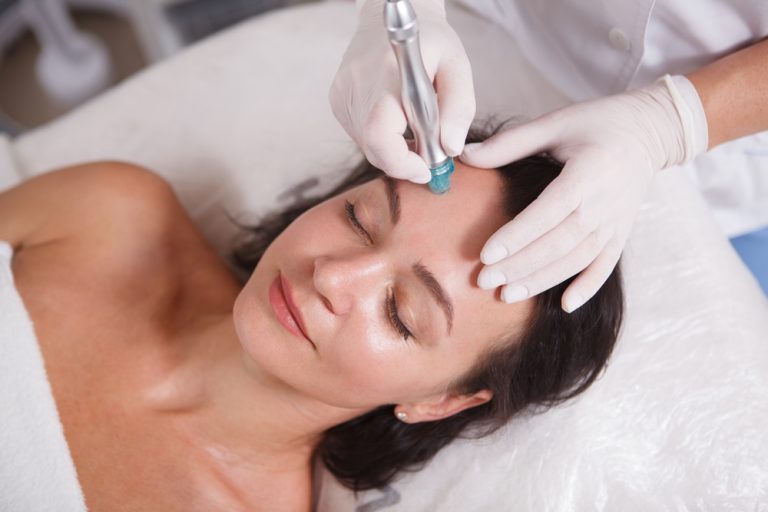
Our clinic also operates under the medical oversight of Dr. Joseph Hummel, which means that when something does warrant a medical referral, that pathway is built into how we work. You’re not left to figure out the next step on your own. For spots that are cosmetically bothersome but clinically benign, we offer multiple treatment options — IPL, chemical peels, diamond-tip microdermabrasion, and HydraFacial with brightening boosters — matched to your skin type and the specific nature of your hyperpigmentation. We serve clients across Wake County, including Wake Forest, Raleigh, Durham, Chapel Hill, Youngsville, and Franklinton, and the first consultation is always free.
When Should You Get an Age Spot Checked in Wake County, NC?
The short answer: sooner than you think you need to, and definitely before it changes further. Most spots are benign. But a spot that’s turning red, developing irregular borders, or just looking different than it did six months ago deserves a professional opinion — not because the worst-case scenario is likely, but because catching something early costs nothing and waiting can cost a great deal.
If your spots are stable and you’re mainly looking to fade or treat them for cosmetic reasons, we have effective, non-invasive options that can make a real difference. If something is changing and you’re not sure what it means, that’s exactly the situation a free skin evaluation is designed for.
Wake Skincare is here for both conversations. Reach out to schedule your free consultation and let us take a look.