Summary:
You want better brows. You just don’t know how permanent you want to go.
That’s the real decision most people are sitting with when they start researching brow services. Eyebrow tinting sounds easy and low-risk. Microblading sounds more dramatic — maybe a little intimidating. And somewhere in the mix, you’ve probably seen “semi-permanent eyebrows” and “eyebrow tattoo” thrown around like they all mean the same thing. They don’t.
Here’s a straight-talking breakdown of what each service actually does, who it works best for, and how to figure out which one makes sense for you — without committing to something you’re not ready for.
What Is Eyebrow Tinting and How Does It Work?
Eyebrow tinting is a semi-permanent dye treatment applied directly to your existing brow hairs. A tinted dye — matched to your hair color, skin tone, and the look you’re going for — is applied to the brow area, left for a few minutes, then removed. The whole appointment typically takes around 15 to 30 minutes, and the results are visible the moment you walk out.
The effect lasts roughly four to six weeks on the hair itself. If the dye also lightly stains the skin beneath the brow, that fades faster — usually within a few days. After that, it’s just the hair color that remains, giving your brows definition without any daily effort.
One thing people don’t expect: tinting often reveals brow hairs they didn’t even know they had. Fine, nearly invisible hairs that blend into your skin suddenly show up with color — and for a lot of our clients, that alone makes a significant difference. We’ve heard it more than once: “I finally have eyebrows.”
Is Eyebrow Tinting Safe, and What Should You Know Before You Go?
The short answer is yes — when it’s done professionally, with the right formulas, by a licensed esthetician. That last part matters more than most people realize.
In North Carolina, lash and brow tinting falls within the regulated scope of practice for licensed estheticians. The NC Board of Cosmetic Art Examiners formally added brow and lash tinting to the esthetics curriculum in April 2023, meaning any licensed NC esthetician has received structured training in the service as part of their licensure. That’s not a given everywhere — it’s a specific credentialing requirement here in the state.
The safety concern worth knowing about is a chemical called PPD (paraphenylenediamine), which is found in many traditional brow tints. Some people are sensitive or allergic to it, and reactions can range from mild irritation lasting a week or two to more significant responses that take months to resolve. We use ophthalmologist-tested formulas designed specifically for the delicate brow area — not general-purpose hair dye — and we discuss your skin history before applying anything.
We also offer a Henna Brow as a natural alternative. Henna uses a plant-based, vegan dye that’s gentler on sensitive skin and can last between four and six weeks on the hair. It’s worth asking about if you have reactive skin or simply prefer a more natural formula.
Aftercare is straightforward but important. For the first 24 to 48 hours after your appointment, keep the brow area dry, skip makeup around the eyes, and avoid exfoliating treatments near the brows. Heat and steam can shorten the life of the tint, so saunas and hot yoga are best avoided for a couple of days. After that, you’re free to go about your normal routine — with noticeably better brows.
One more thing: pairing your Brow Tint with a Brow Shape makes a real difference. Tint adds color and definition; shaping gives the brow its structure. Together, they produce a result that looks intentional and polished rather than just darker. We recommend the combination to most first-time tinting clients.
Who Is Eyebrow Tinting Actually Best For?
Eyebrow tinting works well for almost anyone, but it’s especially effective for a few specific situations.
If your brows are naturally light, fair, or have faded over time, tinting can restore definition without adding anything artificial. The dye darkens what’s already there — it doesn’t draw on anything new. For clients with naturally darker brows, tinting adds depth and makes the brows read more clearly on the face, especially in photos or from a distance.
It’s also a strong choice if you’re not ready to commit to something longer-lasting. Microblading lasts 12 to 18 months. Tinting lasts four to six weeks. If you’ve never had a professional brow service before, tinting is a low-stakes way to understand what level of definition you actually want — before you make a longer-term decision.
Wake County’s climate is worth factoring in here too. The summers across Raleigh, Cary, Apex, and Wake Forest run hot and humid from April through October, and that’s a long stretch to be relying on brow pencils and powders that smudge by midday. Tinting holds up through heat and sweat in a way that daily brow products simply don’t. For clients who are active — runners, cyclists, anyone who spends time outdoors — that’s a practical argument that doesn’t get talked about enough.
Clients with oily skin, mature skin, or certain skin textures may also find that tinting serves them better than microblading, which can fade faster or heal differently on those skin types. We talk through all of this during the consultation, because the right service depends on your specific skin — not just your brow goals.
Semi-Permanent Eyebrows: Understanding Microblading and Your Longer-Term Options
“Semi-permanent eyebrows” is a broad term that covers a range of services — and it’s one of the more confusing parts of the brow conversation. Tinting is technically semi-permanent, in the sense that it fades. But when most people use that phrase, they’re thinking about something that lasts longer than a few weeks. That’s where microblading comes in.
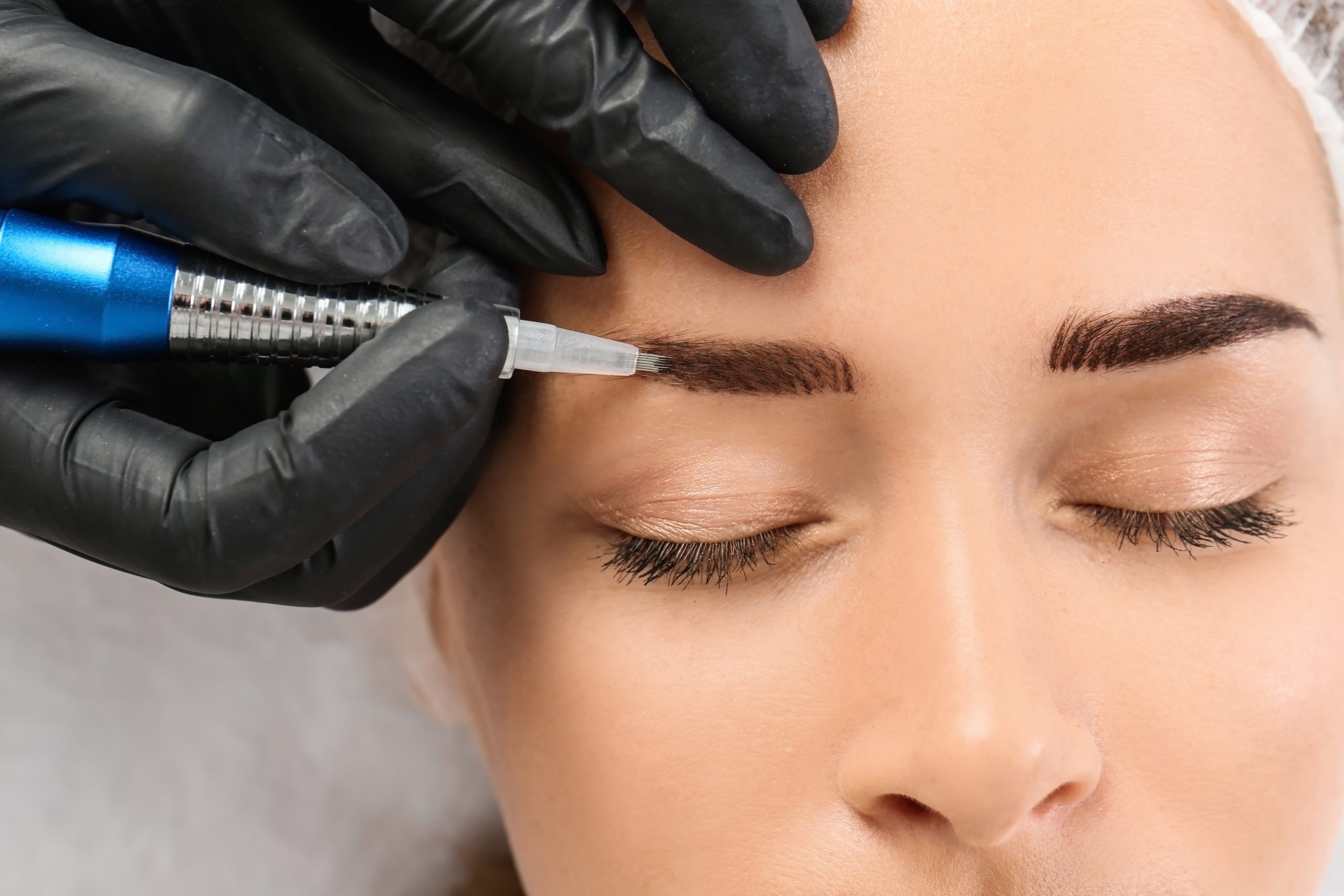
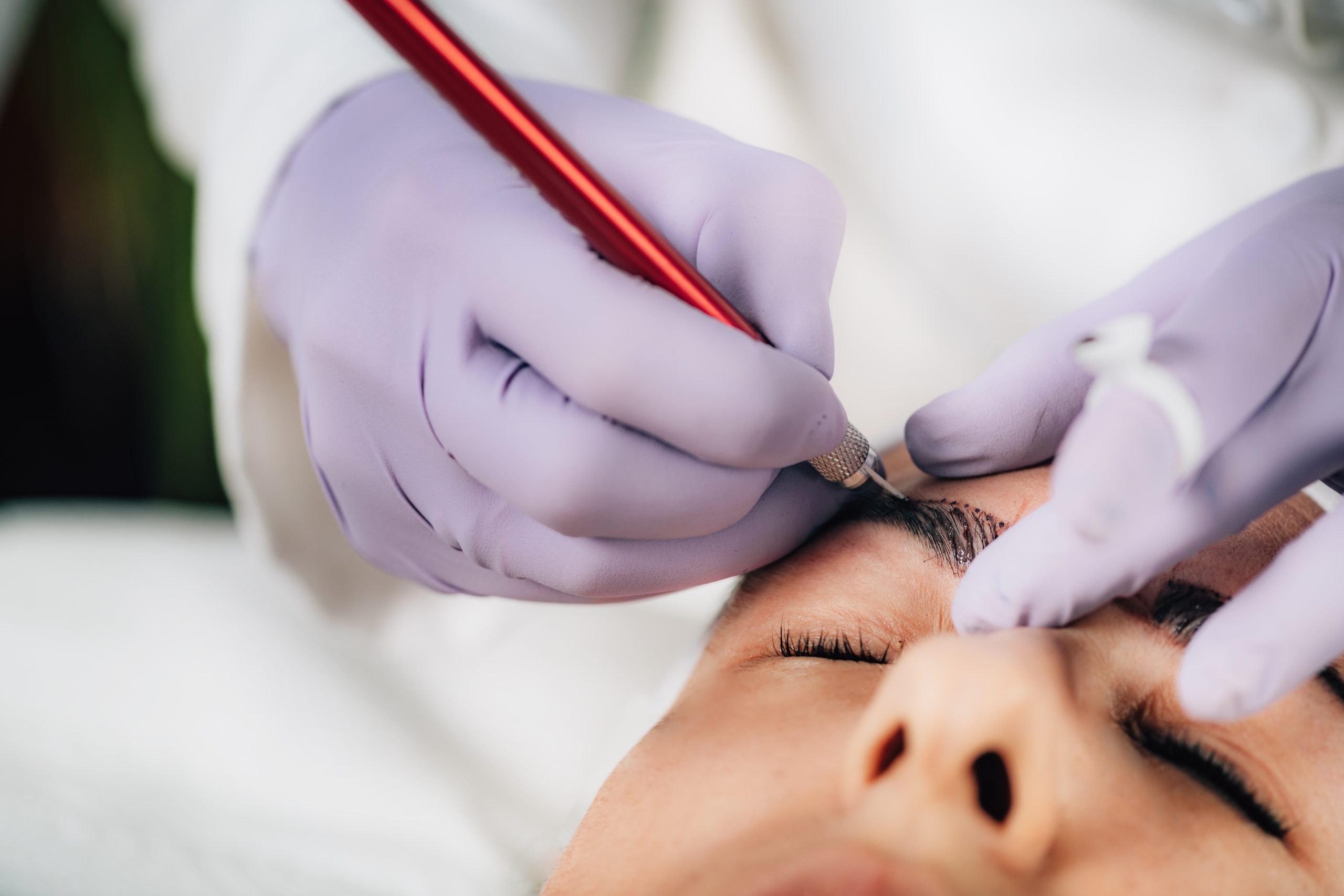
Microblading is a manual technique that deposits pigment into the upper layer of the skin — not as deep as a traditional tattoo — using fine, hair-like strokes. The result mimics the look of natural brow hairs, filling in gaps and creating a fuller brow shape that lasts roughly 12 to 18 months before it fades. It’s not a daily commitment; it’s a decision you make once, then largely forget about for a year or more.
The distinction between microblading and a traditional permanent eyebrow tattoo matters, and it’s worth getting clear on before you book anything.
Permanent Eyebrow Tattoo vs. Microblading: What's the Actual Difference?
A traditional permanent eyebrow tattoo uses a machine to deposit ink deep into the dermis — the same layer targeted by body tattoos. The ink is truly permanent. It doesn’t fade away; it changes over time, and not always in ways that age well. Colors can shift toward gray, blue, or orange as the ink breaks down in the skin, and the crisp lines of the original work tend to blur as years pass. Removing or correcting a permanent eyebrow tattoo is a significant undertaking.
Microblading works differently. The pigment is deposited into the papillary dermis — a shallower layer of skin — which is why it fades naturally over 12 to 18 months rather than staying permanently. As your skin renews itself, the pigment gradually lightens. A touch-up appointment is typically recommended four to six weeks after the initial session to refine the results, and then periodic touch-ups every year or two keep the brows looking fresh.
This distinction is important for anyone who’s worried about being “stuck” with a result they don’t like. Microblading is not forever. That said, it’s still a meaningful commitment — which is exactly why the technique and the person doing it matter.
Our founder, Jacqueline Grace, placed 2nd in Lash and Brow Artist of the Year at The Skin Games, an international esthetician competition. That’s not a local award or a regional ranking — it’s a placement earned against practitioners from across the industry. Her microblading approach uses a light, airy powder brow technique trained by one of Raleigh’s best permanent makeup artists, producing results that look like your brows on a good day, not a drawn-on approximation of them. For clients who’ve had bad experiences elsewhere — brows that looked too dark, too harsh, or too artificial — that distinction tends to matter a lot.
How to Choose Between Eyebrow Tinting and Microblading for Your Brows
There’s no universal right answer here — it depends on what you’re starting with, how much you want to commit, and what your daily life actually looks like.
If you have existing brow hair that just needs more visibility, tinting is often the smarter starting point. It’s lower cost, lower commitment, and gives you a clear picture of what defined brows look like on your face before you decide whether you want something longer-lasting. Think of it as a preview, not a consolation prize.
If you have sparse brows, significant gaps, or areas where hair simply doesn’t grow, tinting alone won’t fully address that — because tinting colors existing hair, it can’t create the appearance of hair where there isn’t any. That’s where microblading becomes the more effective solution.
The cost difference is also real. Professional brow tinting is generally priced well under $60 per session, and sessions are recommended every four to six weeks. Microblading typically runs between $400 and $800 for the full service. Both represent real value when you factor in the time saved on daily brow makeup — but they’re different financial commitments, and it’s worth being honest with yourself about which one makes sense right now.
Skin type plays a role too. Oily skin tends to break down microblading pigment faster than dry or combination skin, which can mean more frequent touch-ups to maintain the result. For clients with oily skin in Wake County’s humid summers, tinting — or a powder brow technique rather than traditional microblading strokes — may hold up better over time.
One thing we offer that most providers in the area don’t: a free consultation before you commit to anything. Some local competitors charge $50 just to sit down and talk through your options. We don’t. If you’re not sure which direction is right for you, come in, ask your questions, and leave with a clear picture of what each service would actually look like for your specific brows and skin. No obligation, no pressure.
Finding the Right Brow Service in Wake County, NC
Better brows don’t require a dramatic decision. Sometimes the right move is a 30-minute tinting appointment that reveals what was already there. Sometimes it’s a more considered conversation about microblading. Either way, the starting point is understanding what you’re working with — and what you actually want.
Wake County has no shortage of brow service providers, but credentials in this space vary widely. The person doing this work is putting something on your face that will be there for weeks or months. That’s worth thinking about before you book.
If you’re somewhere in that comparison window — not quite sure whether tinting or microblading is the right call — we’re a good place to start that conversation. We serve clients across Wake Forest, Raleigh, Cary, Apex, and the broader Triangle, and we’re happy to walk you through both options at no cost. Reach out to Wake Skincare to book your free consultation and find out which brow service actually fits your life.