Summary:
If your lips have darkened over time and you’re not sure why — or you’ve tried brightening products with nothing to show for it — you’re not alone. Lip pigmentation is one of the most common concerns we see, and it’s also one of the most misunderstood. Most people assume it’s just genetic, or that nothing can realistically be done. Neither of those things is true.
What is true is that treating lip hyperpigmentation without understanding its cause is exactly why most approaches fail. This page explains what’s actually going on, what professional treatment involves, and how to find someone in Wake County, NC who genuinely knows what they’re doing.
What Causes Lip Pigmentation — and Why It Matters Before Any Treatment
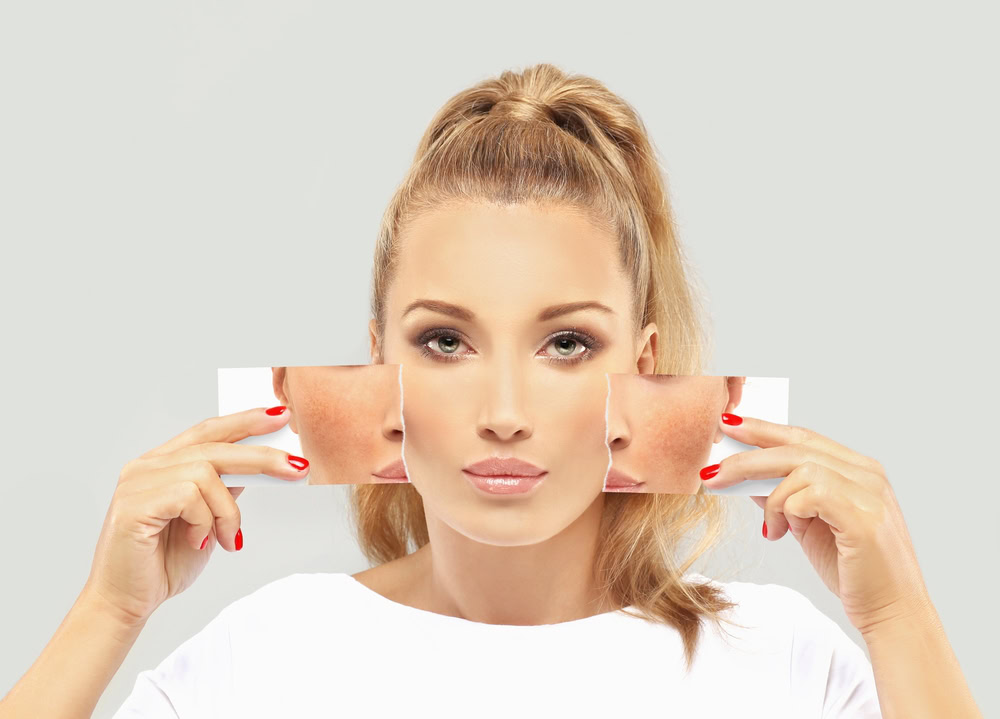
Lip hyperpigmentation happens when melanin — the pigment that gives skin its color — accumulates unevenly in the lip tissue. But that’s where the simple explanation ends, because the reasons it happens vary significantly from person to person.
Sun exposure is one of the most common drivers. Wake County sees roughly 213 sunny days per year, which is above the national average. If you spend time outdoors — whether you’re commuting along I-40, grabbing lunch in downtown Raleigh, or just living a normal life in this climate — your lips are accumulating UV exposure year-round, not just in summer. That repeated exposure stimulates melanocyte activity, and over time, the pigmentation builds.
But sun damage is only one piece. Hormonal changes — from pregnancy, menopause, or hormonal contraceptives — can trigger melanin overproduction in the lips. Smoking causes vascular changes and direct melanin deposits in lip tissue. Certain medications increase photosensitivity. Even past allergic reactions or skin inflammation can leave behind post-inflammatory hyperpigmentation, or PIH, long after the original irritation has resolved.
Why does the cause matter so much? Because the treatment has to match it. A protocol designed for sun-induced pigmentation won’t address hormonally driven darkening the same way. This is why walking into any treatment without a proper skin evaluation first is a gamble — and why so many people spend money on things that don’t work.
Why Lip Pigmentation Treatments Often Fail
If you’ve tried lip brightening products and seen little to no change, the product probably isn’t the problem. The issue is that over-the-counter formulas contain active ingredients at concentrations too low to produce meaningful results on established pigmentation. They’re designed for maintenance, not correction. Using them on significant lip darkening is like trying to sand down a hardwood floor with a nail file.
The same logic applies to generic professional treatments applied without a proper assessment. Lip skin is thinner and more sensitive than the rest of your face. It responds differently to chemical exfoliants and energy-based treatments. A protocol that works well on the cheeks or forehead can cause irritation — or worse, a rebound flare of post-inflammatory hyperpigmentation — if it’s not calibrated specifically for the lip area and your skin type.
This risk is especially real for clients with deeper skin tones. People with Fitzpatrick skin types IV through VI are more prone to hyperpigmentation in the first place, and they’re also more vulnerable to PIH as a side effect of poorly matched treatments. It’s not a reason to avoid professional treatment — it’s a reason to be careful about who you trust with it. A provider without specific training in melanin-rich skin can inadvertently make the problem worse, which is a frustrating and costly outcome that happens more often than it should.
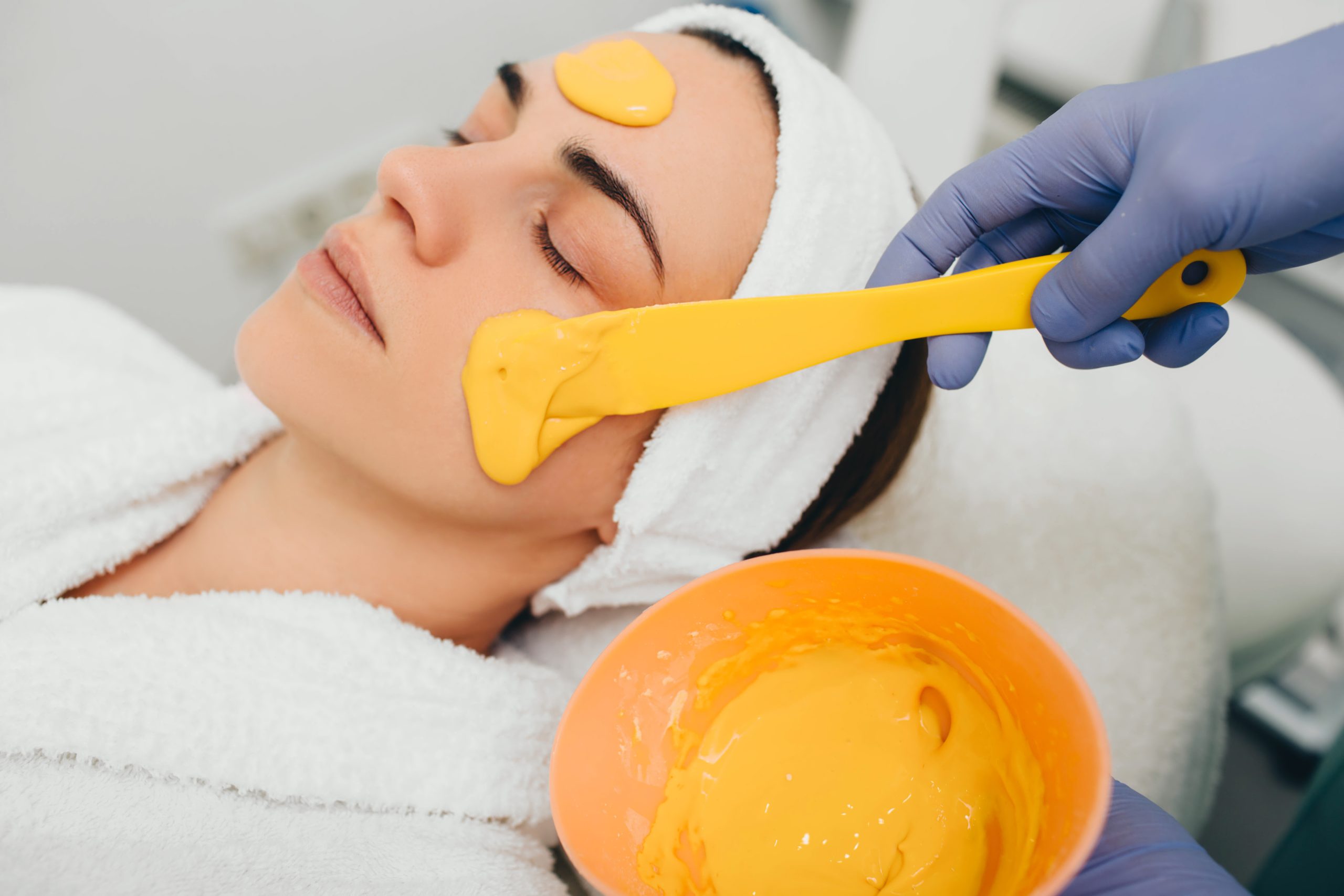
Professional lip pigmentation treatment, done correctly, typically involves one or more of the following: a series of professionally formulated chemical peels using AHAs or TCA at clinical concentrations, HydraFacial protocols with brightening boosters like kojic acid, vitamin C, and niacinamide delivered directly into the skin, or targeted energy-based treatments for deeper, more stubborn pigmentation. Clinical studies have documented 50–70% improvement in melanin index scores after a proper peel series combined with appropriate topical agents.
Those results don’t come from a single session — they come from a plan built around your skin specifically, followed consistently, and supported by daily sun protection. The consultation isn’t a formality. It’s the step that makes everything else actually work.
Is Lip Pigmentation Treatment Safe for Darker Skin Tones?
This is the question that stops a lot of people from moving forward — and it’s a fair one. If you have a deeper skin tone and you’ve heard stories about treatments causing burns, scarring, or worsened pigmentation, your hesitation makes complete sense. Those outcomes are real. They happen when providers apply protocols designed for lighter skin to melanin-rich skin without adjusting technique, product selection, or treatment intensity.
The answer to whether lip pigmentation treatment is safe for darker skin isn’t a blanket yes or no. It depends entirely on the provider’s experience with your skin type.
Post-inflammatory hyperpigmentation is among the top three most common skin concerns among patients of color seeking professional skincare care. That prevalence isn’t a coincidence — it reflects both a biological predisposition and a history of being underserved by providers who weren’t adequately trained for melanin-rich skin. When a provider understands how darker skin responds to treatment, adjusts accordingly, and monitors throughout the process, the outcomes are very different.
At Wake Skincare, our specialization in skin of color isn’t a marketing line — it’s a clinical focus that shapes how we approach every consultation and every treatment plan. Jacqueline Grace has won both first and second place in the Pigmentation Artist of the Year category at The Skin Games, an international peer-judged competition where results are evaluated against strict clinical standards. Those wins weren’t for treating one skin type. They reflect documented outcomes across a range of skin tones and pigmentation presentations. That’s the kind of specific, verifiable credential that matters when you’re deciding who to trust with your skin.
We also operate under the medical supervision of Dr. Joseph Hummel, a physician from the Triangle region, which means every treatment protocol we use has an additional layer of clinical oversight behind it.
What the Best Treatment for Dark Spots on the Lips Actually Looks Like
The best treatment for dark spots on the lips isn’t a single modality — it’s a sequence. And that sequence starts with understanding what you’re working with before anything touches your skin.
A thorough intake evaluation looks at your skin type, the likely cause of your pigmentation, your lifestyle factors (sun exposure, medications, smoking history, hormonal context), and your timeline. From there, a treatment plan is built. That plan might center on a series of professional peels, a HydraFacial brightening protocol, or a combination approach — but it will be specific to you, not a preset menu option.
What good outcomes also require is consistency and sun protection. Clients who use broad-spectrum SPF 30 or higher daily throughout and after their treatment protocol achieve significantly better results and lower recurrence rates. That’s not optional advice — it’s a standard part of any well-designed pigmentation treatment plan.
What a Facial for Pigmentation Actually Does
A facial designed specifically for pigmentation isn’t just a relaxing skin treatment — it’s a targeted delivery system. The goal is to introduce brightening actives into the skin at concentrations and depths that topical products applied at home simply can’t reach.
HydraFacial is one of the most effective options in this category, and it’s a treatment we know at a level most providers don’t. Jacqueline is among the first 100 practitioners in the world to achieve HydraFacial Master certification — the highest of three certification levels — which means the brightening protocols we use are executed with the precision that certification requires. During a pigmentation-focused HydraFacial, the treatment’s patented Vortex-Fusion technology delivers active ingredients like kojic acid, vitamin C, and niacinamide directly into the skin while simultaneously clearing congestion and improving surface texture. The result is brighter, more even-toned skin with zero downtime.
For lip pigmentation specifically, this kind of treatment works particularly well as part of a broader protocol — either as a preparatory step before more intensive treatment, or as a maintenance option for clients who’ve completed a peel series and want to sustain their results. It’s also one of the most accessible entry points for clients who want to start cautiously, especially those with sensitive or reactive skin.
What a pigmentation-focused facial won’t do is produce the same depth of correction as a clinical peel series or an energy-based treatment for deeply embedded pigmentation. That’s not a limitation of the technology — it’s just a realistic picture of what different tools are designed to accomplish. The right choice depends on the severity of your pigmentation, your skin type, and what your skin evaluation reveals.
How Many Sessions Does Lip Pigmentation Treatment Take?
This is one of the most common questions we hear, and the honest answer is: it depends. Lip pigmentation that’s been present for years won’t resolve in a single session. Most professional treatment protocols involve a series of appointments spaced appropriately to allow the skin to respond and recover between treatments.
For a chemical peel series targeting lip hyperpigmentation, clients typically see meaningful improvement across three to six sessions, with the timeline varying based on the depth and cause of the pigmentation. Hormonally driven darkening — such as pigmentation associated with pregnancy or contraceptive use — may require ongoing maintenance even after initial improvement, because the hormonal trigger can persist. Sun-induced pigmentation, on the other hand, often responds more predictably to a structured peel protocol combined with strict daily sun protection.
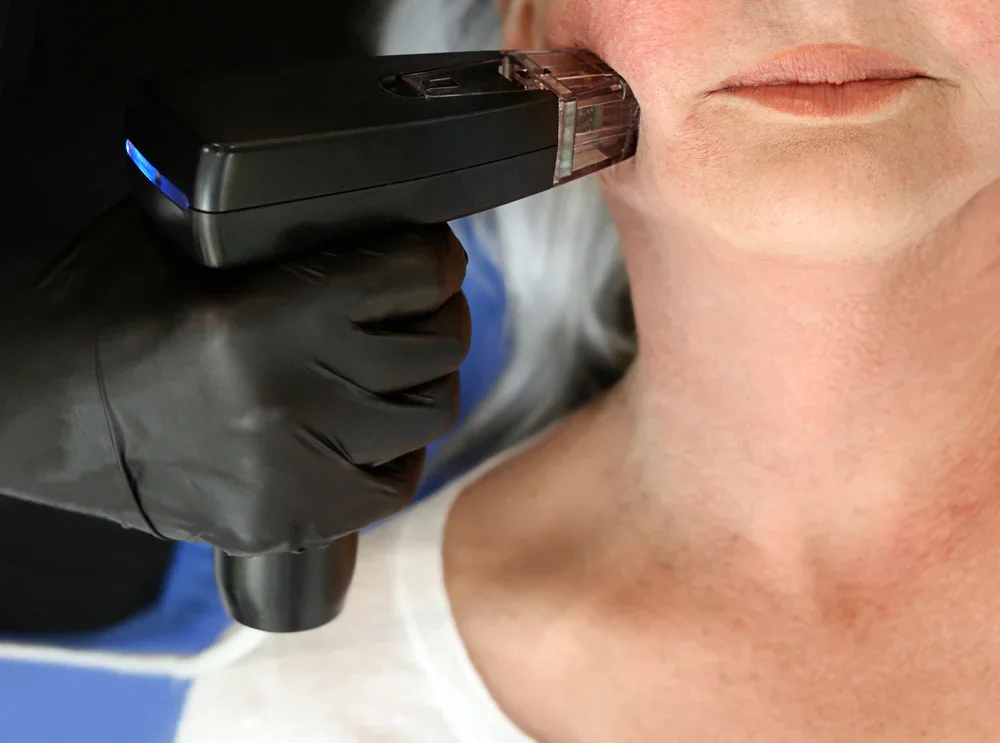
Energy-based treatments for deeper, more stubborn lip pigmentation — such as Q-switch laser protocols — are similarly structured as a series, with peer-reviewed clinical literature documenting significant lightening after three to six sessions on average.
The fall and winter months are generally the best time to begin a pigmentation treatment series. With Wake County’s UV index dropping significantly between October and February, the risk of sun-induced rebound during treatment is lower, and the skin has more opportunity to respond without interference from ongoing UV exposure. If you’ve been thinking about addressing your lip pigmentation, the cooler months are genuinely the right window to start.
Results do not require you to be off work or out of your life for days at a time. Many professional pigmentation treatments — particularly HydraFacial protocols and lighter peel options — involve minimal to no downtime. More intensive peels may involve a few days of peeling or sensitivity. We’ll walk you through exactly what to expect before you commit to anything.
Finding the Right Lip Pigmentation Specialist in Wake County, NC
If there’s one thing worth taking from this page, it’s that lip pigmentation is treatable — but who you see matters more than which treatment you pick. The right protocol in the wrong hands produces the wrong results. The right provider starts with a proper evaluation, builds a plan around your specific skin, and has the credentials to back up what they’re offering.
Wake County has a growing number of aesthetic providers, but very few with documented, peer-judged expertise in pigmentation treatment specifically — and even fewer with a demonstrated focus on skin of color. For residents across Raleigh, Wake Forest, Cary, Apex, Morrisville, Knightdale, and the rest of the county, that distinction is worth paying attention to.
If you’re ready to stop guessing and start with a real plan, we offer a free skin evaluation and consultation. No pressure, no upselling — just an honest look at what your skin needs and what’s actually possible.