Summary:
You’ve done the research. You know IPL can clear up sun damage, even out your skin tone, and address the kind of pigmentation that topical products just can’t reach. Now you want to know what it’s actually going to cost — and whether it’s worth it.
That’s a fair question, and it deserves a straight answer. IPL photofacial pricing in Wake County, NC varies depending on a few real factors: the device being used, the provider’s experience level, and how many sessions your skin actually needs. We’ll walk through all of it — including why the cheapest option in the market is rarely the one that gets you where you want to go.
IPL Photofacial Cost in Wake County, NC: What the Numbers Actually Look Like
In the Raleigh and Wake County, NC area, IPL photofacial sessions typically run between $300 and $600 per session. A full treatment plan — which usually spans three to five sessions depending on your skin — puts the total investment somewhere in the $900 to $3,000 range, with local pricing consistent with that window.
Those ranges exist for a reason. A lot of variables go into what you’ll actually pay: the size of the treatment area, the device the provider uses, the complexity of your skin concerns, and the level of expertise behind the treatment. Understanding those variables is what helps you compare providers accurately — rather than just comparing price tags.
What Makes IPL Photofacial Prices Go Up — or Down?
The biggest pricing variable most people overlook is the device itself. Not all IPL technology is the same. Older or lower-powered systems require more sessions to achieve the same result a more advanced device can deliver in fewer visits. At Wake Skincare, we use Lumecca by InMode — a system that delivers significantly more energy per pulse than traditional IPL. That higher peak power means more visible results, often in fewer sessions. When you factor in the full treatment plan rather than just the per-session cost, that difference matters.
Provider experience is the second major variable — and arguably the more important one. IPL is a light-based treatment that works by targeting pigment in the skin. When it’s calibrated correctly for your specific skin tone, pigmentation type, and treatment area, the results are real and lasting. When it isn’t, you can end up with burns, worsened pigmentation, or a series of sessions that simply don’t move the needle. The cost of a bad outcome — financially and physically — far exceeds the cost of choosing the right provider from the start.
The treatment area also affects price. A full-face session is priced differently than treating just the hands or décolletage, and some clients come in with concerns that extend across multiple zones. During a consultation, a qualified provider will assess exactly what you’re working with and give you a realistic picture of what a full plan looks like — including cost — before you spend anything.
One more factor worth understanding: the number of sessions you actually need depends heavily on what you’re treating. Sun damage and age spots often respond faster than deep melasma or post-inflammatory hyperpigmentation. A provider who tells you upfront how many sessions are realistic for your specific concern — rather than quoting the minimum to get you in the door — is one worth trusting.
Why Wake County's UV Season Makes IPL Treatment Timing Critical
Wake County, NC sits in a UV exposure zone that most residents don’t fully account for. From roughly March through October, the UV index in Raleigh and the surrounding area regularly hits High to Very High levels — with peak summer days reaching UV index readings above 10 and unprotected exposure risk in effect for up to seven hours. That’s a long season.
For anyone spending time outdoors — commuting, doing yard work, watching kids play sports, walking the greenway — sun damage accumulates steadily whether you’re thinking about it or not. That matters for IPL in two ways. First, it means the demand for IPL treatment in Wake County, NC is genuine and ongoing. Sun damage is one of the most common skin concerns we see, and the long North Carolina summer is a significant reason why.
Second, it affects timing. IPL requires you to avoid significant sun exposure for several weeks before and after treatment. That makes fall — once the UV season starts winding down — the natural window when most people start thinking seriously about addressing the damage that built up over the warmer months.
If you’ve been noticing dark spots, uneven tone, or a general dullness that wasn’t there a few years ago, there’s a good chance the Wake County sun played a role. IPL is one of the most direct tools available for correcting that kind of accumulated damage. The key is doing it at the right time of year, with a provider who can assess your skin accurately and set realistic expectations for what a full treatment plan will achieve.
We also want to be honest about candidacy. IPL works best on Fitzpatrick skin types I through III — fair to medium skin tones. Wake County’s population is genuinely diverse, and a meaningful portion of residents have skin tones that require a much more careful approach, or for whom a different treatment entirely may be more appropriate. That’s not a reason to avoid asking — it’s a reason to ask someone who actually knows the difference.
IPL Treatment for Pigmentation: What It Does and Who It's For
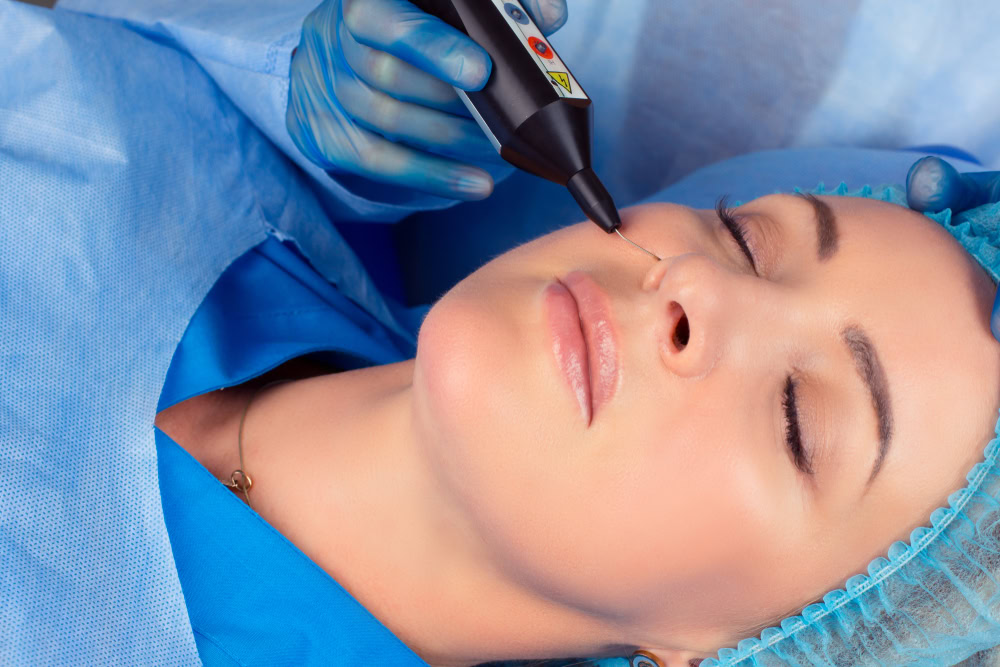
IPL photofacial works by delivering pulses of broad-spectrum light into the skin. That light is absorbed by pigment — whether that’s the melanin in a sun spot or the hemoglobin in a visible blood vessel — and converts to heat, which breaks down the targeted cells. The body clears them naturally over the following one to two weeks.
The result, done well, is a more even, clearer complexion. Sun spots fade. Redness associated with rosacea calms. The overall tone becomes more consistent. It doesn’t resurface the skin the way a laser does — it targets what’s already there and helps the body eliminate it.
IPL for Hyperpigmentation: What Works, What Doesn't, and Why Expertise Changes Everything
Hyperpigmentation is a broad category. It includes sun spots and age spots caused by UV exposure, post-inflammatory hyperpigmentation (PIH) left behind by acne or injury, and melasma — a deeper, more complex pigmentation pattern that’s often hormonally driven. IPL is effective for some of these and genuinely contraindicated for others if the provider isn’t experienced.
Sun damage and age spots are typically the most straightforward to treat with IPL. The pigment is superficial, the cause is clear, and the response to treatment is predictable. Post-inflammatory hyperpigmentation can respond well too, but it requires careful calibration — especially on medium to deeper skin tones where the risk of triggering additional pigmentation is real. Melasma is the most nuanced. IPL can help in some cases, but it can also worsen melasma if the treatment isn’t approached correctly. A provider who treats all three the same way is one to be cautious about.
This is where the credential gap between providers becomes tangible. Our founder, Jacqueline Grace, earned first and second place in the Pigmentation Artist of the Year category at The Skin Games — an international esthetics competition. That’s not a general “best medspa” award. It’s a specific, verifiable recognition in the exact skill set that determines whether an IPL treatment corrects pigmentation or complicates it. When you’re investing in a treatment series for hyperpigmentation, the person calibrating the device and assessing your skin type is the most important variable in the room.
We also use the Lumini Beauty Kiosk, an AI-powered skin analysis tool, to generate a detailed picture of your skin before any treatment is recommended. It’s one more layer of precision in a process where precision genuinely matters.
How to Choose an IPL Provider in Wake County, NC Without Getting It Wrong
Wake County, NC has no shortage of providers offering IPL. That’s not a bad thing — but it does mean the quality range is wide, and the differences aren’t always obvious from a website or a price list.
A few things worth looking for. First, does the provider name the specific device they use? “State-of-the-art IPL technology” tells you nothing. A provider who specifies that they use Lumecca by InMode, or names another clinical-grade system, is being transparent in a way that matters. Second, does the provider have named physician oversight? In North Carolina, certain aesthetic procedures require physician supervision. At Wake Skincare, Dr. Joseph Hummel serves as our named medical director — that’s a compliance signal, but it’s also an accountability signal.
Third, does the provider offer a real consultation before recommending a treatment plan? Candidacy for IPL depends on your skin tone, your pigmentation type, your current medications, and the specific device being used. A provider who skips that step is a provider who isn’t doing the job correctly.
We offer a free skin evaluation and consultation to every prospective client — no commitment required. That conversation is where we assess your Fitzpatrick skin type, understand what you’re trying to address, and give you an honest picture of whether IPL is the right tool, how many sessions are realistic, and what the full cost of a treatment plan looks like for your specific situation. If IPL isn’t the right fit, we’ll tell you that too — and we’ll tell you what is.
Wake Skincare has been recognized as the Best Esthetician in Wake County for three consecutive years, including First Place in the Wake Weekly Best of the Best 2022. Those recognitions come from the community we serve, and they reflect a standard of care we hold ourselves to every day.
Ready to Find Out What IPL Will Actually Cost for Your Skin?
IPL photofacial is one of the most effective tools available for sun damage, uneven tone, and stubborn pigmentation — but what it costs and whether it’s right for you depends on factors that are specific to your skin, not a standard price sheet.
In Wake County, NC, where the UV season runs long and sun damage is one of the most common concerns we treat, fall is often the ideal window to start. The damage is visible, the sun is pulling back, and your skin is ready for correction.
If you’ve been thinking about it, the most useful next step is a conversation — not a commitment. Wake Skincare offers free consultations so you can get a real assessment of your skin, an honest answer on candidacy, and a clear picture of what a treatment plan would look like for you before you spend a dollar.