
Summary:
You’ve probably tried things that didn’t move the needle — creams that promised firmer skin, basic facials that felt nice but didn’t last, maybe even a lighter treatment that gave you a week of glow and then nothing. RF microneedling is a different category entirely. It works at a deeper level than most surface treatments, and the results — tighter skin, smoother texture, reduced scarring — keep developing for months after your last session. This page covers how the technology works, how it compares to traditional microneedling, and what a smart treatment plan actually looks like. If you’re somewhere in Wake County and trying to figure out whether this is worth your time and money, keep reading.
How RF Microneedling Works to Rebuild Collagen
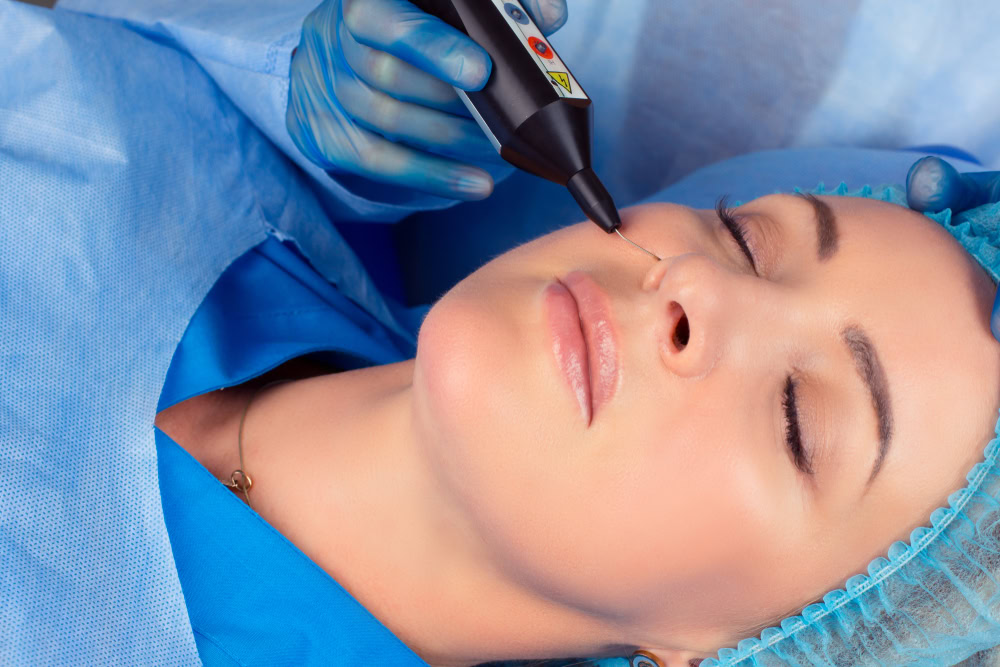
Standard microneedling creates tiny controlled injuries in the skin, which triggers your body’s healing response and stimulates collagen production. RF microneedling does that — and then delivers radiofrequency energy through those same needles into the deeper layers of your skin, including the dermis and the subdermal tissue beneath it.
That thermal energy is what separates the two treatments. The heat contracts existing collagen immediately and, more importantly, signals your body to produce significantly more over the following months. Clinical data shows that a series of four sessions can result in up to a 400% increase in collagen and elastin production, measured six months after the final treatment. That’s not a marketing figure — it comes from histological analysis of treated tissue.
The result is skin that looks and feels structurally different: tighter, smoother, and more even in tone and texture.
RF Microneedling vs. Standard Microneedling: Which One Is Right for You?
This is probably the most common question people have when they start researching, and the honest answer is that it depends on what you’re trying to fix and how much change you’re looking for.
Standard microneedling is effective for improving skin texture, reducing mild acne scarring, and supporting general skin health. It’s a well-established treatment with a strong safety record, and for some clients — particularly those with early-stage concerns or more sensitive skin — it’s genuinely the right starting point. We use SkinPen, which is the only FDA-cleared microneedling device on the market. That distinction matters more than most people realize when comparing providers.
RF microneedling is the better choice when you’re dealing with more significant skin laxity, deeper acne scars, enlarged pores, or stubborn texture that hasn’t responded to lighter treatments. The radiofrequency energy reaches depths that standard needles can’t — up to 4mm with devices like Morpheus8, compared to the 1mm maximum allowed for estheticians performing standard microneedling in North Carolina. That extra depth is what makes RF microneedling effective for skin tightening in a way that standard microneedling simply isn’t designed to achieve.
There’s also a skin tone consideration worth knowing. Because RF energy is delivered beneath the epidermis rather than at the surface, it carries a lower risk of post-inflammatory hyperpigmentation than many laser treatments. That makes it a more suitable option for a broader range of skin tones, which is clinically meaningful — not just a talking point.
The bottom line: if you want to improve overall skin quality and you’re starting fresh, standard microneedling may be where you begin. If you want measurable tightening, significant scar reduction, or results that last 12 to 18 months, RF microneedling is the more powerful tool. A thorough consultation will tell you which one — or which combination — makes sense for your skin specifically.
What RF Microneedling Actually Treats (and What It Doesn't)
RF microneedling is genuinely versatile, but it’s worth being specific about what it does well so you can go in with realistic expectations.
It’s particularly effective for skin laxity — the loss of firmness that happens gradually with age and UV exposure. Clinical studies show average improvements of 25 to 35% in skin laxity scores and a 30 to 40% reduction in wrinkle severity after a series of three treatments. Those aren’t dramatic overnight changes, but they’re consistent and measurable, and they come from collagen remodeling that continues long after the treatment itself.
Acne scarring is another strong application. Patient satisfaction rates in clinical studies for microneedling-based acne scar treatment reach 80 to 85%, and RF microneedling’s ability to remodel deeper tissue makes it especially useful for rolling and boxcar scars that sit below the skin’s surface. Texture, enlarged pores, and uneven tone also respond well — these are concerns that affect people in their 20s and 30s just as much as those dealing with age-related changes.
What RF microneedling doesn’t replace is targeted pigmentation treatment for conditions like melasma, where a different approach — or a combination strategy — may be more appropriate. It also isn’t a substitute for injectables like Botox when the goal is relaxing muscle movement rather than improving skin quality. These are complementary treatments, and knowing the difference helps you build a plan that actually addresses what you’re trying to fix rather than throwing everything at the wall.
One more thing worth saying: you won’t see full results in the first week. Initial texture improvements show up in one to three weeks. The deeper structural changes — the tightening, the collagen remodeling — develop over two to three months as new collagen matures. That timeline is normal, and it’s a sign the treatment is working the way it’s supposed to.
Microneedling Treatments in Wake County: What a Smart Protocol Looks Like
Most people need three to six sessions spaced four to six weeks apart for optimal results. The exact number depends on your skin, your concerns, and how your skin responds after the first one or two treatments. A provider who tells you a single session will transform your skin is either misinformed or overselling — and either way, that’s not a good sign.
What matters as much as the number of sessions is how each one is customized. Needle depth, radiofrequency energy levels, and treatment areas should all be adjusted based on your skin’s response and the specific concerns being addressed. A one-size-fits-all approach to RF microneedling produces one-size-fits-all results, which is usually underwhelming.
Recovery is generally three to seven days. Expect redness and mild swelling in the first 24 to 48 hours — it looks and feels similar to a moderate sunburn. Most people are comfortable returning to normal activity within a few days, though direct sun exposure should be avoided during recovery.
Why Provider Selection Matters More Than Most People Realize
The FDA has issued guidance specifically on RF microneedling, warning that complications — including burns, scarring, and nerve damage — can occur when the procedure is performed by unqualified providers using improper settings. That’s not meant to scare you away from the treatment. It’s meant to make the point that who performs it and how they’re set up matters enormously.
In North Carolina, RF microneedling is a medical-level procedure because of the depth it reaches and the thermal energy involved. That means it should be performed under physician oversight — not just nominally, but in a structure where a licensed physician is genuinely responsible for the medical direction of the practice. At Wake Skincare, that oversight comes from Dr. Joseph Hummel, who is both the owner and the overseeing physician. That structure isn’t a formality. It’s what ensures that if something unexpected happens, there’s a qualified medical professional accountable for your care.
Beyond the medical framework, look for providers who use named, recognizable devices rather than unbranded “RF microneedling machines.” Ask about their training on the specific device they use. Ask whether they perform a thorough consultation before treatment — not a five-minute intake form, but an actual skin evaluation that informs how your treatment is customized. A provider who can’t answer those questions clearly is a provider worth skipping, regardless of how appealing the pricing looks.
Jacqueline Grace, our lead esthetician, has been named Best Esthetician in Wake County three consecutive years running by Wake Weekly’s Best of the Best — a reader-voted recognition from a publication Wake County residents actually know. She’s also placed first internationally in the Pigmentation Artist of the Year category at The Skin Games. Those aren’t self-promotional claims. They’re verifiable results that reflect years of consistent, skilled work on real clients in this community.
Common Questions About RF Microneedling from Wake County Clients
**Does RF microneedling hurt?** Most clients describe it as a warm, prickly sensation rather than sharp pain. A topical numbing cream is applied before the treatment, which significantly reduces discomfort. Deeper settings — which produce more significant results — can be more intense, but the numbing makes it manageable for the vast majority of people.
**How many sessions will I need?** Most people benefit from three to six sessions, spaced four to six weeks apart. After your first session, we’ll have a much clearer picture of how your skin is responding and can adjust the plan accordingly. Going in expecting one session to do everything will leave you disappointed — the real results come from a complete series.
**Is this the right time of year to start in Wake County?** Actually, this is worth thinking about. North Carolina’s UV index is significant from roughly March through October, and sun exposure immediately after RF microneedling is contraindicated. That makes fall and winter the ideal window to start a treatment series in Wake County — you can complete your sessions with less sun exposure to manage, and you’ll be seeing your best results right as the warmer months return. That said, we treat clients year-round with proper sun protection protocols in place, so don’t let timing be a reason to put it off indefinitely.
**How long do results last?** Most clients maintain their results for 12 to 18 months. A consistent at-home skincare routine and periodic maintenance sessions can extend that significantly. Given that Wake County’s sunny climate accelerates photoaging year-round, ongoing skin support — whether through maintenance treatments or a good daily regimen — makes a real difference in how long your results hold.
**Will this work on my skin tone?** RF microneedling is generally safer for a wider range of skin tones than laser-based treatments because the energy is delivered below the surface of the skin, reducing the risk of pigmentation changes at the epidermis. That said, every client’s skin is different, and we evaluate this specifically during your consultation before recommending any treatment.
Ready to Find Out If RF Microneedling Is Right for Your Skin?
RF microneedling is one of the most clinically supported non-surgical options available for skin tightening, acne scarring, and collagen loss. The results are real, they’re measurable, and they last — but only when the treatment is performed correctly, customized to your skin, and backed by genuine expertise.
If you’re in Wake County and you’ve been trying to figure out whether this is worth pursuing, the most useful next step is a conversation, not a commitment. Every new client at Wake Skincare starts with a free consultation and skin evaluation — no pressure, no upselling, just an honest look at your skin and a clear explanation of what would actually help.
Reach out to us to schedule yours. We serve clients across Wake Forest, Raleigh, Rolesville, Youngsville, Knightdale, Holly Springs, and more than 22 cities throughout Wake County, NC.