Summary:
Here’s a question we hear all the time at Wake Skincare: “Isn’t Morpheus8 just microneedling with a fancier name?” It’s a fair question. Both treatments use needles. Both stimulate collagen. Both get talked about for similar skin concerns. But no — they are not the same thing, and the difference is more than a price tag. Understanding what separates them is the only way to know which one will actually move the needle on your specific concern. Whether you’re dealing with acne scars, loose skin along your jawline, or texture that just won’t quit, the answer depends on what’s happening in your skin — and how deep the problem goes.
What Is Microneedling and How Does It Actually Work?
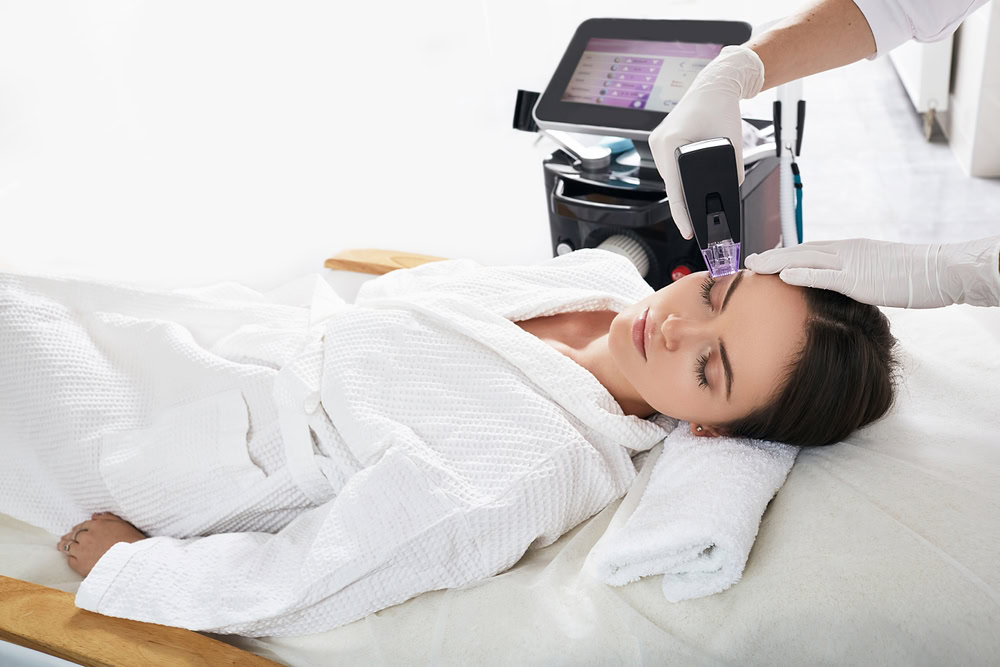
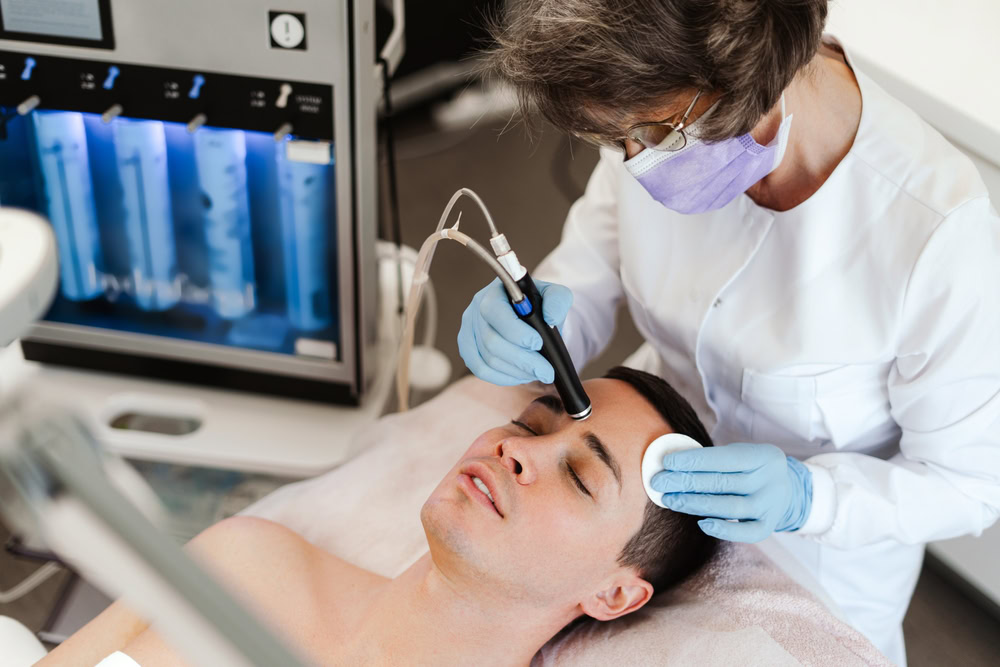
Standard microneedling — the kind we perform using the SkinPen, the only FDA-cleared microneedling device for facial acne scars — works by creating tiny, controlled micro-injuries in the skin’s surface. Those micro-injuries trigger your body’s natural healing response, which means increased collagen and elastin production. Over time, that new collagen fills in scars, smooths out texture, and gives skin a firmer, more even appearance.
The needle depth typically sits between one and two millimeters, which targets the upper layers of the dermis. It’s effective, well-studied, and genuinely useful for a wide range of concerns — fine lines, enlarged pores, mild acne scarring, rosacea, and uneven tone. Research shows that four sessions spaced about a month apart can produce a 400% increase in collagen and elastin production six months after the final treatment.
Is Microneedling the Right Treatment for Acne Scars and Texture?
For many people in Wake County dealing with acne scars or rough skin texture, standard microneedling is genuinely one of the most effective tools available — and it’s often underestimated because it doesn’t come with the name recognition that newer devices do. The SkinPen earned its FDA clearance specifically for treating facial acne scars in patients 22 and older, and it received additional clearance for neck wrinkles in 2024. That’s not marketing language — that’s a regulatory standard most devices never reach.
Where microneedling shines is in surface-level and mid-dermal concerns. Atrophic acne scars — the kind that leave small depressions in the skin — respond well to the collagen induction process because the new tissue fills in from beneath. Enlarged pores, rough texture, and mild fine lines fall into the same category. The treatment works with your skin’s own repair system, which means results build gradually and continue improving for months after your last session.
That said, microneedling has a ceiling. Because the needles reach one to two millimeters into the skin, it can’t address what’s happening deeper — the connective tissue, the fat layer beneath the dermis, or the kind of skin laxity that shows up as jowling, a soft jawline, or loose skin along the neck. For those concerns, you need something that reaches further. That’s where the comparison with Morpheus8 starts to matter.
One thing worth noting for clients with darker skin tones: standard microneedling is considered safe across all Fitzpatrick skin types. Because it doesn’t use heat or light energy at the surface, it doesn’t carry the same risk of post-inflammatory hyperpigmentation that some laser treatments do. This is a meaningful consideration for a lot of the clients we see here in Wake County, NC, where skin of color is something we specialize in and take seriously — not as an afterthought, but as a core part of how we approach every consultation.
How Many Microneedling Sessions Do You Actually Need?
This is one of the most common questions we get, and the honest answer is: it depends on what you’re treating and where your skin is starting from. For general texture improvement, fine lines, and mild pigmentation, many clients see meaningful results after three to four sessions spaced about four to six weeks apart. For more significant acne scarring, you may need additional sessions before seeing the full outcome.
What’s important to understand is that microneedling results are cumulative. Each session builds on the last, and the collagen your skin produces doesn’t fully mature for several months after treatment. This means the best results from a series of sessions often show up six months after your final appointment — not the week after your first one.
Downtime is minimal. Most clients experience redness and mild sensitivity for one to three days after a session — similar to a moderate sunburn. You can typically return to work the next day with appropriate skincare and sun protection in place. Because North Carolina’s summers are intense and UV exposure needs to be avoided post-treatment, fall and winter tend to be the most popular time for microneedling series. Many of our Wake County clients start a series in September or October and see their best results by spring — which also lines up well for anyone planning ahead for weddings, events, or just wanting their skin in the best shape heading into warmer months.
The short version: microneedling is a real, effective treatment that requires some patience and a proper series. It’s not a one-and-done, and any provider who suggests otherwise is skipping over the part where they explain how collagen actually works.
RF Microneedling vs. Morpheus8: They're Related, But Not Interchangeable
Here’s where the terminology gets genuinely confusing. Morpheus8 is a type of RF microneedling — but RF microneedling is a category, not a single device. Other RF microneedling devices include Pixel8, Genius RF, SylfirmX, and Potenza, among others. They all combine microneedles with radiofrequency energy, but they differ significantly in needle depth, energy delivery, FDA clearances, and what they can actually accomplish.
Morpheus8, made by InMode, is the only fractional RF microneedling device with FDA clearance for contraction of soft tissue. That’s a specific, verifiable distinction — and it matters clinically. The needle depth on Morpheus8 reaches up to seven millimeters on the face and up to eight millimeters on the body, compared to one to two millimeters for standard microneedling. The RF energy delivered through those needles adds an additional millimeter of thermal penetration beyond the needle tip, reaching subdermal tissue that standard microneedling simply cannot touch.
Potenza vs. Morpheus8: Which RF Microneedling Device Is Right for You?
Potenza, made by Cynosure, and Morpheus8 are both RF microneedling devices, and they’re often compared because they’re both well-regarded options in the category. The meaningful differences come down to depth, purpose, and what your skin actually needs.
Potenza uses an insulated tip design that delivers RF energy beneath the skin’s surface — which makes it gentler and generally more comfortable than deeper RF treatments. It’s highly customizable for specific concerns and tends to be a good fit for patients who want RF microneedling benefits with a less intensive experience. For surface-level texture, mild laxity, and acne scarring, it performs well.
Morpheus8 goes deeper — significantly deeper. The combination of greater needle penetration and RF energy reaching the subdermal fat layer is what makes it the preferred option for patients dealing with more significant skin laxity, jowling, loose skin along the neck, or body concerns like loose skin on the abdomen or inner arms. Its Burst Mode technology automatically delivers energy at three different depths in a single pass, which ensures more uniform tissue remodeling without requiring multiple manual adjustments.
The practical way to think about it: if your concern is primarily textural or involves mild laxity, Potenza may be a comfortable and effective option. If you’re looking to address meaningful skin looseness, deeper contouring, or body areas where fat remodeling is the goal, Morpheus8’s depth advantage becomes clinically relevant — not just a selling point.
Sofwave vs. Morpheus8 — and Where Pico Laser Fits Into the Picture
Sofwave comes up in comparison searches often, and it’s worth clarifying upfront: Sofwave is not a microneedling device at all. It uses ultrasound energy delivered through the skin’s surface — no needles, no punctures. The energy targets the mid-dermis to stimulate collagen production, and because nothing penetrates the skin, there’s essentially no downtime. For patients with needle aversion or who genuinely cannot take even one to two days of redness, Sofwave is worth knowing about.
The trade-off is reach. Sofwave is primarily a facial and neck treatment. It doesn’t have the versatility to address body areas, it can’t achieve the depth of fat remodeling that Morpheus8 provides, and for patients with more significant laxity or deeper concerns, the results tend to be more modest. It’s a real treatment with real benefits — just a different tool for a different patient profile.
Then there’s pico laser, which is a different category entirely and often gets pulled into the microneedling conversation because both are used for acne scars. Pico laser uses ultra-fast laser pulses to break up pigment and scar tissue through a photoacoustic effect — no needles, no RF energy. Head-to-head data shows pico laser achieves 20 to 30 percent greater improvement in scar severity scores compared to microneedling alone for pigmentation-based scarring, with success rates ranging from 70 to 90 percent depending on scar type. Where microneedling is stronger is in textural scarring — the atrophic, depressed scars that need new collagen to fill them in.
This is a distinction that matters a great deal for clients with skin of color, which is a significant part of the population we serve across Wake County, NC. Hyperpigmentation, post-inflammatory darkening, and melasma are common concerns — and choosing between microneedling, RF microneedling, and pico laser isn’t a one-size-fits-all call. The right answer depends on your Fitzpatrick skin type, the nature of your scarring or pigmentation, and your history with prior treatments.
Which Treatment Is Right for Your Skin? Start Here.
The honest answer to “microneedling vs. Morpheus8” is that the better question is: what does your skin actually need? Standard microneedling is a genuinely effective treatment for texture, mild scarring, and surface-level concerns. Morpheus8 reaches deeper — into the tissue where laxity and contouring work happens. RF microneedling devices like Potenza offer a middle ground. Sofwave removes needles from the equation entirely. And pico laser addresses pigmentation in ways that needles alone can’t.
None of these treatments is universally better. Each one has a patient profile it’s built for, and recommending the right one requires looking at your actual skin — your Fitzpatrick type, your specific concerns, your history, and your goals.
At Wake Skincare, we offer both SkinPen microneedling and Morpheus8, which means the recommendation you get from us isn’t shaped by which device we happen to own. If you’re ready to stop guessing and get a clear, honest assessment of what your skin needs, reach out to us — we offer free skin evaluations for all new clients, and there’s no pressure, no sales pitch, just a real conversation about your skin.