
Summary:
Wake County is growing fast, and so is the number of skincare providers claiming to be the best. That makes the real question harder, not easier: how do you actually tell the difference between someone who’s qualified and someone who just says they are?
If you’ve tried facials before and walked away unimpressed, you’re not alone. Most people don’t realize that the gap between a licensed esthetician and a certified one — or between a standard provider and an award-winning specialist — is enormous. This guide walks you through what credentials actually mean, what to look for in a skincare specialist, and what makes certain providers in Wake County stand out from the rest.
What Certified Aesthetician Credentials Actually Mean
The word “certified” gets used a lot in the aesthetics industry, and not always accurately. Understanding the difference between licensed and certified isn’t just trivia — it directly affects the quality of care you receive and the results you can realistically expect.
Licensure is the legal floor. Every practicing esthetician in North Carolina must hold a state-issued license, which requires completing an approved esthetics program and passing both written and practical exams. Without it, they can’t legally work on your skin. But the license alone tells you they met the minimum standard — nothing more.
Certification is what happens when a provider goes further. It’s earned on top of licensure through advanced training, continuing education, and in some cases, rigorous brand-specific credentialing. North Carolina is one of roughly fifteen states that also offer a Master Esthetician license — a higher-tier credential that expands scope of practice beyond what a basic license covers. When you’re comparing providers in Wake County, credentials above the minimum are the ones worth paying attention to.
What Is HydraFacial Master Certification — and Why Does It Matter?
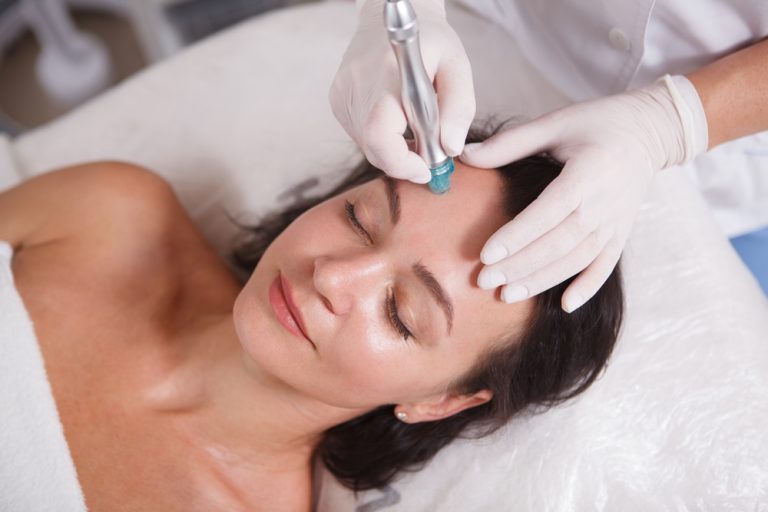
HydraFacial is one of the most popular professional skincare treatments available, but not all HydraFacial providers are equal. The brand issues certifications at multiple tiers, and the Master Certified level is the highest available. It’s not a participation credential — it represents demonstrated mastery of the full HydraFacial protocol, including advanced customization and the use of targeted boosters for specific skin concerns.
Most providers who offer HydraFacial are certified at the entry or professional level. Very few reach Master Certified status, which places them among the top practitioners globally. For a client, that distinction matters in a practical way: a Master Certified provider has the training to assess your skin, adapt the treatment in real time, and deliver a result that a less experienced technician simply can’t replicate.
We hold HydraFacial Master Certification — something we earned, not just purchased. It’s verifiable directly through HydraFacial’s official provider directory, which is worth checking for any provider you’re considering in Wake County. We mention this not to impress you but because we think you should know that credentials like this one can be looked up, and ours hold up to that scrutiny.
The broader point is this: when you’re evaluating skincare specialists in Wake County, ask specifically about the tier of any certification they mention. “HydraFacial certified” and “HydraFacial Master Certified” are not the same thing, and the difference shows up in your results.
How Competition Wins Signal Real-World Skill in Aesthetic Treatments
Awards from community publications tell you something about local reputation. Competition placements tell you something about technical skill. Both matter, but they measure different things.
The Skin Games is an international esthetics competition that draws practitioners from across the country and around the world. Categories are highly specific — not general “best esthetician” categories, but treatment-focused ones that require demonstrating clinical results in areas like pigmentation correction, acne treatment, and lash artistry. Placing first in a category like Pigmentation Artist of the Year doesn’t happen by accident. Hyperpigmentation — sun spots, melasma, post-acne marks — is one of the most technically demanding skin concerns to treat because it requires understanding the underlying cause, choosing the right modality, and managing the treatment carefully to avoid worsening the condition.
Our team placed first in that category at The Skin Games. We’ve also been named Best Esthetician in Wake County three consecutive years through Wake Weekly’s Best of the Best — a community-voted award that reflects local trust built over time, not a single strong season. Three years running means the people who actually live here, in Wake Forest and surrounding communities, have consistently chosen us above every other option available to them.
When you’re searching for a top esthetician in Wake County, these are the kinds of credentials worth weighing. Not because they guarantee a perfect outcome for your specific skin, but because they represent a meaningful pattern of verified, third-party recognition that self-declared superlatives simply can’t replicate.
How to Choose the Right Skincare Specialist in Wake County
Wake County’s skincare market has expanded significantly alongside the county’s population growth. From Wake Forest to Raleigh to Cary and Chapel Hill, there are more providers than ever — which makes the decision harder, not easier, for someone who just wants results.
The most common mistake people make is choosing based on price or proximity alone. Both are reasonable factors, but neither tells you whether a provider has the training to actually address your concern. A cheaper facial at a chain spa and a customized treatment from a credentialed specialist are not comparable products, even if they’re described with similar language.
The right starting point is always a consultation — ideally a free one where a licensed professional assesses your skin before recommending anything.
What Should Happen Before Any Skincare Treatment Begins
A qualified skincare specialist doesn’t start with a treatment menu — they start with your skin. Before any procedure, a thorough skin analysis should assess your skin type, hydration levels, sensitivity, active concerns like congestion or hyperpigmentation, and any contraindications that would affect which treatments are appropriate for you.
This matters more than most people realize. The same treatment that produces dramatic results for one person can cause irritation or setbacks for another if the provider doesn’t account for skin type, current condition, and any medications or sensitivities in play. A chemical peel, for example, requires careful assessment of skin tone, recent sun exposure, and healing capacity before it’s appropriate to recommend.
We start every new client with a free skin evaluation and consultation — not as a promotional offer, but as a core part of how we operate. No pressure, no sales pitch. Just a licensed professional taking a real look at your skin, asking the right questions, and giving you an honest assessment of what would actually help. You don’t spend a dollar until you’ve had a real conversation about what your skin needs and why.
This kind of process is what separates a thoughtful provider from one who applies the same protocol to every client regardless of their situation. If a provider you’re considering doesn’t offer any form of consultation before booking a treatment, that’s worth noting. It’s not about cost — it’s about whether they’re treating your skin or just performing a service.
Wake County's Climate and Your Skin
One thing that doesn’t come up enough when people research skincare specialists is how much the local environment affects what your skin actually needs. Wake County’s humid subtropical climate creates specific, recurring challenges that a good esthetician should understand and account for.
Summers here are hot and humid. That combination drives increased oil production, clogged pores, and breakouts — even in people who don’t typically struggle with acne. The high UV index through late spring and summer accelerates hyperpigmentation and sun damage, which is why so many Wake County clients come in with uneven tone and dark spots that weren’t there a few years ago.
Winters shift the challenge entirely. The air dries out, skin loses moisture faster, and dullness sets in. Clients who look radiant in October can look dehydrated and tired by January if they’re not actively supporting their skin’s barrier function.
A provider who understands these patterns can help you build a treatment plan that accounts for the season — not just your current concern. Hydration-focused treatments like HydraFacial tend to be especially effective in the drier months, while targeted pigmentation correction and deeper resurfacing treatments are often better timed for fall and winter when sun avoidance post-treatment is more manageable.
We serve clients across more than twenty cities in Wake County — Wake Forest, Raleigh, Durham, Chapel Hill, Cary, Apex, Morrisville, Garner, Fuquay-Varina, Knightdale, and beyond — and the climate-driven skin concerns we see are remarkably consistent across the county. Knowing your environment is part of knowing your skin, and it’s something we factor into every consultation and treatment plan we put together.
Finding a Certified Aesthetician Worth Your Time in Wake County
The short version: look for credentials you can verify, awards you can search, and a provider who wants to assess your skin before selling you anything. That combination is rarer than it should be.
Wake County has talented skincare professionals, and the market is only growing. But the difference between a provider who’s technically licensed and one who has spent years earning advanced certifications, placing in international competitions, and building a reputation that real community members have voted for three years running — that difference is real and it shows up in your results.
If you’ve been frustrated by treatments that didn’t deliver, or if you’re just starting to take your skin seriously and want to get it right the first time, we’re a good place to start that conversation. Reach out to schedule your free consultation — no obligation, no pitch, just an honest look at your skin and a clear plan for what comes next.
—
**Frequently Asked Questions**
**Who are the most qualified skincare specialists in Wake County, NC?** Qualification in this field comes down to credentials above the minimum license — advanced certifications, competition placements, and verifiable awards. We hold HydraFacial Master Certification (the highest tier available), placed first in the Pigmentation Artist of the Year category at The Skin Games international competition, and have been named Best Esthetician in Wake County three consecutive years by Wake Weekly’s community vote. Those are credentials you can look up independently.
**How do I find a certified aesthetician in Wake County with the right specialization for my skin concern?** Start by identifying your primary concern — whether that’s hyperpigmentation, acne, aging, dehydration, or texture — and then look for a provider with documented expertise in that area specifically. A competition placement in pigmentation, for example, means something different than a general “best spa” award. From there, book a consultation before committing to any treatment. A provider worth your time will assess your skin first and recommend a plan based on what they find — not what’s most expensive or most popular. In Wake County, where humidity and UV exposure drive specific seasonal skin challenges, finding someone who understands the local climate’s impact on skin is especially valuable.
**What’s the difference between a licensed and certified aesthetician?** A licensed esthetician has met the state’s legal minimum requirements to practice — completing an approved training program and passing state exams. Certification is earned on top of that, through advanced training and brand- or organization-specific credentialing. North Carolina also offers a Master Esthetician license, a higher-tier state credential that expands scope of practice. When you’re comparing providers, look beyond the license and ask what certifications they hold and whether those credentials are verifiable.
**Is a free consultation with an esthetician actually worth it?** Yes — and it’s one of the clearest signals of a quality provider. A free consultation means the provider is confident enough in their work to let you assess them before spending anything. It also means they’re taking the time to understand your skin before recommending a treatment, which is exactly how good outcomes happen. We offer this to every new client in Wake County. It’s not a sales tactic — it’s how we make sure we’re recommending the right thing for your skin specifically.