
Summary:
You’ve probably noticed it creeping in — a sunspot here, some redness there, a complexion that just looks a little off no matter how much water you drink or SPF you apply. You’ve tried the serums. They haven’t moved the needle. So now you’re looking at IPL photofacial and wondering if it’s actually worth it, or if it’s just another treatment with a long list of promises and a short list of results. We get it. This page is here to give you a straight answer — what IPL is, how it works, who it’s right for, and what to realistically expect when you walk out of your appointment.
What Is an IPL Facial Treatment and How Does It Actually Work?
IPL stands for Intense Pulsed Light. Unlike a laser, which fires a single focused wavelength at a specific target, IPL uses broad-spectrum light — multiple wavelengths at once — to address several concerns in a single session. Think of it like the difference between a spotlight and a floodlight. Both are useful, just for different jobs.
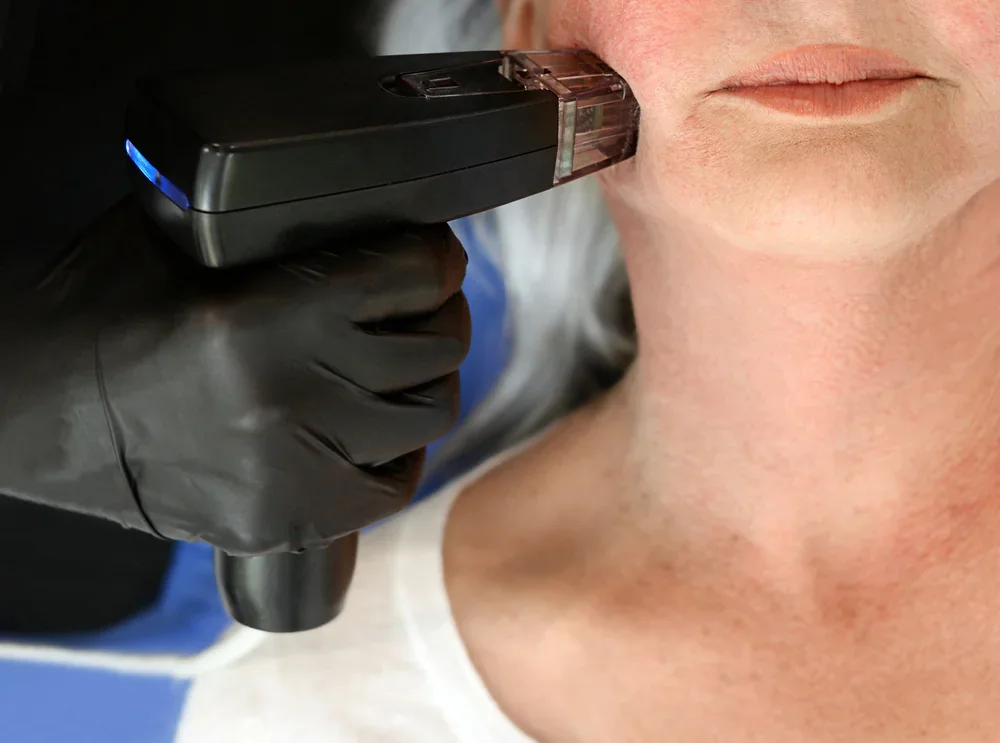
During an IPL skin treatment, the light energy penetrates down to the second layer of your skin without damaging the surface. Pigment cells and blood vessels absorb that energy, which breaks them down. Your body then clears the debris naturally over the following days and weeks. The result is a more even tone, reduced redness, and skin that looks noticeably cleaner and clearer.
At Wake Skincare, we use Lumecca by InMode — one of the most powerful IPL devices available on the market. It’s designed to deliver visible results in fewer sessions than older-generation IPL technology, which matters when you’re investing your time and money into a treatment series.
IPL Skin Rejuvenation: What Concerns Does It Actually Treat?
IPL gets talked about most for sunspots and age spots, but the treatment does quite a bit more than that. It’s effective for redness and rosacea, broken capillaries, vascular lesions, uneven skin tone, and the kind of dull, blotchy complexion that builds up after years of sun exposure. It also stimulates collagen production as a secondary benefit, which means your skin’s overall texture and firmness can improve over time — not just the specific spots you’re targeting.
For those of us in Wake County, this is especially relevant. The Triangle’s climate means long stretches of high UV exposure from spring through fall. If you spend any meaningful time outdoors — whether that’s in Wake Forest, Rolesville, Zebulon, or anywhere else in the county — you’re accumulating sun damage every year. IPL skin rejuvenation is one of the most direct ways to address that accumulation, particularly when you book during the fall or winter months when UV levels drop and your skin can heal without interference.
One thing worth knowing: IPL is not just a face treatment. The same light energy works on the neck, chest, hands, and arms. We regularly treat clients who come in for full face, neck, and chest sessions — and the results in those areas are just as significant as the face alone.
The treatment is non-ablative, meaning it doesn’t remove or wound the surface of your skin the way some laser resurfacing treatments do. That’s why downtime is minimal. Most clients experience some redness for a few hours after their session — comparable to a mild flush — and that’s typically the extent of it.
The Darkening Effect After IPL: What's Actually Happening to Your Skin
This is the part nobody warns you about, and it causes more unnecessary panic than almost anything else in aesthetics. In the two to five days following your IPL session, the brown spots you were trying to treat will often look darker — sometimes noticeably so. They may take on a slightly textured, pepper-like appearance before they flake off naturally.
Here’s what’s actually happening: the IPL energy has done its job. It’s broken down the pigment cells in those spots, and your body is now in the process of pushing that damaged pigment to the surface so it can shed. The darkening is not damage. It’s not a mistake. It’s a sign the treatment worked. Those spots will flake off on their own within seven to ten days, and what’s underneath is cleaner, more even skin.
We tell every client about this before their appointment because the worst outcome is someone going home, seeing their skin look darker on day three, and assuming something went wrong. Nothing went wrong. The process is just visible, and it’s temporary.
The reason this matters beyond managing expectations is that it speaks to a larger truth about IPL: results are a process, not an event. Most clients need a series of three to six sessions spaced three to four weeks apart to achieve their full outcome. The first session starts the process. Improvement builds from there. By the time you’ve completed your series, the difference in your skin is real and lasting — but it takes the full course of treatment to get there.
Understanding this timeline upfront is what separates clients who are thrilled with their results from clients who feel let down after one session. We’d rather you go in with accurate expectations and be genuinely happy than go in expecting a one-session fix and feel disappointed.
IPL vs. Laser: How to Know Which One You Actually Need
This question comes up constantly, and it makes sense — the two treatments are often mentioned together, and the difference isn’t obvious from the outside. The short version is this: IPL and laser are different tools for different jobs, and the right choice depends entirely on your specific concern, your skin type, and how deep the issue goes.
IPL uses multiple wavelengths of light simultaneously, which makes it versatile and well-suited for surface-level concerns like pigmentation, redness, and rosacea. Laser uses a single focused wavelength and can penetrate more precisely and more deeply — making it better for concerns like texture, scarring, or issues that sit deeper in the skin. IPL tends to be gentler with less downtime. Laser treatments can be more intensive and may require longer recovery depending on the type.
Neither is universally better. They’re just different, and a qualified provider will tell you which one makes sense for your skin before you commit to anything.
Is IPL Safe for Darker Skin Tones?
This is probably the most important question we get, and it deserves a real answer rather than a vague disclaimer. The standard guidance you’ll find online — that IPL works best for Fitzpatrick Types I through III, meaning fair to medium skin tones — is not wrong, but it’s incomplete. It reflects what happens when an under-trained provider uses a device without adjusting for skin type. In those situations, yes, there is a higher risk of complications for darker skin.
But that’s a provider and device problem, not an IPL problem.
An experienced provider who specializes in skin of color, using a high-quality device with adjustable settings, can safely and effectively treat Fitzpatrick Types IV through VI. The key is knowing how to set the device — the wavelength filters, pulse duration, and energy levels — for each individual client. This is not something every provider does, or does well. It requires both the right equipment and genuine expertise in pigmentation across different skin types.
This is an area where we’ve invested heavily. Our founder Jacqueline Grace earned First Place in Pigmentation Artist of the Year at The Skin Games — an international esthetician competition where results are judged on live skin transformation work, not submitted photos. That credential means something specific: it reflects real results on real clients, evaluated in real time. Her specialization in skin of color isn’t a marketing angle — it’s validated by the clients who come to us specifically because they’ve been turned away or under-served elsewhere.
Wake County’s population is diverse, and a significant number of people here have been told IPL isn’t for them. That’s not always true. A free consultation is the right first step to find out whether you’re a candidate and what a safe, effective treatment plan would look like for your skin.
When Is the Best Time to Book an IPL Photofacial in Wake County?
Timing matters more with IPL than most people realize, and this is one of the places where local knowledge actually changes the advice you should be following.
IPL requires that your skin hasn’t had significant sun exposure in the two to four weeks before your session. It also requires that you protect your skin carefully from UV exposure in the weeks after. In Wake County, where the warm season runs long and UV levels stay elevated well into October, that creates a natural treatment window: fall and winter are the ideal time to start a series.
Practically speaking, this means September through February is when most of our IPL clients book their sessions. September and October are especially popular because that’s when the summer’s accumulated sun damage is most visible — the sunspots, the uneven tone, the redness that built up over months of outdoor time. Booking in fall lets you address that damage during the lower-UV months, complete your series without interruption, and head into the following spring with noticeably better skin.
That doesn’t mean IPL is impossible in warmer months — it means it requires more careful management of sun exposure before and after each session. If you’re disciplined about SPF and avoiding peak sun hours, a summer series is workable. But for most people, fall is simply easier and produces more consistent results.
If you’re newer to Wake County and relocated from a larger metro, you may already be familiar with IPL from a previous provider. The transition to a new provider is a natural time for a fresh consultation — your skin changes, your concerns evolve, and a new set of eyes can catch things a previous provider may have missed or not addressed.
Ready to Find Out If IPL Photofacial Is Right for Your Skin?
IPL photofacial is one of the most effective tools available for sun damage, uneven tone, redness, and pigmentation — but it works best when it’s matched to the right person, done with the right device, and performed by someone who actually knows what they’re doing with your specific skin type.
The short version of everything on this page: IPL is not a one-session fix, the darkening you see afterward is normal and temporary, it can be done safely on darker skin tones by a qualified provider, and fall is the best time to start a series if you’re in Wake County.
If you’re still unsure whether you’re a candidate, or you just want to talk through what a treatment plan would look like for your skin, that’s exactly what our free consultation is for. Reach out to Wake Skincare — we’ll take a look at what you’re working with and give you a straight answer.