Summary:
You cleared the acne. You’ve been patient. You’ve tried the serums, the spot treatments, the vitamin C — and those dark marks are still there, maybe months later. If this sounds familiar, you’re not imagining things, and you’re not doing anything wrong. Hyperpigmentation in darker skin tones behaves differently at the biological level, which means it responds differently to treatment too. Understanding that difference is the first step toward actually making progress. Here’s what’s going on under the surface — and what genuinely works.
Post Inflammatory Hyperpigmentation Causes: Why Darker Skin Reacts This Way
When your skin experiences any kind of inflammation — a breakout, a scratch, an ingrown hair, even aggressive exfoliation — it responds by producing melanin. That’s a normal protective response. But in darker skin tones, the melanocytes (the cells responsible for pigment production) are more active and produce more melanin when triggered. The result is a dark mark that’s more pronounced and takes much longer to fade than it would in someone with a lighter complexion.
This isn’t a flaw. It’s biology. But it does mean that post inflammatory hyperpigmentation causes real, lasting frustration for people with Fitzpatrick skin types III through VI — the classification range that covers medium-olive to deep brown and black skin tones. Research published by the National Institutes of Health puts the incidence of PIH in darker-skinned acne patients as high as 65%. That’s nearly two in three people dealing with this.
PIH vs. Melasma vs. Sun Damage: Why Getting the Diagnosis Right Matters
One of the biggest mistakes people make — and honestly, one of the biggest mistakes some providers make — is treating all hyperpigmentation as the same condition. It isn’t. The dark mark left behind after a pimple is post inflammatory hyperpigmentation. The patchy, symmetrical discoloration that shows up on the cheeks or forehead, often triggered by hormonal shifts from birth control or pregnancy, is melasma. The scattered spots that appear on areas with the most sun exposure are UV-driven sun damage. Each of these sits at a different depth in the skin, has a different underlying cause, and responds to different treatments.
This distinction matters because choosing the wrong treatment doesn’t just waste money — it can actively make things worse. A treatment designed to address surface-level sun damage won’t touch deeper melasma. A protocol that works beautifully on lighter skin may trigger additional PIH in darker skin if the settings aren’t adjusted. That’s a documented clinical reality that higher Fitzpatrick skin types face a greater chance of unwanted pigmentary changes when treated with energy-based devices by providers who haven’t adjusted their approach accordingly.
Before you book anything, you need to know what you’re actually dealing with. That means a real evaluation — not a quick visual glance, but an assessment that considers your skin type, your history, your triggers, and what’s happening beneath the surface. The treatment plan follows the diagnosis, not the other way around.
Why OTC Products Stall Out — and What Professional Treatment Can Actually Do
Over-the-counter products work on the surface. That’s not a knock on them — ingredients like kojic acid, azelaic acid, tranexamic acid, and vitamin C can genuinely support skin brightening over time. But they’re limited. They can’t reach the deeper layers where stubborn pigmentation lives, and they can’t trigger the biological processes that professional treatments can.
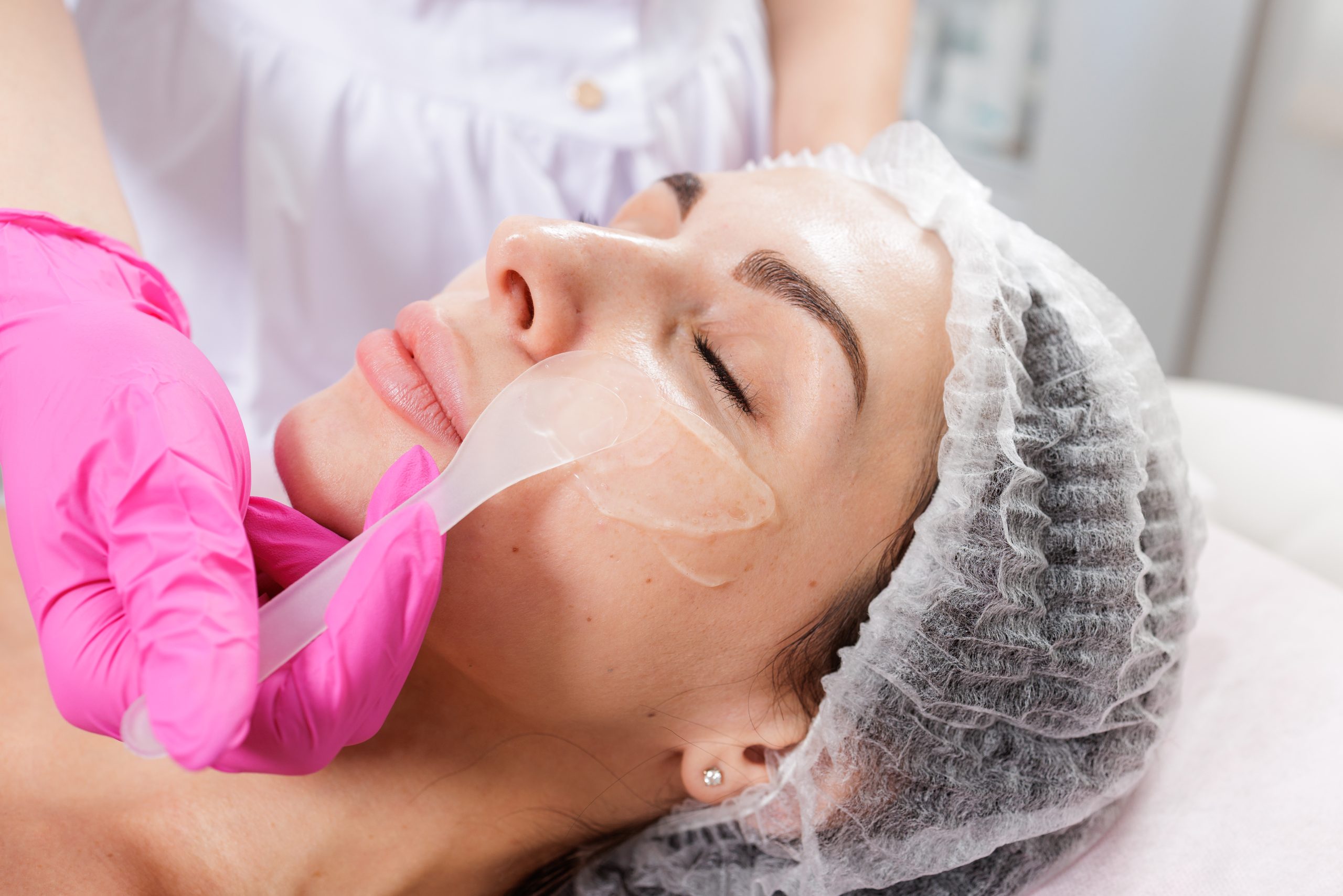
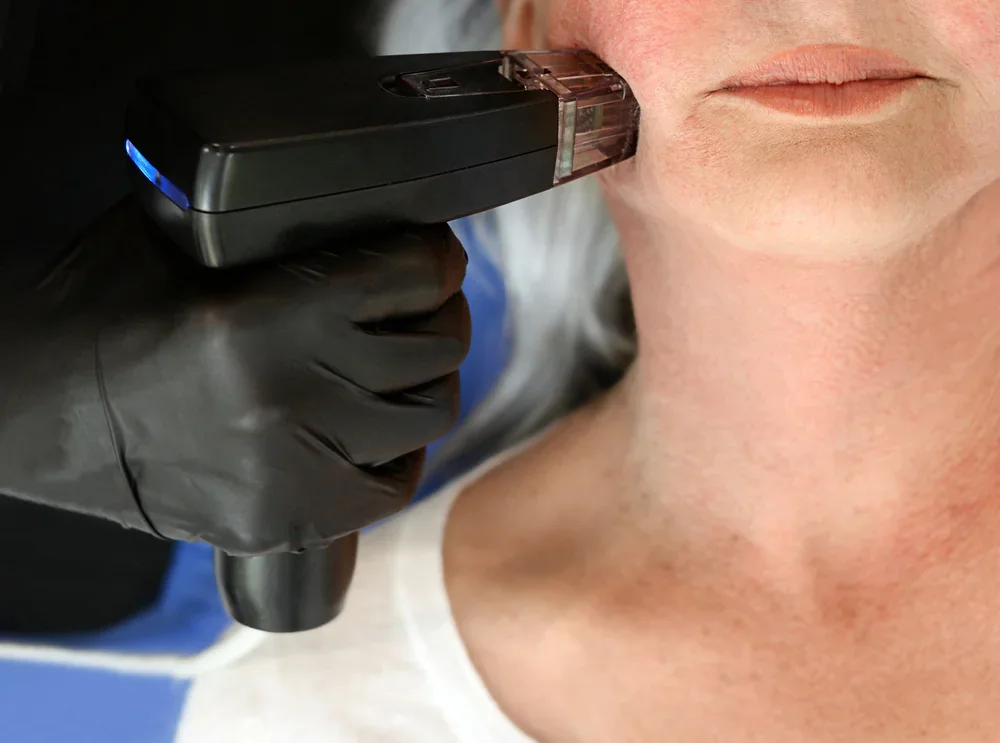
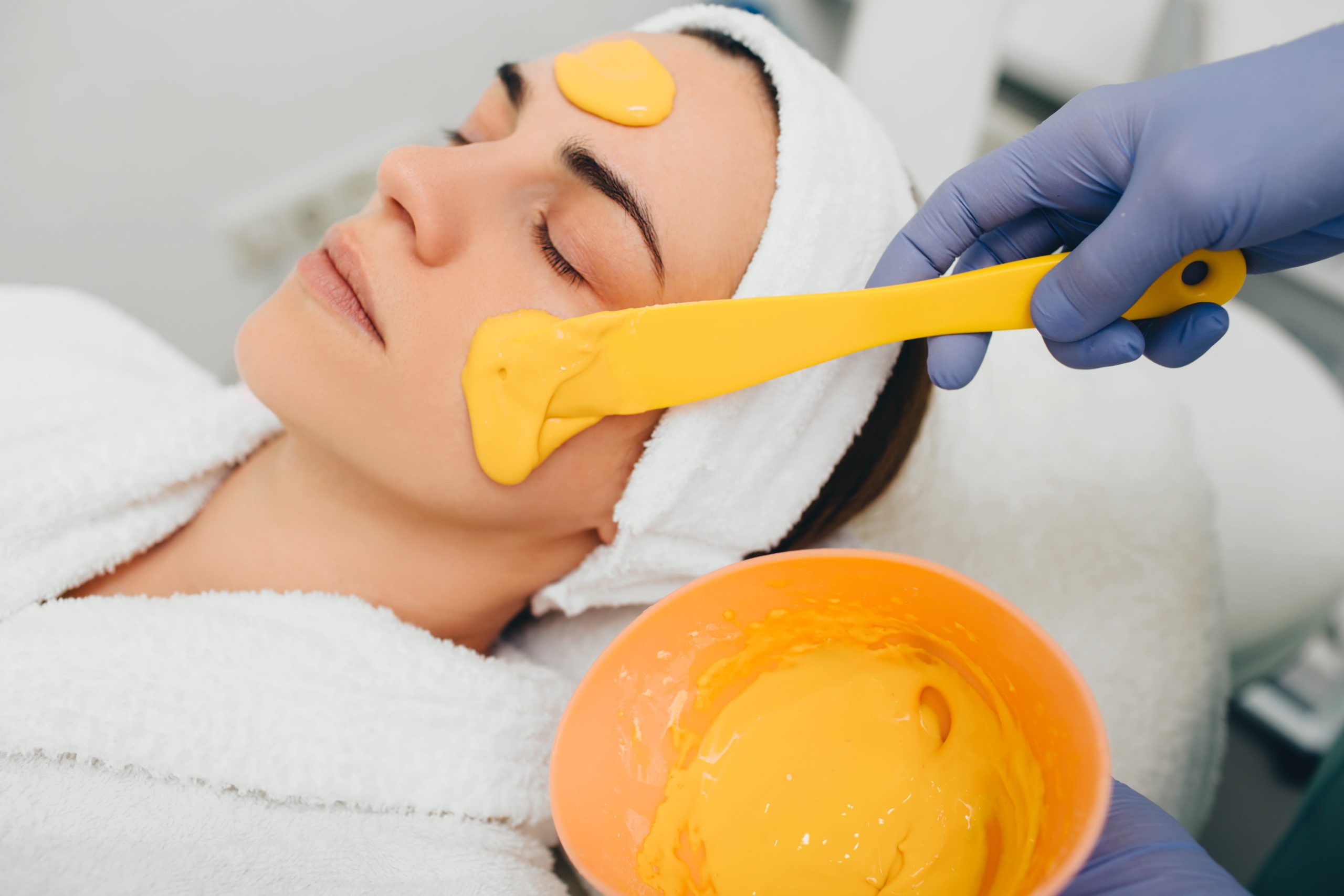
Professional hyperpigmentation treatment for dark skin works differently. Chemical peels accelerate cell turnover, clearing away pigmented cells faster than your skin would on its own. HydraFacial with pigmentation-specific boosters — like the Britenol booster — targets discoloration while simultaneously infusing skin with brightening actives. Microneedling with SkinPen creates controlled micro-channels that stimulate collagen and help break down pigmented tissue. Clear + Brilliant laser, which is one of the safer laser options for darker skin tones, resurfaces the skin at a gentler intensity without the risk profile of more aggressive devices.
None of these treatments work in isolation, at least not optimally. The research consistently shows that combination approaches — using multiple treatments in a deliberate sequence — produce better outcomes than any single modality alone. That’s especially true for darker skin, where the pigmentation tends to be more stubborn and the margin for error is smaller. A provider who offers you one treatment type and calls it a day isn’t working with the full picture. The goal is to slow melanin overproduction, increase cell turnover, reduce inflammation, and break down existing pigment — and no single treatment does all of that.
Sun protection also isn’t optional. UV exposure amplifies existing hyperpigmentation, particularly in Fitzpatrick types IV through VI, where the melanin response to UV is significantly exaggerated. Any treatment plan that doesn’t include a serious conversation about daily SPF is incomplete.
What to Look for in a Hyperpigmentation Treatment Provider for Dark Skin
Finding someone who says they can treat hyperpigmentation is easy. Finding someone who actually knows how to treat it on darker skin — safely, effectively, and with a protocol built around your specific skin type — is a different thing entirely.
The risk of making things worse is real, and it’s one of the reasons so many people with darker skin hesitate to seek professional treatment at all. That hesitation is understandable. But it’s also why the provider you choose matters more than the treatment itself.
What "Specializing in Skin of Color" Actually Means — and Why It's Not Just Marketing
A provider who specializes in skin of color isn’t just saying they’re willing to treat darker skin tones. They’re saying they’ve built their practice, their protocols, and their clinical knowledge around the specific ways that melanin-rich skin behaves — how it responds to inflammation, how it reacts to energy-based treatments, what parameters need to be adjusted to avoid triggering the very problem you came in to fix.
At Wake Skincare, treating skin of color isn’t a side service. It’s a core focus. Our founder, Jacqueline Grace, has earned first and second place in the Pigmentation Artist of the Year category at The Skin Games — an international aesthetics competition where results are evaluated by peers, not marketing teams. That credential is specific to pigmentation treatment, and it’s the only one of its kind held by a provider in the Wake County, NC market. It’s not a regional award or a local popularity contest. It’s a competition result that can be looked up.
Jacqueline has also been named Best Esthetician in Wake County three consecutive years running, including first place in the Wake Weekly Best of the Best 2022. She holds a Master certification in HydraFacial — among the first 100 practitioners in the world to reach that level. These aren’t decorative credentials. They directly shape how your skin gets evaluated and treated.
Every new client starts with a free consultation that includes both AI-powered skin analysis and a hands-on assessment. That’s a genuine evaluation designed to identify what type of hyperpigmentation you’re dealing with, what’s driving it, and which combination of treatments will actually address it. No guessing, no pressure, no generic protocol.
Why Wake County Residents Are Especially Prone to Worsening Hyperpigmentation in Summer
Wake County’s climate isn’t doing anyone with hyperpigmentation any favors. Average July highs sit around 90°F, and the outdoor culture here — the greenways in Raleigh, the parks in Wake Forest, the weekend events in Apex and the surrounding communities — means cumulative UV exposure adds up fast over the course of a summer.
UV light doesn’t just cause new hyperpigmentation. It amplifies existing pigmentation by stimulating melanin production and disrupting how melanin is distributed in the skin. For people with Fitzpatrick types IV through VI, that response is significantly more pronounced. By late summer, we consistently see clients coming in with sun-damaged skin and hyperpigmentation that has visibly worsened over the warmer months — even when they weren’t spending unusual amounts of time in direct sunlight.
The good news is that fall is one of the best windows for treatment. As UV intensity drops through September, October, and November, it becomes safer to undergo treatments that increase photosensitivity — chemical peels, IPL, laser. The skin has a chance to recover without ongoing UV interference, and results tend to hold better when treatment isn’t happening simultaneously with peak sun exposure.
Wake County’s demographics also matter here. Black or African American residents make up approximately 19% of the county’s population — higher than the national share — and combined with Hispanic, Asian, and multiracial residents, people with darker skin tones represent roughly 40% of Wake County’s 1.18 million people. That’s a large community dealing with a concern that most local providers aren’t specifically equipped to address. It’s part of why we built our practice the way we did.
If you’ve been putting off getting a professional evaluation because you’re not sure whether it’s worth it, or because you’re worried about making things worse, the consultation is the right first step. It costs nothing, it’s genuinely informative, and it gives you a clear picture of what’s actually possible for your skin before you commit to anything.
Finding the Right Hyperpigmentation Treatment for Dark Skin in Wake County, NC
Hyperpigmentation on darker skin is not a simple problem, and it doesn’t respond to simple solutions. The biology is different, the risks are different, and the treatment has to be different too. Getting to the other side of it — genuinely clearer, more even skin — requires knowing what you’re actually treating, working with someone who understands how your skin behaves, and using a combination of approaches that address the problem from more than one angle.
If you’re in Wake County, NC and you’ve been frustrated with results that never quite get there, the answer usually isn’t more products. It’s a better starting point. We offer free consultations to every new client — a real evaluation, not a sales pitch — so you can understand exactly what’s driving your hyperpigmentation and what a realistic treatment plan looks like for your skin specifically. That’s where meaningful progress starts.