Summary:
If you have a darker skin tone and you’ve been researching microneedling, you’ve probably run into two very different stories. One says it’s a game-changer for acne scars and hyperpigmentation. The other warns about dark spots getting worse. Both contain truth — which is exactly why this question deserves a real answer, not a marketing one.
The short version: yes, microneedling is safe for dark skin. But the longer version matters a lot more. What makes it safe — or not — has everything to do with who’s doing it and how. Here’s what you actually need to know.
Why Dark Skin and Microneedling Require a Different Conversation
Darker skin tones — what dermatologists classify as Fitzpatrick Types IV through VI — produce more melanin. That’s what gives your skin its depth and richness. It’s also what makes your skin more reactive to certain kinds of trauma, including the kind that comes from aesthetic treatments done without the right adjustments.
The concern isn’t that microneedling damages dark skin. It’s that the wrong settings, too many passes, or no post-care plan can trigger post-inflammatory hyperpigmentation — PIH for short. That’s when the skin overproduces melanin in response to irritation, leaving dark patches behind. It’s temporary in most cases, but it’s real, and it’s preventable.
The good news is that microneedling doesn’t use heat or light energy. Unlike lasers, which can overstimulate melanin production in darker skin, microneedling creates tiny mechanical channels in the skin that trigger your body’s natural collagen response — without targeting pigment at all. That distinction matters more than most people realize.
What Is Post-Inflammatory Hyperpigmentation and Can Microneedling Cause It?
PIH is one of the most common concerns we hear from clients with melanin-rich skin, and it’s a fair one. It happens when the skin responds to inflammation — whether from a pimple, a cut, or an aesthetic treatment — by sending melanin to the area as a kind of protective response. The result is a dark spot or patch that lingers long after the original irritation has healed.
Microneedling, done incorrectly, can trigger that response. If the needle depth is too aggressive, if too many passes are made over the same area, or if post-care sun protection is skipped, the healing process can go sideways for darker skin types. This is why you’ll sometimes find alarming accounts online from people who came out of a session with more discoloration than they went in with.
But here’s what those accounts usually have in common: the provider didn’t adjust their protocol for the client’s skin tone. They used the same settings they’d use on someone with fair skin and hoped for the best. That’s not a microneedling problem — it’s a provider problem.
When the protocol is right, the research actually supports microneedling as a strong treatment for the very issues darker skin clients are most concerned about. A peer-reviewed study published in the Journal of Cosmetic Dermatology evaluated 39 patients with Fitzpatrick skin types 3, 4, and 5 who underwent microneedling for acne scars with associated pigmentation. The study confirmed both safety and efficacy. A separate study found that combining microneedling with glycolic acid peels produced excellent results for pigmented acne scars in darker skin. The science is there. The question is whether your provider is applying it.
For darker skin specifically, a sound protocol includes a thorough skin assessment before anything else, conservative needle depth settings, fewer passes to minimize cumulative trauma, topical numbing for comfort, and a clear post-care plan that includes strict sun protection during the healing window. Some protocols also involve pre-treatment priming with brightening agents to quiet melanocyte activity before the session begins. None of this is complicated — but all of it requires a provider who’s actually thinking about your skin, not just running through a standard checklist.
Is Microneedling Safer Than Laser for Dark Skin Tones?
For a lot of clients with darker skin, this is the question underneath the question. Many of them have already been told they’re not a good candidate for laser treatments, or they’ve had a bad experience with one. So they want to know whether microneedling is actually different — or just another version of the same risk.
It is genuinely different, and the reason comes down to how each treatment works. Lasers use heat and light energy to target specific structures in the skin. That heat can overstimulate melanocytes — the cells responsible for producing pigment — which is why PIH risk is meaningfully higher with laser for Fitzpatrick IV through VI skin. The energy doesn’t always know where to stop.
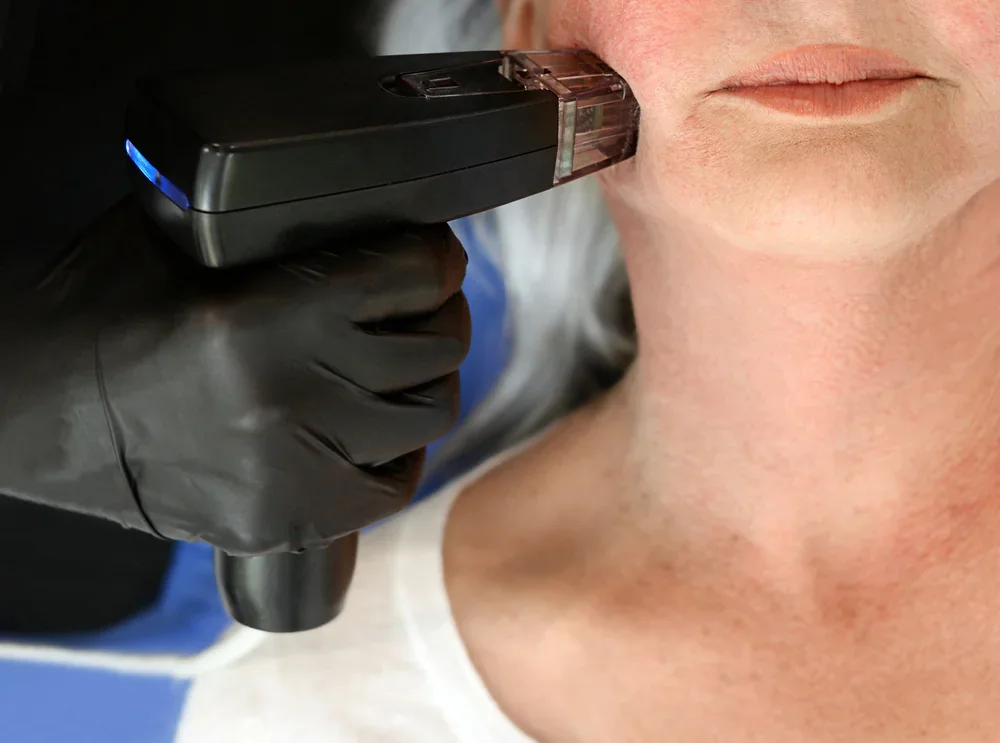
Microneedling doesn’t work that way. The SkinPen device we use at Wake Skincare — the only FDA-cleared microneedling device in the United States — creates precise, controlled micro-channels in the skin using fine needles. There’s no heat involved. The treatment stimulates collagen production through a mechanical process, not a thermal one. Your melanocytes aren’t being targeted, which means the trigger for PIH is significantly reduced when the protocol is handled correctly.
That said, microneedling isn’t a blanket replacement for every laser treatment. There are specific concerns — like certain types of vascular pigmentation — where other modalities may be more appropriate. But for the most common concerns among darker skin clients — acne scars, post-inflammatory hyperpigmentation, uneven texture, and dullness — microneedling is often the smarter, safer starting point.
Clinical studies also show that elevated collagen levels persist for up to a year after treatment, meaning the results continue developing long after the session ends. And because microneedling improves how deeply serums absorb into the skin — by as much as 3,000% — it can also amplify the effectiveness of any brightening products you’re already using. That’s a meaningful compounding benefit for anyone managing ongoing hyperpigmentation.
How to Know If Your Wake County Microneedling Provider Is Actually Qualified to Treat Dark Skin
This is where most of the real risk lives — not in the procedure itself, but in who’s performing it. Any provider can claim they do microneedling. Fewer can demonstrate that they understand how to do it safely on melanin-rich skin. And almost none have the credentials to prove it.
What you’re looking for isn’t just general experience. You’re looking for someone who has specifically worked with skin of color, who can explain what adjustments they make for your Fitzpatrick type, and who has a track record — ideally a verifiable one — of treating pigmentation concerns well. That last part is harder to find than it should be.
What Questions Should You Ask Before Booking Microneedling if You Have Dark Skin?
Before you commit to any microneedling session, there are a few questions worth asking — not to be difficult, but because the answers will tell you a lot about whether this provider has actually thought about skin like yours.
Ask them what device they use and whether it’s FDA-cleared. Ask how they adjust needle depth for darker skin tones. Ask what their post-care protocol looks like, specifically around sun exposure. Ask whether they do a skin assessment before every treatment or whether they use a standard protocol for everyone. Ask if they have experience treating Fitzpatrick Type IV through VI skin specifically.
A provider who’s genuinely experienced with melanin-rich skin will answer these questions without hesitation. They’ll mention the Fitzpatrick scale without being prompted. They’ll talk about conservative settings and why they matter. They’ll bring up PIH risk and explain how they prevent it. If a provider seems vague, gives you generic answers, or tells you there’s nothing to worry about without explaining why, that’s useful information.
It’s also worth asking to see before-and-after photos from clients with similar skin tones. Results on fair skin don’t tell you much about how a provider handles yours. And if the consultation itself is rushed or transactional, that’s a signal too. A provider who takes time to understand your skin history, your concerns, and your goals before recommending anything is a provider who’s thinking about you — not just filling an appointment slot.
At Wake Skincare, we offer free consultations to every new client. Not because it’s a standard practice, but because we genuinely don’t think you should spend money on a treatment plan until you’ve had a real conversation about your skin first.
Why Pigmentation Expertise Matters More Than a Great-Looking Website
Wake County has no shortage of medical spas and aesthetics clinics offering microneedling. What’s harder to find is a provider who has been specifically recognized for their expertise in treating pigmentation — which is the exact concern at the center of the dark skin microneedling conversation.
Jacqueline Grace, who founded Wake Skincare and operates out of Wake Forest, NC, placed first in the Pigmentation Artist of the Year category at The Skin Games — an international aesthetics competition that draws practitioners from across the country and around the world. She also placed second in the same category in a separate year. That’s not a participation award. That’s a demonstrated, peer-evaluated track record of treating pigmentation concerns at a level that holds up against the best in the industry.
For someone with a darker skin tone who is weighing the risk of making their hyperpigmentation worse, that credential is the most direct answer available. The biggest risk of microneedling on dark skin is a pigmentation complication. The person treating you has been internationally recognized for pigmentation expertise. That’s not incidental — it’s the point.
Jacqueline also holds a Master certification in HydraFacial, placing her among the first 100 practitioners in the world to reach that level, and has been named Best Esthetician in Wake County for three consecutive years. Wake Skincare operates under the medical oversight of a physician director described as one of the most esteemed medical directors in the Triangle — a layer of clinical accountability that not every aesthetics practice can offer.
North Carolina’s year-round sun exposure is a persistent trigger for hyperpigmentation, and for Wake County residents with darker skin tones, that means the concern doesn’t go away between seasons. Finding a provider who genuinely specializes in pigmentation — not just someone who lists it on a services menu — makes a real difference in both the safety and the outcome of treatment. That’s what we’ve built Wake Skincare around.
So Is Microneedling Right for You? Here's How to Find Out
Microneedling for dark skin is safe. It’s backed by clinical research, it’s been performed successfully on Fitzpatrick Types IV through VI in peer-reviewed studies, and it avoids the heat-based risks that make laser a harder choice for melanin-rich skin. But safe outcomes depend entirely on the person holding the device and the protocol they follow.
If you’ve been hesitant because of what you’ve read online, that hesitation makes sense. The risk is real when the wrong approach is used. What changes the equation is finding a provider who has actually earned the right to treat skin like yours — not just someone who offers the service.
If you’re in Wake County, NC and you want a straight answer about whether microneedling is right for your skin, we’re happy to have that conversation. Wake Skincare offers free consultations to every new client, and there’s no pressure to book anything until you feel genuinely confident. Start there.