Summary:
At some point, the creams stop working. Not because you chose the wrong ones — but because what you’re dealing with isn’t a surface problem anymore. Skin laxity, sagging jowls, a softening jawline, a neck that’s starting to loosen — these are structural changes happening beneath the skin. No serum reaches that layer.
The question most people in Wake County reach at this point isn’t “should I do something?” It’s “what are my real options, and who do I trust to do it?” This page answers both. We’ll walk through how non-invasive skin tightening actually works, which treatments are worth your time, and what to look for in a provider before anyone touches your face.
How RF Skin Tightening Actually Works
Radiofrequency skin tightening works by delivering controlled heat energy into the deeper layers of the skin — past the surface, into the dermis and the tissue beneath it. When collagen fibers are exposed to that heat, they contract. The body also responds by producing new collagen over the weeks that follow, which is where the longer-term tightening effect comes from.
It’s not magic and it’s not marketing. The mechanism has been studied and documented in peer-reviewed literature going back nearly two decades. Radio frequency skin tightening is now the most widely used technology in the non-surgical skin tightening market — holding roughly 35% of the global market share — precisely because the science is solid and the results are reproducible when done correctly.
What “done correctly” means matters. The depth of energy delivery, the settings used, and how the treatment is calibrated for your specific skin type all affect the outcome. That’s the part that depends on the person holding the device.
What Skin Tightening Procedures Are Actually Available?
The term “non-invasive skin tightening” covers several different technologies, and they’re not interchangeable. Understanding the difference helps you evaluate your options rather than just picking whatever a medical spa happens to offer.
Radiofrequency treatments — including standalone radiofrequency facials and RF microneedling — are the most widely used category. They work by heating the dermis to stimulate collagen remodeling. A radiofrequency facial uses surface-level energy delivery, while RF microneedling combines the needles with RF energy delivered directly into the deeper tissue layers, making it more precise and typically more effective for significant laxity.
Ultrasound-based treatments like Sofwave or Ultherapy use focused sound waves to reach even deeper tissue planes — sometimes down to 5mm — which is why they’re often used for more pronounced laxity or structural lifting. The trade-off is that they tend to be more uncomfortable during treatment.
Laser-based skin tightening is another category, but it comes with an important caveat: certain laser modalities carry a higher risk of post-inflammatory hyperpigmentation for patients with darker skin tones. This is something most providers don’t address upfront, and it matters significantly in a diverse community like Wake County, NC. RF-based treatments are generally considered safer across all Fitzpatrick skin types, which is one reason we lean on them here.
Injectables like Botox and dermal fillers can complement skin tightening treatments by addressing volume loss and dynamic wrinkles — but they work differently and shouldn’t be confused with actual tissue tightening. They’re often used alongside energy-based treatments rather than instead of them.
The honest answer to “which is best” is that it depends on your skin, your goals, and the degree of laxity you’re dealing with. Mild to moderate laxity responds well to RF-based treatments. More significant changes may require a combination approach or a different modality entirely. That’s exactly why a proper consultation — before any money changes hands — is non-negotiable.
Not quite. The face and neck have different tissue structures, and the concerns in each area tend to present differently. Face tightening typically targets the cheeks, jawline, and the area around the eyes and brows — places where skin laxity shows up as softening definition or early jowling. The neck is a separate challenge: the skin is thinner, the underlying platysmal muscle plays a bigger role in how laxity appears, and patients often notice changes there before anywhere else.
For face tightening treatment, RF microneedling is one of the most effective options because it can be precisely calibrated for different zones of the face. The energy depth can be adjusted depending on the treatment area, which matters when you’re working near the eyes versus along the jawline.
When it comes to tightening neck skin, the approach often needs to be more targeted. RF microneedling before and after neck results consistently show improvement in skin texture, firmness, and definition along the neck and décolletage — but results build over a series of sessions, not overnight. Collagen remodeling takes time. Most patients see meaningful improvement after three to six sessions spaced four to six weeks apart, with results continuing to develop in the months after the final session.
Sagging jowls are a common concern we see across all age groups, not just older patients. Younger clients in their 30s and early 40s are increasingly using RF-based treatments to address early jowling before it becomes more pronounced — which is a smarter approach than waiting. Treating mild laxity is easier and produces faster results than treating significant sagging. If you’re in Wake County, NC and you’ve started noticing a change in your jawline definition, that’s the right time to have a conversation about your options — not years from now.
RF Microneedling Treatment: What Sets It Apart
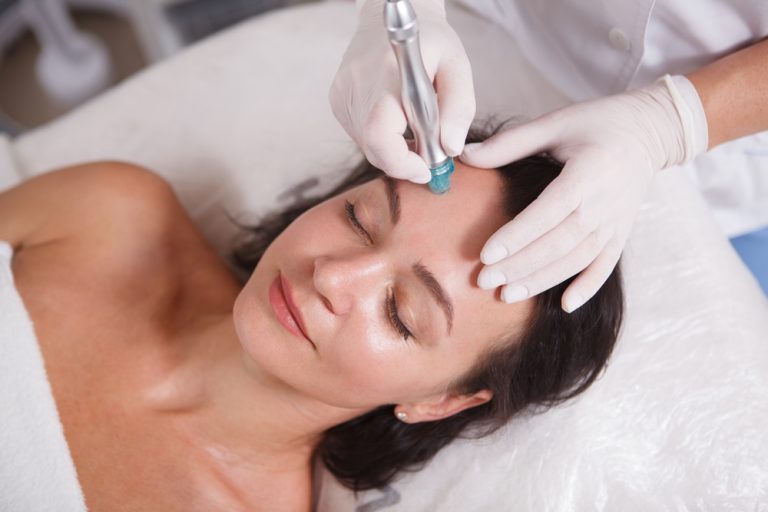
RF microneedling is a specific combination of two proven technologies — microneedling and radiofrequency energy — delivered simultaneously through insulated needles that penetrate the skin at a controlled depth. The needles create micro-channels in the tissue while the RF energy is released at the tip, heating the dermis from the inside rather than from the surface.
The result is a treatment that addresses skin texture, tone, and tightening in a single session. Radio frequency microneedling produces more significant collagen remodeling than standard microneedling alone, which is why it’s become the preferred option for patients dealing with laxity, acne scarring, and uneven texture at the same time. It’s also one of the most versatile treatments available — effective on the face, neck, and chest.
Standard microneedling — without the RF component — has its own strong track record. The advantages of microneedling go well beyond skin tightening. The controlled micro-injuries created by the needles trigger the skin’s natural repair process, which increases collagen production, improves skin texture, and helps fade acne scars, hyperpigmentation, and uneven tone over time.
Microneedling for collagen production is particularly effective because it works with your body’s existing biology rather than imposing a result from the outside. The skin responds to the treatment as it would to any healing process — by building new, healthier tissue. That’s why benefits of microneedling face results tend to look natural rather than “done.”
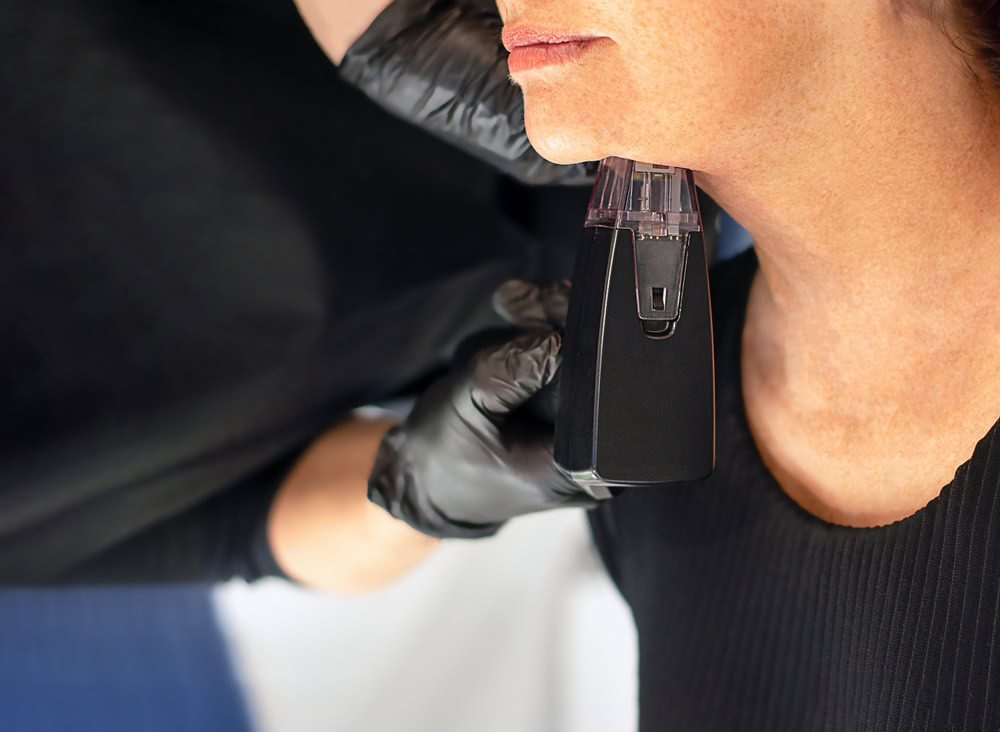
The SkinPen is the device we use for microneedling services at Wake Skincare. It’s FDA-cleared — which matters in a market where not every device in circulation has been evaluated for safety and efficacy. SkinPen benefits include a precise, consistent needle depth, a sterile single-use cartridge system, and a documented safety profile across multiple skin types. That last point is especially relevant for patients with darker complexions, where some treatments carry a higher risk of post-inflammatory hyperpigmentation. The SkinPen’s design minimizes that risk.
Dermapen benefits are often discussed in the same conversation as SkinPen — both are microneedling devices, and the core mechanism is similar. The meaningful difference comes down to device quality, clinical clearance, and the skill of the person using it. Nano needling benefits are also worth understanding as a gentler, surface-level alternative for patients who aren’t candidates for deeper microneedling — it works on the outermost skin layer and is often used for product infusion and mild texture improvement rather than structural tightening.
Microneedling services at a qualified medical & aesthetic clinic look different from what you’d find at a budget spa or a kiosk. The consultation process, the device quality, the provider’s training, and the post-care protocol all contribute to the outcome. These aren’t interchangeable.
The benefits of RF microneedling over standard microneedling come down to depth and intensity. Standard microneedling creates micro-channels in the skin and relies on the body’s healing response to produce collagen. RF microneedling does that and adds a layer of thermal energy delivered directly into the dermis — which means you’re triggering collagen production through two mechanisms at once rather than one.
For patients dealing with moderate skin laxity, RF microneedling before and after results are typically more dramatic than what standard microneedling alone produces. The RF component reaches deeper tissue layers, which is where the structural changes that cause sagging actually originate. Surface-level treatments address surface-level concerns. For genuine tightening, you need to reach the dermis and the tissue beneath it.
The benefits of Morpheus 8 — a well-known branded RF microneedling device — are often cited in this conversation. Benefits of Morpheus 8 include deep fractional energy delivery and the ability to treat both the face and body. It’s a legitimate technology used by a number of practices in the Triangle. What matters more than the brand name on the device, though, is the training and judgment of the provider using it. Two clinics can own the same device and produce very different results depending on who’s operating it and how they’ve calibrated the treatment for your specific skin.
RF needling before and after results also vary based on how many sessions you complete and how consistently you follow post-care instructions. Collagen remodeling is a biological process — it doesn’t happen on a marketing timeline. Most patients see visible improvement after the first treatment, with results continuing to build over three to six months following a complete treatment series. Setting that expectation honestly upfront is something we take seriously, because the clients who understand the process tend to be the ones who see the best outcomes.
Finding the Right Skin Tightening Treatment in Wake County, NC
Wake County, NC is growing fast — and with that growth comes more providers, more devices, and more marketing promising dramatic results. The harder question isn’t whether non-invasive skin tightening works. It does. The harder question is whether the person doing it to your face has the training, the credentials, and the clinical judgment to do it well.
That’s the standard we hold ourselves to at Wake Skincare. Jacqueline Grace has been named Best Esthetician in Wake County for three consecutive years, placed first internationally in Pigmentation Artist of the Year at The Skin Games, and holds a Master certification in HydraFacial — among the first 100 practitioners worldwide to reach that level. Every client receives a free skin evaluation before any treatment begins, because a proper plan starts with actually understanding your skin.
We’re located in Wake Forest and serve clients across Wake County, NC. If you’re ready to have a real conversation about your options, start with the free consultation — no pressure, no commitment, just an honest assessment of what will actually work for you.