Summary:
You’ve probably seen the photos. Dramatic side-by-sides, tighter skin, smoother texture, scars that seem to have disappeared. And now you’re trying to figure out if those results are real — or if they’re filtered, cherry-picked, or just not going to happen for you.
That skepticism is healthy. RF microneedling does work, but results vary widely depending on the provider, the number of sessions, and your specific skin concerns. This guide cuts through the noise and tells you exactly what to expect — before, during, and long after your last appointment.
What RF Microneedling Actually Does to Your Skin
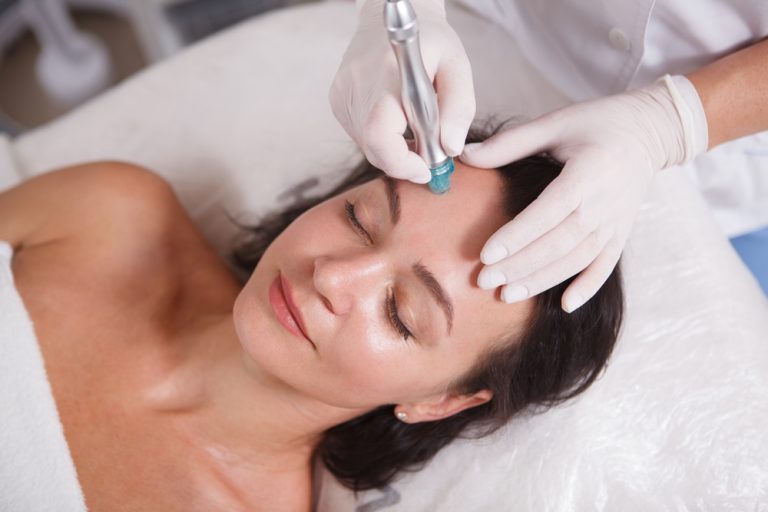
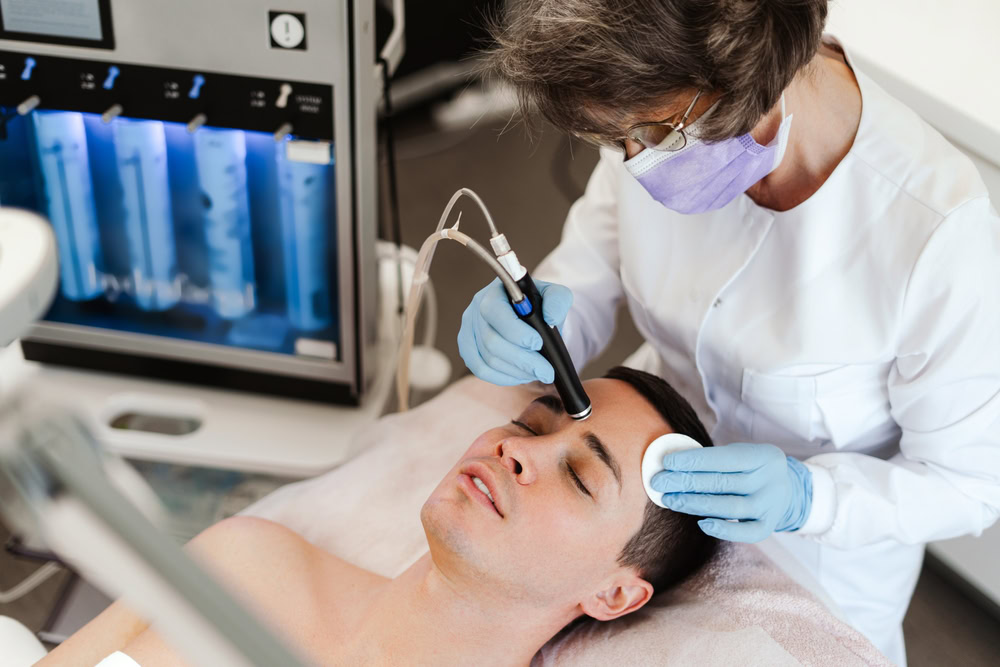
Standard microneedling creates tiny channels in the skin to trigger a healing response. RF microneedling does that — and adds radiofrequency energy delivered directly into those channels, heating the deeper layers of tissue in a way that surface-level treatments simply can’t reach.
That heat is the difference-maker. It triggers collagen remodeling at a structural level, which is why RF microneedling produces results for skin laxity, deeper wrinkles, and acne scarring that traditional microneedling often can’t match. You’re not just poking the skin — you’re retraining it.
What Does Skin Look Like Right After RF Microneedling?
In the first 24 to 48 hours, your skin will look red and feel like a moderate sunburn. Some people experience mild swelling, especially around the cheeks and under-eye area. This is completely normal — it’s your skin responding to the treatment, not a sign that something went wrong.
Most people are comfortable returning to their normal routine within two to three days. You won’t need to clear your schedule for a week, but you will want to keep sun exposure minimal and skip anything harsh on your skin — active ingredients, exfoliants, heavy makeup — until the initial reaction settles.
The first few weeks can feel anticlimactic. Your skin may look similar to how it did before, or you might notice a subtle improvement in texture. This is where a lot of people start to second-guess the investment. Don’t. What’s happening underneath the surface during this window is the beginning of a biological process that takes months to fully play out. Collagen doesn’t rebuild overnight, and the treatments that produce the most lasting results are never the ones that show everything immediately.
By weeks four to eight, most people start to see something real — smoother texture, pores that look tighter, fine lines that have softened. The changes are gradual, which is actually a sign that the skin is remodeling properly rather than responding to surface-level inflammation.
When Do RF Microneedling Results Peak — and How Long Do They Last?
Here’s what the before-and-after photos don’t tell you: the “after” in most clinical photos is taken three to six months after the final session, not two weeks later. Full collagen remodeling takes time, and the results continue building long after you’ve left the treatment chair.
Clinical data shows that four sessions spaced one month apart can produce a 400% increase in collagen and elastin production, measured at six months post-treatment. That’s not a marketing figure — it’s a histological finding from controlled studies. The skin you see at the six-month mark is genuinely different at a structural level from the skin you started with.
For most concerns — fine lines, mild skin laxity, enlarged pores, early acne scarring — a series of three sessions spaced four to six weeks apart is the standard starting point. That spacing matters. Treating too frequently doesn’t accelerate results; it interrupts the remodeling process. A provider who pushes you through sessions faster than that isn’t optimizing for your outcome.
For deeper scarring or more significant skin laxity, six sessions over several months may be more appropriate. And for ongoing skin maintenance, many clients return once or twice a year to sustain the collagen production they’ve built. Results from a full series can last a year or more, though individual factors like sun exposure, skincare habits, and age all play a role in how long those results hold.
The honest answer to “how long do RF microneedling results last” is: it depends on what you’re treating, how many sessions you complete, and what you do with your skin after. A provider who gives you a flat answer without knowing your skin isn’t giving you real information.
RF Microneedling Before and After for Skin of Color — What Wake County Clients Need to Know
This is the part of the conversation that most RF microneedling pages skip entirely — and it’s the part that matters most to a significant portion of people searching for results in Wake County, NC.
If you have a medium to deep skin tone, you’ve probably heard warnings about laser treatments causing burns or worsening hyperpigmentation. Those concerns are legitimate for certain energy-based devices. But RF microneedling is different, and the clinical evidence backs that up.
Is RF Microneedling Safe for Dark Skin Tones?
A 2023 systematic review published in Dermatology Surgery found that RF microneedling carries a lower risk of post-procedural dyspigmentation in Fitzpatrick skin types III through VI compared to ablative laser treatments. That’s a meaningful distinction. The radiofrequency energy is delivered through insulated needles that bypass the melanin in the upper layers of skin, which is what makes it a safer option for darker skin tones than surface-targeting lasers.
But — and this is important — the safety profile of RF microneedling for skin of color is directly tied to the skill of the provider. Device settings, needle depth, and energy levels all need to be calibrated for your specific skin type. A one-size-fits-all approach doesn’t work here, and a provider without real experience treating darker skin tones is a provider you should think carefully about choosing.
Wake County’s population is meaningfully diverse — nearly one in five residents identifies as Black or African American, and that’s before accounting for the broader range of skin tones across the county’s Asian, Hispanic, and multiracial communities. Despite that reality, most RF microneedling before-and-after galleries in this market show results almost exclusively on light skin tones. That gap is a problem, both for representation and for the practical reason that patients with darker skin need to see that a provider actually knows what they’re doing with their skin type.
At Wake Skincare, skin of color isn’t a specialty we added as an afterthought. It’s been central to our practice from the beginning. Jacqueline Grace earned first place in the Pigmentation Artist of the Year category at The Skin Games — an international aesthetics competition — and holds both first and second place finishes in that category. Pigmentation is one of the most technically demanding areas in aesthetics, particularly for darker skin tones, and those results reflect years of focused expertise.
How Do You Know If Your RF Microneedling Provider Is Actually Qualified?
The FDA issued a safety alert on RF microneedling devices noting that serious complications — including burns, scarring, and nerve damage — can occur when devices are used improperly. That alert wasn’t meant to scare people away from the treatment. It was a reminder that the device alone isn’t what makes the outcome safe or effective. The person operating it is.
So what should you actually look for? Start with medical oversight. In North Carolina, RF microneedling involves energy-based devices that require medical supervision. A provider operating without a medical director in place is a provider operating outside of proper protocol. At Wake Skincare, we operate under the supervision of Dr. Joseph Hummel, one of the most esteemed medical directors in the Triangle.
Beyond licensing, look for demonstrated results specific to your skin concern. If you have acne scarring, ask to see before-and-after documentation for acne scarring — not just general skin rejuvenation. If you have a darker skin tone, ask how the provider adjusts their approach for your Fitzpatrick type. A qualified provider should be able to answer those questions without hesitation.
Credentials matter too. Jacqueline Grace has been named Best Esthetician in Wake County, NC for three consecutive years — a community-recognized distinction, not a self-declared one. That kind of recognition reflects consistent outcomes across a wide range of clients and concerns. It also reflects something harder to quantify: the kind of care that makes people come back and send their friends.
We offer a free skin evaluation and consultation to every new client before any commitment is made. That consultation is a real assessment of your skin, your goals, and whether RF microneedling is the right fit for where you are right now. If something else would serve you better, we’ll tell you that too.
What to Expect From RF Microneedling Results — The Honest Summary
RF microneedling works. The science is solid, the clinical data is compelling, and the results — when you complete a proper series with a qualified provider — can be genuinely significant. But they take time, they require the right number of sessions, and they depend heavily on who is doing the treatment and how well they understand your skin.
If you’re in Wake County, NC and you’re researching this treatment seriously, the most important question isn’t which device a clinic uses. It’s whether the provider behind that device has the training, the track record, and the specific expertise to get you real results for your real skin.
Wake Skincare is based in Wake Forest and serves clients throughout Wake County, NC. If you’re ready to get a straight answer about what RF microneedling could actually do for you, reach out and schedule your free consultation.