Summary:
You’ve probably seen both on a menu and had no real way to compare them. A European facial sounds classic. A medical facial sounds serious. But what do they actually do differently — and does it matter which one you choose? For most people in Wake County, the answer is yes, it matters quite a bit. The wrong treatment for your skin concern doesn’t just underdeliver — it can set you back months. This breakdown will give you a clear picture of both, so you can walk into your next appointment knowing exactly what you’re getting.
What Is a European Facial?
A European facial is the foundational professional facial treatment — the one that established the standard for everything else that came after it. The name doesn’t refer to a country of origin. It’s an industry term for the classic multi-step protocol that’s been used in professional esthetics for decades: cleanse, exfoliate, steam, extract, massage, mask, and protect. Done in full, it typically runs 60 to 90 minutes.
What makes it different from a basic or express facial is that it doesn’t skip steps. The massage component alone — often rushed or dropped entirely at chain spas — stimulates lymphatic drainage and improves circulation in ways that actually affect how your skin absorbs products and clears congestion. It’s not filler. It’s clinical.
What Does a European Facial Actually Include?
The full protocol starts with a double cleanse to remove surface buildup and prep the skin for treatment. From there, exfoliation removes dead skin cells that dull the complexion and block product absorption — this is where the cell turnover benefits begin.
Steam follows, softening the skin and opening the follicles so that the next step, extractions, can be done safely and effectively. Manual extractions are one of the most misunderstood parts of a European facial. Done correctly by a trained esthetician, they physically clear blackheads and congestion without damaging the skin. Done incorrectly — by someone without proper technique or training — they can cause scarring, inflammation, and broken capillaries. The difference between a skilled provider and a minimum-licensed one shows up most clearly right here.
After extractions, the facial massage begins. This is where a lot of providers cut corners, especially at high-volume chain spas. The massage isn’t just a relaxation bonus — it moves lymphatic fluid, boosts circulation, and primes the skin to absorb the mask and serum that follow. One of our clients mentioned that her facial massage even helped with her seasonal allergies. That’s how real the lymphatic component is.
The treatment closes with a customized mask based on your skin type — hydrating for dry skin, clarifying for oily or acne-prone skin, calming for sensitive — followed by a moisturizer and SPF. Every step is tailored. That’s what separates a genuine European facial from a generic “relaxation facial” that shares the same name but not the same protocol.
Who Should Get a European Facial, and How Often?
The European facial works across virtually every skin type — oily, dry, combination, sensitive, acne-prone — as long as the provider customizes the products and approach to match. That flexibility is part of why it’s remained the baseline professional facial for so long. It’s not a one-size-fits-all treatment; it’s a framework that a skilled esthetician adapts to whoever is sitting in the chair.
In terms of frequency, the industry standard is every four to six weeks. That timing aligns with the skin’s natural cell turnover cycle, which means each session builds on the last. Clients who come in consistently see compounding results — tighter pores, more even tone, clearer skin between visits — rather than a one-time glow that fades in a week.
For people new to professional skincare, a European facial is almost always the right starting point. It’s non-invasive, requires no downtime, and delivers visible results immediately — cleaner skin, smaller-looking pores, a genuine glow — without the recovery period or commitment of a medical-grade treatment. If you’ve just moved to Wake County, NC and you’re looking to establish a skincare routine with a provider who actually knows your skin, this is typically where we’d suggest beginning.
It’s also worth noting that a European facial isn’t just for people with obvious skin concerns. Plenty of clients with healthy, well-maintained skin use it as a monthly reset — a way to stay ahead of congestion, maintain hydration, and keep their skin performing the way they want it to. Think of it less like a treatment and more like maintenance. The clients who see the best long-term results are the ones who treat it that way.
European Facial Benefits vs. What a Medical Facial Delivers
The core European facial benefits — deep cleansing, improved circulation, manual extractions, lymphatic drainage, and customized hydration — make it an excellent maintenance treatment. But there’s a ceiling to what any manual, non-device-based facial can do. When a client is dealing with active hyperpigmentation, significant texture issues, or skin concerns that haven’t responded to consistent spa-level care, that’s when a medical facial becomes the more appropriate tool.
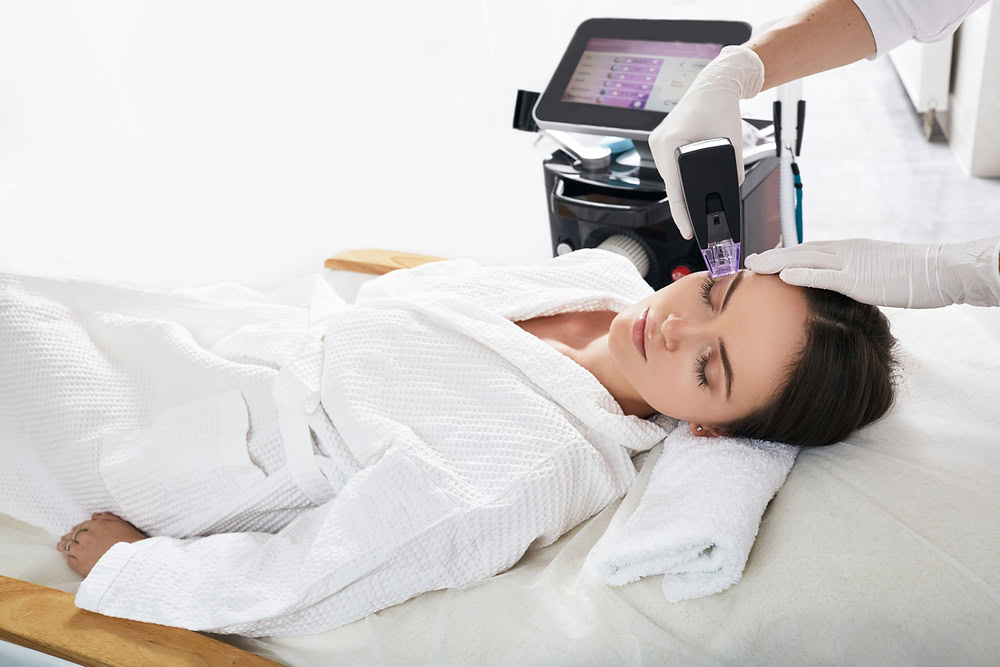
Medical facials use clinical-grade devices and serum infusions to work at a deeper level than manual techniques can reach. They’re not better in every situation — they’re better for specific situations. Understanding the difference is the key to not wasting your time or money on the wrong one.
HydraFacial vs. Regular Facial: What's the Actual Difference?
The HydraFacial is probably the most well-known medical facial on the market, and the comparison to a regular European facial comes up constantly. Here’s the clearest way to think about it: a European facial is performed entirely by hand, with the esthetician’s technique and product selection doing the work. A HydraFacial uses a patented device — Vortex-Fusion technology — that simultaneously vacuums out congestion and infuses the skin with medical-grade serums at a cellular level. It’s not replicable manually.
The results timeline is also different. A European facial delivers immediate visible improvement — cleaner, brighter, more hydrated skin — but the deeper benefits (cell turnover, long-term clarity) build over multiple sessions. A HydraFacial often produces more dramatic immediate results, particularly for clients dealing with congestion, uneven tone, or dehydration that hasn’t responded to standard treatments.
The HydraFacial vs. regular facial question isn’t really about which one is better — it’s about which one is right for your skin right now. For someone with dry, rough, or sun-damaged skin who wants a significant reset, a HydraFacial tends to deliver faster. For someone who wants to maintain healthy skin consistently and build a long-term relationship with a provider who knows their skin, a monthly European facial is often the smarter foundation — with a HydraFacial added in periodically for a deeper treatment.
We offer both at Wake Skincare, which means we’re not trying to push you toward one or the other. During a free skin evaluation, we assess your skin and tell you honestly which treatment makes the most sense for where your skin is right now. Jacqueline Grace holds a Master Certification in HydraFacial — among the first 100 practitioners in the world to achieve that level — so when she recommends one over the other, it’s based on genuine expertise, not a menu preference.
When a Medical Facial Is the Right Call — Especially for Skin of Color
There’s a conversation that doesn’t happen enough in skincare content: not all facials are built equally for all skin tones. For people with darker skin tones dealing with hyperpigmentation, melasma, or post-inflammatory hyperpigmentation (PIH), the choice of treatment — and the provider performing it — carries real consequences. The wrong technique or the wrong product can make pigmentation worse, not better. This is not a hypothetical risk. It’s something that happens regularly when clients with skin of color see providers who haven’t been specifically trained in treating it.
This is an area where Wake County, NC’s growing, diverse population deserves better than what most skincare content addresses. Raleigh and the surrounding communities have seen significant growth over the past several years, with a large and increasing number of residents with skin of color who are actively looking for a provider who actually understands their skin — not just one who claims to.
Jacqueline Grace placed first and second in the Pigmentation Artist of the Year category at The Skin Games, an international, peer-judged esthetics competition that evaluates real client results. That’s not a credential from a weekend course. It’s a demonstrated, verifiable outcome in one of the most technically demanding areas of professional esthetics. Clients have confirmed it directly: “My melasma is completely gone, my pores are tight, fine lines and wrinkles significantly diminished.” Another wrote that Jacqueline “understands and knows how to treat hyperpigmentation in people of color, which not all estheticians know how to do correctly.”
For clients in this situation, the question of European facial vs. medical facial is often less about preference and more about what their specific concern actually requires. Sometimes a well-customized European facial — with the right products for deeper skin tones — is the appropriate maintenance treatment. Other times, a targeted medical-grade approach is needed first to address the pigmentation before maintenance makes sense. The only way to know is an honest skin assessment from someone who’s qualified to make that call.
Which Facial Is Right for Your Skin? Here's How to Decide
If your skin is generally healthy and you want to maintain it, prevent congestion, and build a long-term routine with a provider who knows your face, a European facial every four to six weeks is almost always the right starting point. If you’re dealing with a specific concern — significant pigmentation, persistent texture, dehydration that hasn’t responded to anything else — a medical facial may be the better first move.
The honest answer is that most people benefit from both, used strategically. A monthly European facial as the foundation, with a HydraFacial or other medical-grade treatment layered in when the skin needs a deeper reset. Having access to the full range under one roof, with one provider tracking your progress, makes that kind of long-term approach actually work.
If you’re in Wake County, NC and you’re not sure where to start, we offer a free skin evaluation for all new clients — no commitment, no upsell pressure. Just a licensed professional looking at your skin and telling you what it actually needs. Reach out to Wake Skincare and we’ll take it from there.